


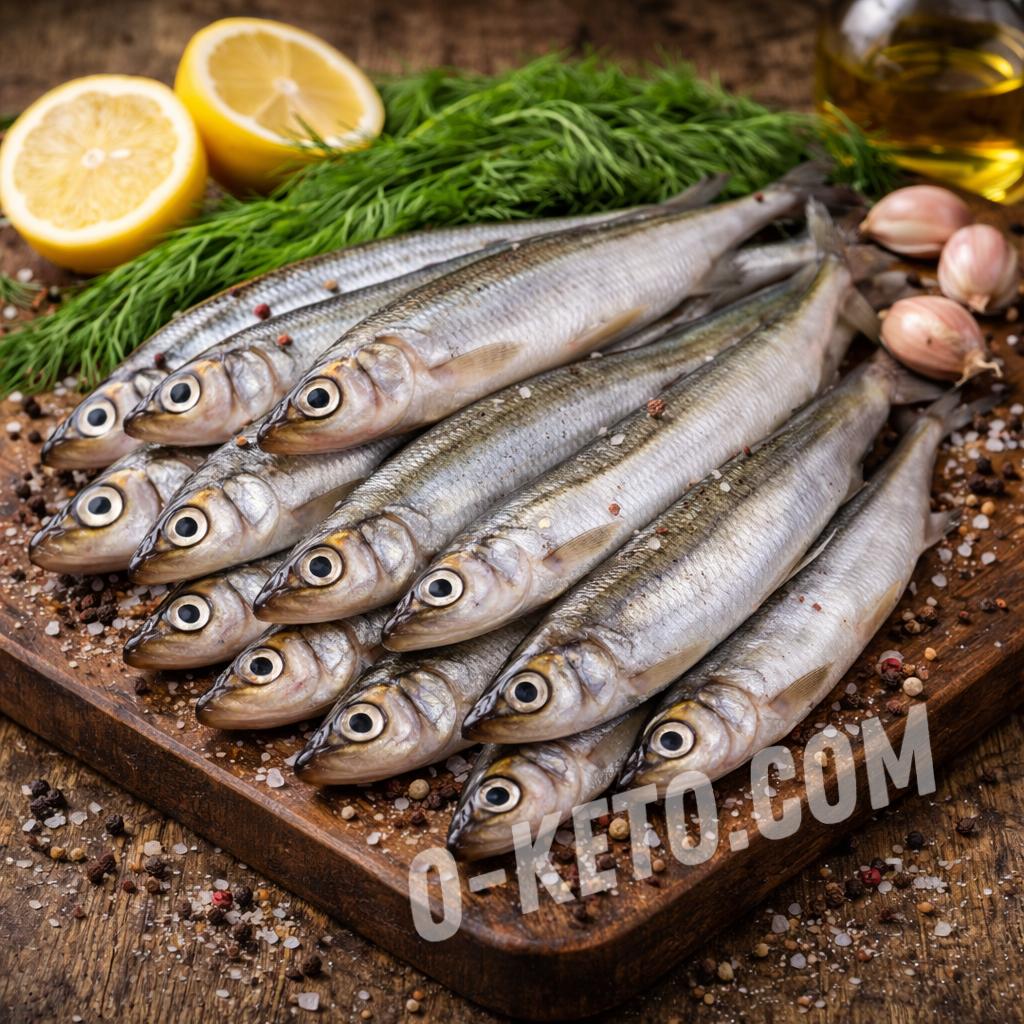

Smelt is a small fish from the smelt family, common in cold seas, bays, and rivers of northern regions. It is often recognized by its characteristic fresh cucumber smell, especially in just-caught fish. The size is usually small, so smelt is often cooked whole or almost whole.
Depending on the region, smelt may be marine, lake, anadromous, or semi-anadromous. In spring it enters spawning areas and becomes a seasonal product. In cooking, it is valued for tender flesh, thin skin, quick preparation, and a clean fish taste without strong fattiness.
Nutritional value
In 100 g of raw smelt there are usually about 100–120 kcal, 18–20 g protein, 3–5 g fat, and 0 g carbohydrates. Exact numbers depend on species, season, and catch area. The fish contains complete protein, phosphorus, selenium, vitamin B12, vitamin D, and fatty acids of marine origin.
For keto, smelt is convenient because it adds no carbohydrates and pairs well with fatty sauces. But by itself it is not as fatty as mackerel or herring, so in low-carb eating it is often cooked with butter, ghee, olive oil, or flour-free sour cream sauce.
Is it suitable for keto?
Smelt fits keto and LCHF well if it is not coated in wheat flour, breadcrumbs, or sweet marinade. The simplest options are frying in fat without breading or with minimal low-carb breading, baking, grilling, stewing in cream sauce, or marinating without sugar.
If the fish is bought ready-made, the ingredient list is especially important. Smoked, dried, and pickled smelt may contain a lot of salt, sugar, vinegar, starchy additions, or oil of unclear quality. For a regular menu, fresh or frozen fish cooked at home is easier to control.
How to prepare it
Small smelt is sometimes fried whole, but more often it is rinsed, gutted, and dried. The drier the surface, the better the crust. If the fish is frozen, it is better thawed in the refrigerator, then drained and patted dry with a paper towel.
The smell of fresh cucumber is normal for smelt, while ammonia-like, sour, or musty odor speaks against buying it. Eyes should be clear, the skin moist but not slimy, and the belly without tears. In old fish, the flesh becomes loose and holds shape worse during frying.
How to cook it
The classic method is to fry smelt quickly in a well-heated pan. Salt is better added shortly before cooking, and the fish should be fried in batches so it does not stew in its own juice. For keto, instead of ordinary flour, a very thin layer of almond flour, flax crumbs, or no breading at all can be used.
Smelt is also baked with lemon and butter, grilled, added to fish appetizers, or marinated with vinegar, bay leaf, and pepper. The delicate fish does not need long heating: overcooked smelt quickly loses juiciness.
For a neater presentation, larger smelt can be opened like a book and the backbone removed, while small fish can be left whole. If a crisp crust without flour is needed, careful drying and enough hot fat in the pan help. The fish is better turned once, when the lower side has already set.
What to pair it with
Smelt pairs with lemon, dill, parsley, garlic, black pepper, butter, sour cream, cucumber, lettuce leaves, cauliflower, and zucchini. On a keto plate, green salad, stewed cabbage, cucumbers, or a sour cream and herb sauce are better than potatoes.
Limitations
Like any fish, smelt is unsuitable for people with fish allergy. Small bones usually soften when fried, but for children and people with sensitive swallowing, larger cleaned fish are more convenient. Salted and smoked versions should be eaten moderately because of salt.
How to store it
Fresh smelt is best cooked on the day of purchase. In the refrigerator it is kept briefly, on the coldest shelf, in a closed container. Frozen fish is stored without repeated thawing. Cooked fried smelt is best eaten fresh: after storage it loses crunch and aroma.
If there is a lot of fish, part can be marinated without sugar or frozen in portions. Before freezing, smelt is better rinsed, dried, and spread in a thin layer so the fish do not freeze into one lump. This makes it easier to take exactly the amount needed later.
What can replace it?
The closest replacements are capelin, Baltic herring, anchovy, small sardine, sand lance, or another small marine fish. If a mild taste without small bones is needed, cod, pollock, or hake fillets can be used, but the texture and cooking method will be different.


