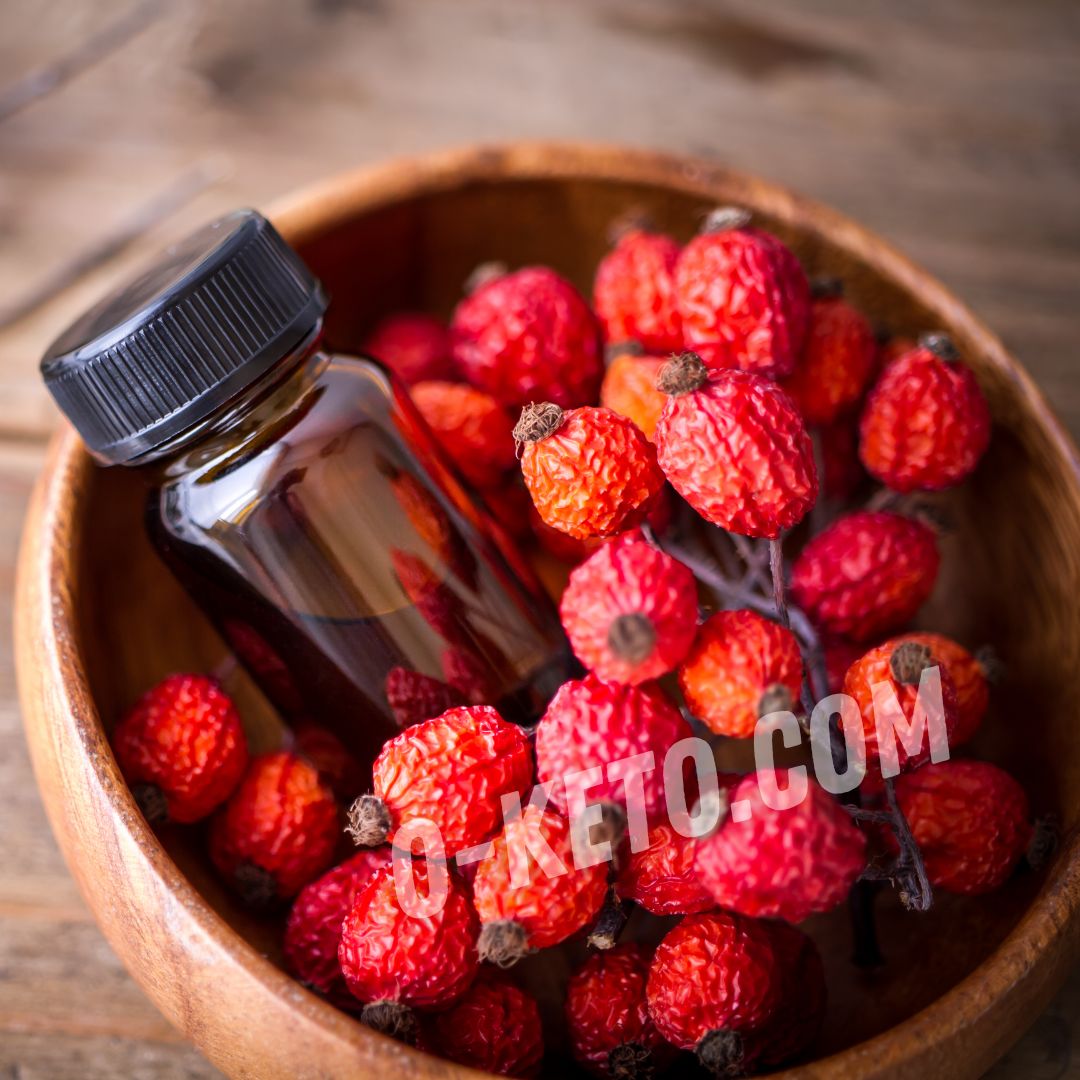

Rosehip is the fruit of wild rose, used fresh, dried, in infusions, teas, syrups, purees and extracts. It is known for its vitamin C content and tart berry-herbal flavor. For keto, however, it is important to distinguish the whole fruit from an infusion: they are very different in carbohydrates.
Fresh or dried rosehips contain a noticeable amount of carbohydrates, especially when eaten as fruit, jam, syrup or sweet drink. An unsweetened infusion, where the fruit only flavors the water, usually has a much lower carbohydrate load.
Nutrition
Rosehips contain vitamin C, polyphenols, carotenoids, vitamin E, some B vitamins, potassium, magnesium, calcium, phosphorus and iron. The amount of vitamin C depends on species, drying, storage and preparation temperature; long boiling destroys part of it.
Fresh rosehips may contain around 14 g of carbohydrates per 100 g, so they are not the same as herbal tea. Glycemic impact depends on the form: whole fruit, powder, syrup and infusion behave differently.
Is Rosehip Keto-Friendly?
Unsweetened rosehip infusion can fit keto if it is consumed without sugar, honey or fruit syrups. Whole fruits, purees, jams and syrups require caution because they contain much more carbohydrate.
If the infusion is very concentrated, with crushed fruit and pulp, the cup will contain more carbohydrates than a light tea. For strict keto, use a moderate amount of fruit and avoid eating the sediment.
How to Brew It
Rosehips are usually infused rather than boiled for a long time. Dried fruits can be lightly crushed, covered with hot water and left in a thermos. Sugar is not necessary; if sweetness is needed, use a keto-compatible sweetener that suits you.
Good sugar-free combinations include:
- rosehip with cinnamon and lemon zest;
- rosehip with a small amount of ginger;
- cold infusion with mint;
- a blend with hibiscus for brighter acidity.
How to Choose and Store
Dried rosehips should have no mold, musty smell or stickiness. Store them dry in a closed jar, away from light. Ground powder loses aroma faster and is more sensitive to moisture than whole fruits.
Portion and Product Form
For keto, the form matters more than the name. A cup of weak unsweetened infusion and a spoonful of thick syrup are completely different products. Syrup almost always contains a lot of sugar, while whole-fruit powder brings more carbohydrates and fiber into the drink than ordinary steeping.
If the goal is a tart hot drink, prepare an infusion from a moderate amount of dried fruit and strain it. If a recipe uses puree, jam, syrup or powder, count the carbohydrates as you would for a berry ingredient, not as herbal tea.
Common Mistakes
The most common mistake is sweetening rosehip with honey “for extra value”. For keto, honey is still sugar even when the drink looks natural. Another mistake is boiling the fruit for a long time to get more vitamin C: the taste may become harsher, and part of the vitamin will still be destroyed. Infusion is usually better than active boiling.
When Rosehip Fits
Rosehip works well as a replacement for sweet hot drinks when you want tart flavor without sugar. It can add variety to water, a tea break or a cold summer infusion. But it should not turn into berry syrup, honey-sweetened compote or a thick pulpy drink if the goal is low carbohydrates. The closer it is to whole fruit or a sweet preserve, the more carefully carbohydrates should be counted.
Limitations and Substitutes
Acidic infusions may irritate a sensitive stomach or worsen reflux. If you have kidney stone risk, digestive conditions or need to limit vitamin C, discuss regular use with a clinician. Sweet rosehip syrups are not suitable for keto.
For a tart herbal drink, use hibiscus, lemon zest, mint, ginger or unsweetened berry teas without sweet fruit pieces. For vitamin C, look at the whole diet: greens, cabbage and moderate portions of bell pepper may be more keto-friendly.
Infusion Strength
The more finely the fruits are crushed and the longer they sit in hot water, the stronger the drink becomes. This gives more acidity and flavor, but also transfers more compounds from the pulp into the cup. For low-carb eating, a light or medium infusion, well strained through a sieve, is usually more practical.
If rosehip is used often, alternate it with water, mint, hibiscus or ordinary unsweetened tea. That keeps it as a flavor accent rather than a constant berry base for the day.