


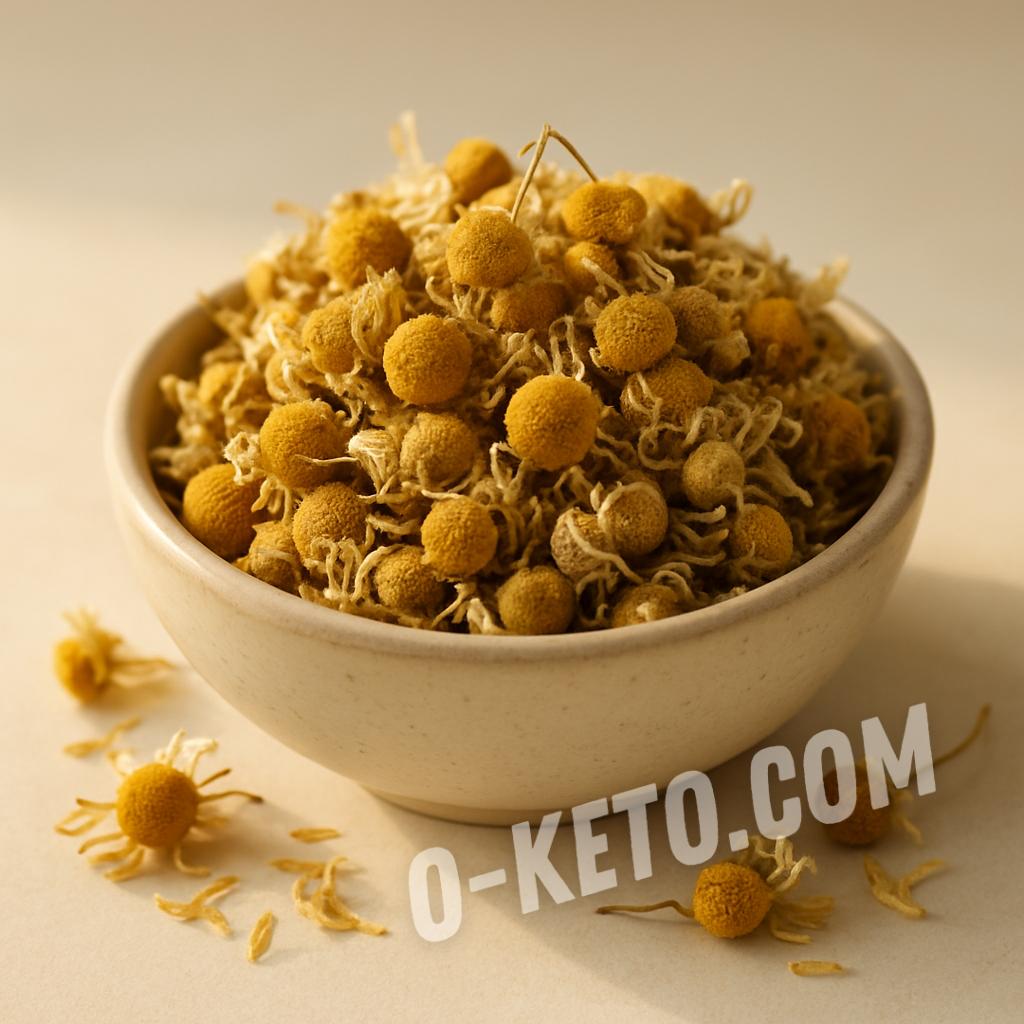

Loose chamomile is dried chamomile flower heads used for herbal infusion. Unlike tea bags, loose flowers let you judge the raw material with your eyes and nose: whether whole flowers are visible, how much dust and stem there is, what the color looks like, and how clean the aroma is.
For keto and LCHF, chamomile matters not as a calorie source but as an almost carbohydrate-free base for a warm or cold unsweetened drink. The infusion can be drunk on its own or paired with mint, lemon balm, lemon zest, cinnamon, or a small amount of cream if that fits the personal diet.
What kind of raw material is it?
In food use, the flowers are most often German chamomile, Matricaria chamomilla, though different species and blends may be sold. Good chamomile smells herbal, honey-like, and slightly apple-like, without dampness, mold, dust, or mustiness. The more whole flower heads and the less gray crumb, the easier it is to control the infusion taste.
The loose form is convenient because the dose can be changed and chamomile can be mixed with other herbs. But it requires a strainer, teapot, or filter, and careful storage. Very fine particles release bitterness faster and often make the infusion cloudy.
Nutrition profile
A cup of chamomile infusion without sugar, honey, or syrups gives almost no calories or carbohydrates. Dry flowers contain plant fibers, polyphenols, and aromatic components, but most coarse fiber remains in the brewed plant material. The infusion is therefore usually not counted as a source of protein, fat, or notable minerals.
If honey, sugar, sweet syrup, or sweetened plant drink is added, the carbohydrate count changes because of that addition. For a keto version, use chamomile without sugar, with lemon zest, mint, vanilla, cinnamon, or an allowed sweetener in a minimal amount.
Is it suitable for keto?
Unsweetened chamomile infusion fits keto and LCHF well. It can replace sweet evening tea, add flavor variety, and help avoid reaching for dessert out of habit. But the drink itself does not make the diet low-carb; what is added to the cup and what it is served with matters.
For a fuller taste, make a stronger infusion and serve it cold with ice, lemon zest, and mint. Cream adds softness but also calories and requires attention to dairy tolerance. Honey is better kept as an occasional exception rather than a daily addition in this context.
How to brew it
Usually 1–2 teaspoons of dry flowers are used for one cup of hot water. Let boiling water cool slightly, pour it over the chamomile, and cover for 5–10 minutes. A short infusion is softer; a longer one gives richer flavor and more herbal bitterness.
For a cold drink, brew chamomile stronger, cool it, and refrigerate. Do not keep the infusion at room temperature all day. If mixing chamomile with mint, lemon balm, or cinnamon, start with small amounts so the apple-honey note of the flowers is not covered.
How to choose
Good loose chamomile has light petals, yellow centers, and a clean herbal aroma. A little crumb is acceptable, but a lot of dust, darkened flowers, gray color, hard stems, and foreign smell point to weak raw material or poor storage.
Packaging should protect from light and moisture. A Latin name, region of harvest or packing, and date are useful. A strong perfume-like smell is unnecessary: chamomile should have a natural, soft aroma.
Limits
Chamomile belongs to the Asteraceae family, so caution is needed if ragweed, arnica, calendula, chamomile, or related plants cause reactions. During pregnancy, breastfeeding, pronounced allergy tendency, and regular medication use, frequent intake is better discussed with a qualified professional.
If itching, rash, swelling, abdominal discomfort, unusual drowsiness, or other unpleasant reactions appear after the infusion, exclude the product. A very strong infusion can be bitter and heavy in taste, so a larger dose is not always better.
Storage
Keep dry chamomile in a tightly closed jar or bag, in a dark dry place, away from spices, coffee, and flavored tea. The flowers quickly absorb foreign smells and lose their own aroma. Do not scoop the raw material with a wet spoon or store it near the stove.
What can replace it?
For a mild herbal drink, chamomile can be replaced with lemon balm, linden flower, mint, a very small amount of lavender, rooibos, or chamomile mixed with lemon zest. If the exact chamomile taste is needed, essential oil is not a substitute: for drinks, use food-grade dry flowers, a tea filter, or a ready infusion.


