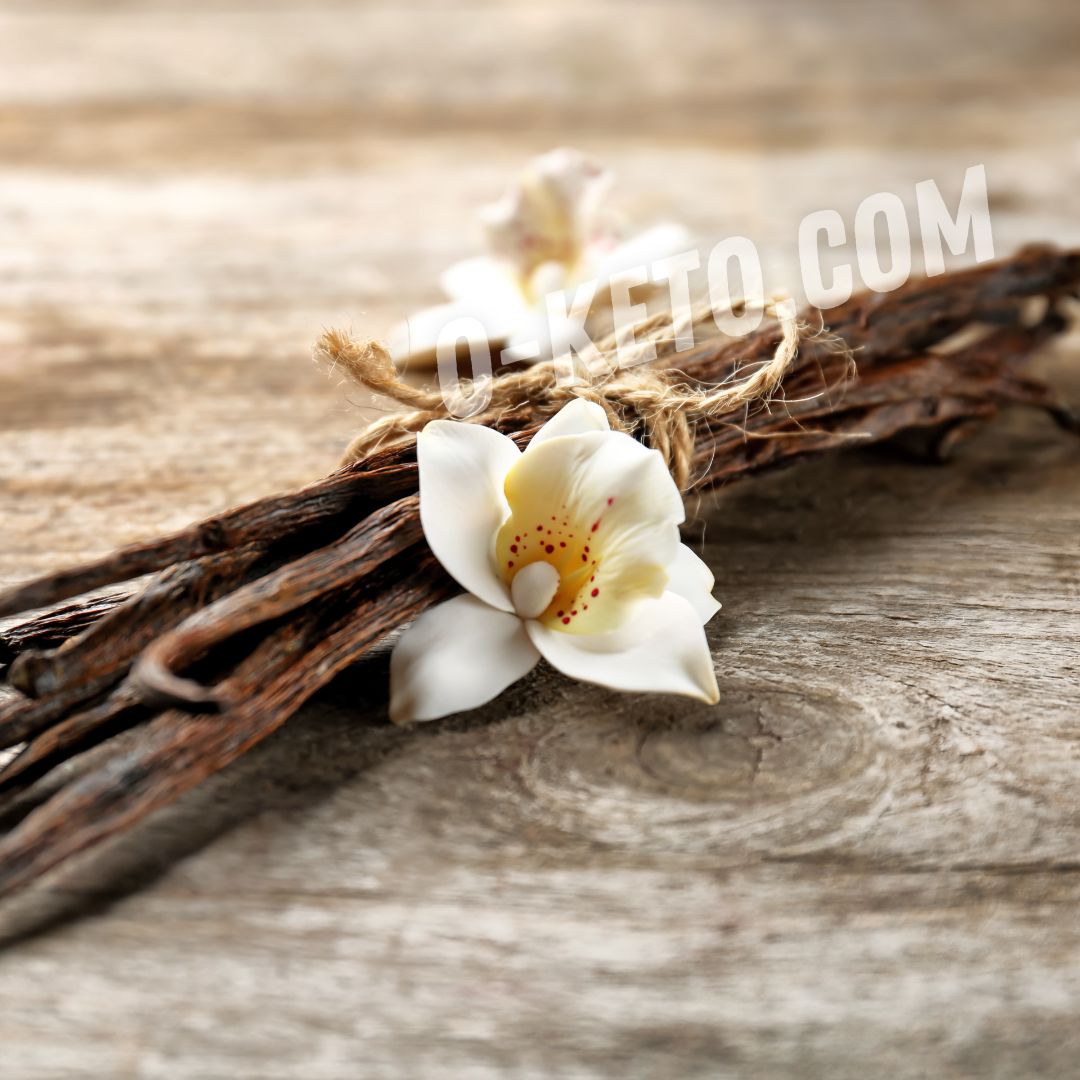

Vanilla is one of the most recognizable spices in the world. It comes from the pods of orchids of the Vanilla genus, especially Vanilla planifolia. Its origin is linked to Mexico and Central America, where it was used to flavor cacao drinks long before the European spice trade. In Europe, vanilla became known in the sixteenth century, but it remained rare for a long time because the plant required special pollination and a complex pod-curing process.
The main value of vanilla is aroma, not vitamins or minerals. A good pod smells of warm cream, dried fruit, woody notes, sometimes tobacco and caramel. Vanillin is only one of its aromatic components, so natural vanilla usually tastes softer and deeper than plain vanillin from a packet. For keto, however, the important question is the product form and added ingredients.
Forms of vanilla
Vanilla is sold as pods, ground vanilla, vanilla extract, vanilla paste, vanilla powder, vanillin, and vanilla sugar. A pod gives the most complex aroma: split it lengthwise, scrape out the seeds, and steep the empty pod in cream, milk, butter, or sweetener. Extract is convenient for creams, drinks, and desserts, although it is often alcohol-based.
Vanilla paste can be very aromatic, but the ingredient list needs careful reading because it often contains sugar syrup. Vanilla sugar usually does not suit keto because it is sugar flavored with vanilla. Vanillin is cheaper and more stable, but the flavor is simpler and more direct. It can be useful in baking when the familiar sweet aroma is needed without expensive pods.
Nutrition
Vanilla is used in tiny amounts, so its contribution to calories, protein, fat, and carbohydrates is usually minimal. One teaspoon of unsweetened vanilla extract may contain around half a gram of carbohydrates, but the exact number depends on the formula. A pod or a pinch of powder adds aroma with almost no effect on macros.
If the product contains sugar, syrup, dextrose, maltodextrin, or a sweet base, the situation changes. Vanilla flavor often hides sweetness, so dessert mixes, flavored yogurts, protein creams, and ready sauces should be judged by the label rather than by the word “vanilla” in the name.
Fit for keto and LCHF
Natural vanilla, vanillin, and unsweetened extract fit keto and LCHF well when used in culinary amounts. They help create a dessert-like flavor without sugar: cottage cheese, mascarpone, cream, chia pudding, almond dough, coconut cream, and cocoa all taste rounder with vanilla aroma.
But vanilla does not cancel the sugar in a recipe. If a dessert is based on bananas, dates, honey, wheat flour, or jam, adding vanilla does not change its carbohydrate load. For keto, vanilla is better paired with a non-caloric sweetener, cream, eggs, nut flour, a small portion of berries, and unsweetened cocoa.
How to use it
A vanilla pod opens best in a warm fatty base. Add the seeds to cream, a custard base, sauce, or dough, and steep the empty pod in a jar of erythritol or warm cream. Extract is best added near the end, when the mixture is no longer boiling strongly, so less aroma evaporates.
Vanilla pairs well with cinnamon, cocoa, coffee, lemon zest, coconut, almond, cream cheese, cottage cheese, cream, and berries. It is rare in savory cooking, but a tiny drop of extract can sometimes soften a cream sauce for pumpkin or seafood. This needs restraint because too much vanilla quickly makes the dish taste like dessert.
How to choose
A good pod is flexible, slightly oily, dark, aromatic, and free of mold or dry cracks. If it snaps like a dry stick, much of the aroma has already faded. Extract is best when the composition is clear: vanilla, alcohol base, water, sometimes glycerin. In pastes and powders, check for sugar, starch, and fillers.
It is also worth separating natural vanilla from vanillin. Natural vanilla is more expensive, more complex in aroma, and better for creams, sugar-free ice cream, and dishes where the spice is noticeable. Vanillin is cheaper and can suit simple baking, but too much gives a sharp confectionery taste.
Storage
Pods should be kept tightly closed in a dark cool cabinet, not in the refrigerator, where cold and condensation may damage the texture. Extract should stay in a closed bottle away from light and the stove. Ground vanilla and vanillin should not be left in open packets because the aroma fades quickly.
Substitutes
If there is no vanilla, a dessert profile can be built with cinnamon, cardamom, lemon or orange zest, cocoa, coffee, almond extract, or coconut. The right substitute depends on the recipe: zest and cinnamon work well in cream, coffee and cocoa in chocolate desserts, and cinnamon, lemon, and a few berries in cottage cheese.