


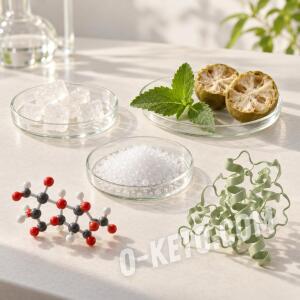


Sugar cravings are not simply a lack of willpower or a random habit. Sweet taste is built into our biology as an ancient signal of energy, safety, and pleasure. For a human living in conditions of food scarcity, sweetness meant: there are quick calories here, this is worth remembering and finding again.
In the modern world, this ancient system has entered completely new conditions. Sugar is constantly available, sweet foods are cheap, and the brain still reacts to sweetness as if it has discovered a rare source of energy. That is why on keto and LCHF it is important not only to remove sugar, but also to understand how the sensation of sweetness is formed. Then a dessert can become delicious through aroma, texture, temperature, salt, acidity, and bitterness — not only through sweeteners.
Why Sweet Foods Are So Attractive
From an evolutionary perspective, sweet taste was a useful clue. Bitterness could often signal toxins, acidity could indicate unripeness or spoilage, while sweetness more often pointed to ripe fruit, honey, and accessible energy. The brain quickly reinforced this connection: sweet means valuable.
There is also a more unusual hypothesis: attraction to mild sweetness may have been reinforced not only by fruit, but also by animal foods. Fresh liver contains glycogen — the storage form of glucose. Because of this, it may have a faintly sweet taste. For ancient humans, this could also have acted as a signal: this is nutritious and valuable food.
The main logic of this system looks like this:
| signal | what it may have meant for the ancient brain |
| sweet taste | energy, ripeness, high nutritional value |
| bitter taste | possible danger, toxic substances, caution |
| sour taste | unripeness, fermentation, or the need for additional evaluation |
| fatty and creamy texture | dense energy, satiety, rich food |
The problem begins when this ancient program meets modern abundance. The brain loves sweetness not because it is “broken,” but because its reward system is designed to remember energy sources. Today, however, sweet sources are no longer rare berries and honey, but products filled with sugar, syrups, flour, and flavorings.
What Happens in the Brain When We Eat Something Sweet
Everything begins on the tongue. Taste receptors react to sugar molecules or sweeteners and send a signal to the brain. But the brain does not perceive this signal in isolation. It immediately combines it with aroma, temperature, texture, memories, and expectations of pleasure.
That is why sweetness is not simply the number of grams of sugar. It is the final sensation the brain assembles from multiple sensory channels. The same level of sweetness can feel completely different in a liquid drink, a thick cream, a warm brownie, or a cold mousse.
You can imagine it as a simple formula:
| component | how it affects the sensation of sweetness |
| basic sweet taste | provides the direct signal from sugar or sweetener |
| aroma | enhances the expectation of sweetness through vanilla, cinnamon, chocolate, berries, and creamy notes |
| temperature | warmth releases aroma, while strong cold reduces receptor sensitivity |
| texture | creaminess, viscosity, and density prolong contact with taste receptors |
| contrast | salt, acidity, and bitterness make flavor more multidimensional and prevent it from feeling flat |
Why a Simple Sweetener Is Not Always Enough
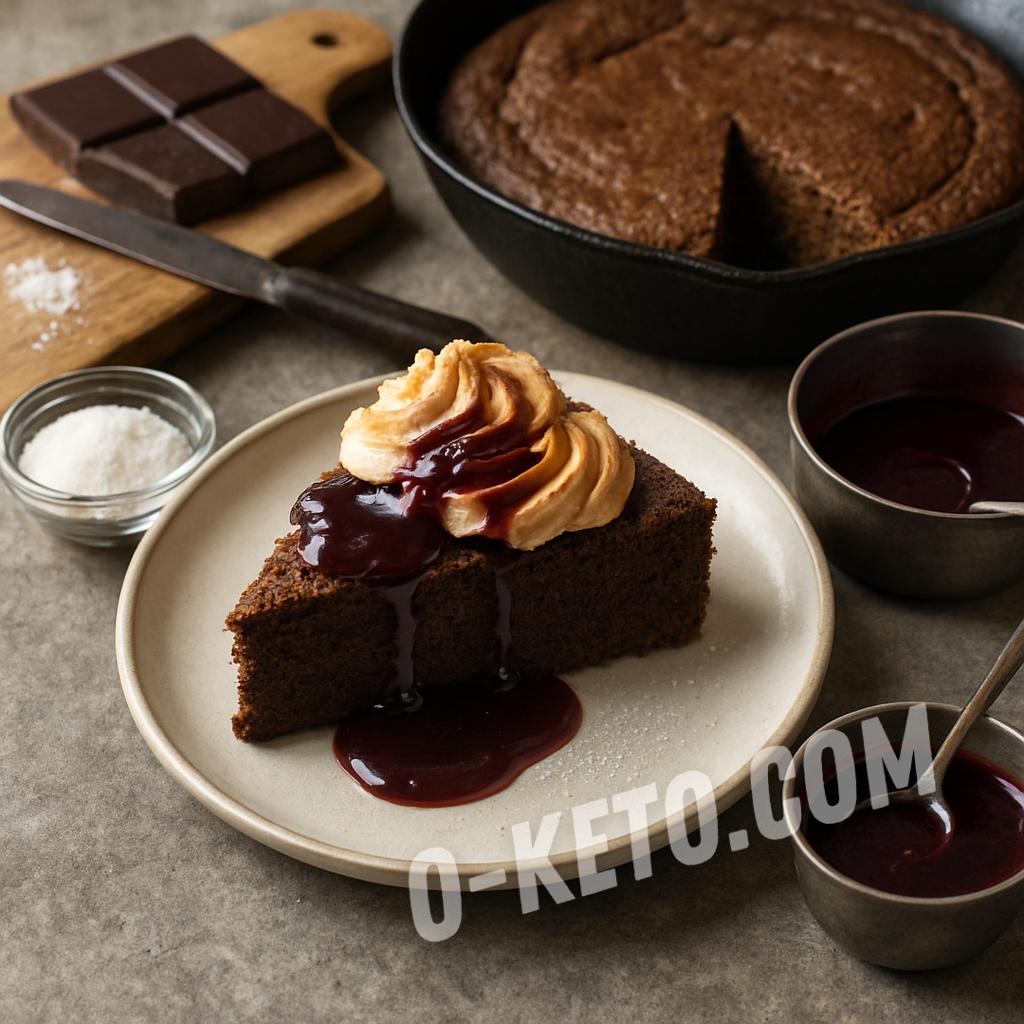
If you simply replace sugar with erythritol, stevia, or another sweetener, the dessert may become technically sweet but still taste flat. Sugar provides more than sweetness alone. It affects texture, moisture, caramelization, volume, and aftertaste. When sugar is removed, many of these signals disappear.
That is why a good keto dessert is not built around the principle of “add more sweetener,” but around balance. You need to combine several signals that the brain interprets as a complete dessert:
- a sweet base taste from a suitable sweetener;
- a strong aroma that enhances the expectation of sweetness;
- a creamy or viscous texture that keeps flavor lingering in the mouth;
- a pinch of salt to enhance flavor;
- a bit of acidity or bitterness to prevent flatness and excessive sweetness.
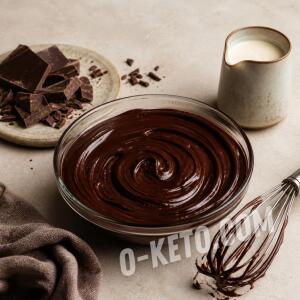
That is why a chocolate ganache made with cream can feel sweeter and richer than a watery drink containing the same amount of sweetener. In the first case, the brain receives not one signal, but an entire composition.
Aroma: The Most Underrated Sweetness Enhancer
A large part of what we call flavor is connected to smell. Aromatic molecules reach olfactory receptors in two ways: externally, when we inhale the smell of food, and internally, when aroma rises from the mouth into the nasal cavity during chewing. This second pathway is called retronasal olfaction.
That is why desserts with vanilla, cinnamon, cocoa, or berries feel richer even when they contain very little sugar. Smell is closely tied to memory and emotions, so a familiar aroma can instantly trigger expectations of sweetness and pleasure.
For keto desserts, the following aromatic signals work especially well:
- vanilla, because it is associated with creamy desserts, ice cream, and baked goods;
- cinnamon, because it creates a warm sense of sweet spice even without sugar;
- cocoa and dark chocolate, because they add depth and a “dessert-like” character;
- lemon or orange zest, because it makes flavor brighter and cleaner;
- berries, because their aroma creates the impression of natural sweetness.
Aroma is especially important in cold desserts. Strong cold suppresses smell and receptor sensitivity, which is why ice cream tastes less sweet when frozen than the same mixture before freezing. This is one reason ordinary ice cream tastes almost overwhelmingly sweet in liquid form.
Salt, Acidity, and Bitterness: Why They Matter in Sweet Desserts
Sweet taste without contrast quickly becomes flat. The brain enjoys not simply a sugar signal, but complexity. That is why in sugar-free desserts, small flavor accents become especially important — they enhance sweetness and make it feel more convincing.
Three main tools work particularly well:
| tool | how to use it | what it provides |
| salt | a tiny pinch in cream, batter, or chocolate mixture | enhances sweetness, removes blandness, adds depth |
| acidity | lemon juice, zest, raspberries, cranberries, lingonberries | refreshes flavor, reduces cloying sweetness, adds structure |
| bitterness | coffee, cocoa, dark chocolate, walnuts, almonds | adds depth and a mature flavor so the dessert does not feel “empty sweet” |
Salt should not make the dessert salty. It works as a micro-dose flavor enhancer. Acidity should not turn cream into lemon sauce unless the recipe specifically intends it. Bitterness should not dominate. All these elements work best in small amounts.
Temperature Changes Sweetness
The same dessert can feel completely different depending on temperature. A warm dessert releases aromatic molecules more actively, so it often feels sweeter and richer. A cold dessert, by contrast, suppresses aroma and receptor sensitivity.
This is important to consider in keto recipes:
- a warm brownie or cake may feel sweeter than when fully cooled;
- a mousse taken from the refrigerator should rest a few minutes so the aroma can open up;
- ice cream requires a more intense flavor in the unfrozen base because cold suppresses sweetness;
- an overly cold chocolate dessert may seem less aromatic and more bitter.
Sometimes the problem of “not sweet enough” can be solved not with another spoonful of sweetener, but with proper serving temperature.
Texture: The Physics of Pleasure
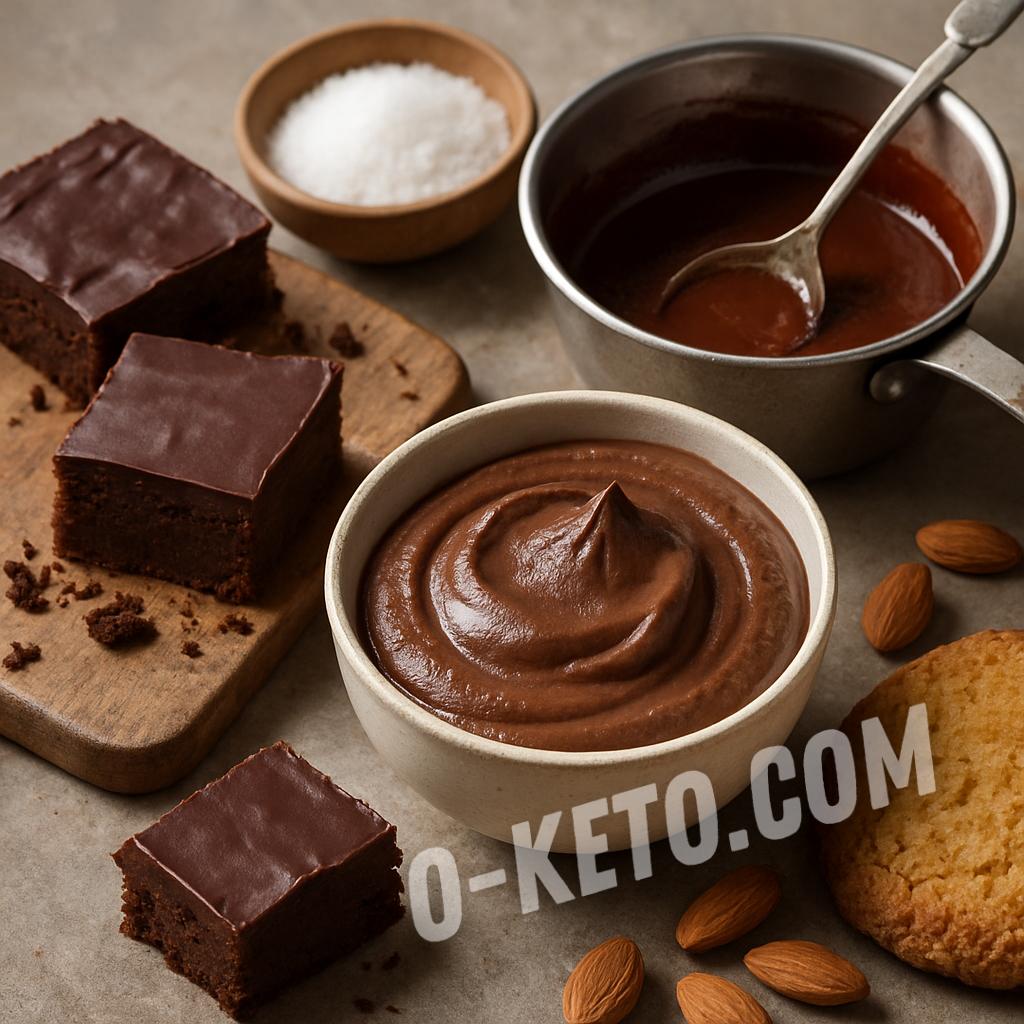
The way a dessert feels in the mouth influences flavor no less than its ingredients. The longer a product stays in contact with the tongue and receptors, the longer the brain receives signals. A thick cream, ganache, or cheesecake can feel richer and sweeter than a liquid drink with the same sweetness level.
Different textures create different signals:
| texture | what the brain perceives | examples for keto desserts |
| creamy | richness, softness, satiety, comfort | ganache, cheesecake, cream mousse, buttercream |
| viscous | long receptor contact, more intense aftertaste | thick custard, sugar-free caramel texture, chocolate sauce |
| dense | the feeling of real food and greater satiety | brownies, cakes, nut bases, dense cookies |
| airy | lightness, delicacy, fast melting | soufflé, egg-white mousse, sugar-free bird’s milk dessert |
| crunchy | contrast, interest, complexity | nuts, almond flour crumble, thin chocolate shell |
Texture contrast is especially important in sugar-free desserts. If there is only sweetness and softness, the flavor quickly becomes monotonous. But if you add crunch, tart berries, a bitter chocolate layer, or warm sauce with cool cream, the brain receives more pleasure signals.
How to Build a Keto Dessert That Feels Sweet
The practical goal is not to deceive yourself, but to create a complete flavor experience without sugar. For this, it helps to think not only about sweeteners, but about the entire sensory structure of the dessert.
A good recipe framework looks like this:
| element | practical approach |
| sweetness base | choose a sweetener based on flavor and tolerance, but do not make it the only source of pleasure |
| aroma | add vanilla, cinnamon, cocoa, coffee, berries, or zest |
| fat content | use cream, mascarpone, butter, coconut cream, or nut butter |
| contrast | add salt, acidity, or refined bitterness |
| texture | decide whether you want creaminess, crunch, density, airiness, or a combination |
| serving temperature | do not serve the dessert too cold if aroma and soft sweetness are important |
If a dessert feels “almost good, but something is missing,” the solution is not always more sweetener. Sometimes it is better to add a pinch of salt, a drop of lemon juice, vanilla, a little cocoa, more creaminess, or a crunchy layer.
Conclusion
Sweet taste affects us deeply because the brain associates it with energy, safety, and reward systems. But the sensation of sweetness is not limited to sugar. It is created through flavor, aroma, temperature, texture, memory, and contrast.
That is why a sugar-free keto dessert can still be genuinely delicious. The key is not simply replacing sugar with sweeteners, but constructing sweetness as a layered sensory experience: aromatic, creamy, contrasting, with the right temperature and texture. Then the brain receives the signal of dessert even when there is no sugar in the recipe.
Sources
- A Systematic Review and Activation Likelihood Estimation Meta-Analysis of fMRI Studies on Sweet Taste in Humans — Neuroscience & Biobehavioral Reviews
- Reward Systems in the Brain and Nutrition — Advances in Nutrition
- Neuroendocrine and Metabolic Effects of Low-Calorie and Non-Calorie Sweeteners — Frontiers in Endocrinology
- The neuroscience of sugars in taste, gut-reward, feeding circuits, and obesity — Neuroscience & Biobehavioral Reviews


