


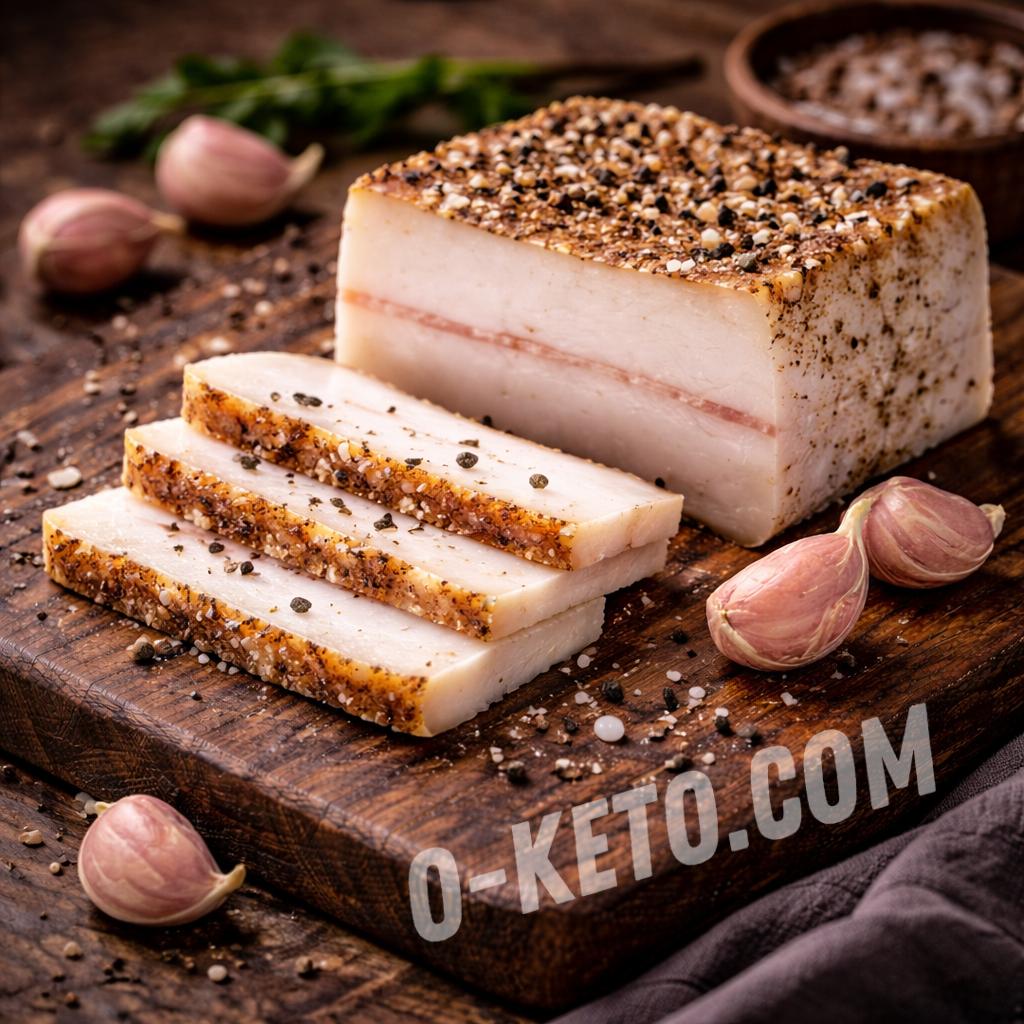

Shpig is a dense layer of pork subcutaneous fat, usually from the back or side of the carcass. In Eastern European cooking the term overlaps with salted pork fat, but shpig is often understood as a firmer, more even piece that is convenient for slicing or larding meat. It is salted, smoked, aged with spices, sliced thinly, or used as fat for meat dishes.
Its culinary value is not in universal “wellness”, but in texture, fat content, taste, and the ability to keep well when processed correctly. Good shpig has a clean pork aroma, melts gently in the mouth, and makes lean meat juicier. Bad shpig smells rancid, stale-smoked, or sharply salty.
Nutritional value
Shpig is almost entirely fat. In 100 g there are usually about 800–900 kcal, 80–95 g of fat, traces of protein, and practically 0 g of carbohydrates. Exact values depend on meat streaks, salt, smoking, and remaining moisture. The glycemic load of plain shpig is zero, but the energy density is very high.
The fat profile includes saturated, monounsaturated, and a small share of polyunsaturated fats. If the product is made from good raw material and contains no sugar, starch, or sweet marinades, carbohydrates usually do not matter. But salt and calories do: a few thin slices and a large piece are very different portions.
Is it suitable for keto?
For keto and LCHF, shpig fits by macronutrients: it contains a lot of fat and almost no carbohydrates. It can be served with eggs, cucumbers, greens, sugar-free sauerkraut, meat, or low-carb crispbread. It also helps make lean meat juicier when used for larding or frying.
At the same time, it should not replace all fat sources in the diet. Keto is not only about adding fat, but also about enough protein, salt, low-starch vegetables, and varied fats. If the product is smoked or very salty, the portion should be smaller, especially for people sensitive to salt.
How to use it
Thinly sliced chilled shpig is served as an appetizer with garlic, horseradish, sugar-free mustard, pickles, herbs, and black pepper. It can be added to scrambled eggs, stewed cabbage, mushroom dishes, pâtés, minced meat, meat rolls, and roasted poultry. Small sticks are used to lard lean beef, game, or turkey.
For frying, shpig is cut into cubes and rendered over moderate heat. The cracklings can be used as an addition, and the fat for cooking. Strong overheating is undesirable: the fat darkens, the smell becomes heavy, and the taste gets rough. If clean frying fat is needed, rendered lard is sometimes more convenient.
How to choose
Good shpig should be white or slightly creamy, firm, without yellowing, gray spots, or sour smell. Meat streaks are acceptable, but they change storage: a product with meat spoils faster than almost pure fat. The ingredient list should be short: pork fat, salt, spices, sometimes garlic or smoke. Sugar, glucose syrup, and flavor enhancers are unnecessary for a simple product.
Smoked shpig should smell gently smoky, not like soot or liquid smoke. Too bright a color and sticky surface may point to a marinade or poor storage. When buying at a market, freshness, a clean cut, and a cold display are important.
Limitations
Shpig is very calorie-dense and salty in most ready versions. Large portions can easily provide excess energy even without carbohydrates. When sodium is limited, fatty food is poorly tolerated, gallbladder issues are present, or smoked foods are not tolerated well, the portion is better reduced and a simpler product chosen.
How to store it
Salted or smoked shpig is kept in the refrigerator, tightly wrapped in parchment or in a container. Sliced pieces dry out faster than a whole piece. For longer storage, it can be frozen in portions. If rancid smell, slime, mold outside intentional aging, or bitter taste appears, it should not be eaten.
What can replace it?
The closest replacements are salted pork fat, lardo, sugar-free pancetta, bacon without sweet marinade, pork belly, or rendered lard for frying. For larding lean meat, pork fat or thin strips of bacon can work. If only fat is needed without pork flavor, beef tallow, ghee, or avocado oil can be used, but the dish will taste different.


