


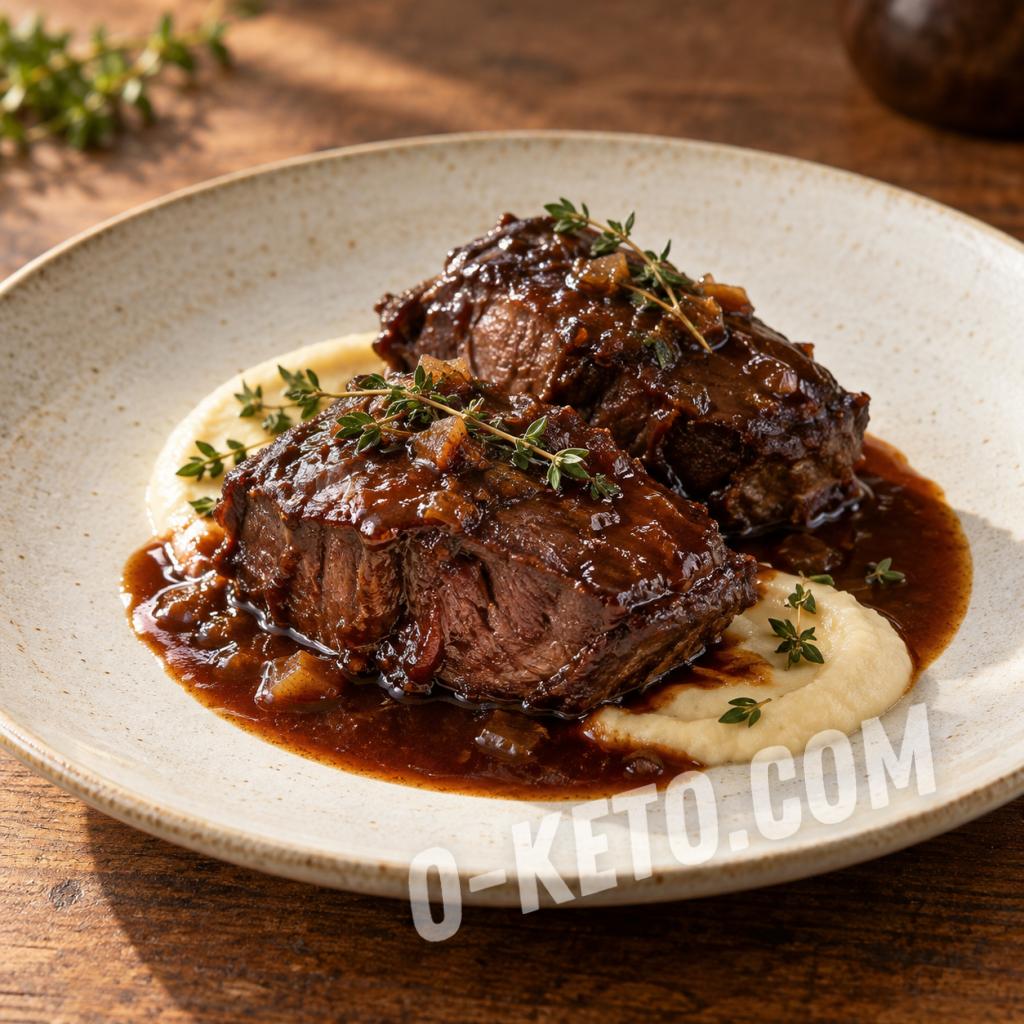

Veal cheeks are the small muscles from the lower jaw of a calf. They are removed during butchery and sold fresh or frozen, whole or trimmed. Raw cheeks feel firm and may look fairly lean, yet they contain substantial connective tissue. That tissue defines both their texture and the way they should be cooked: with prolonged, gentle heat, the cheeks become succulent and tender enough to separate with a fork.
What makes this cut different
The cheek muscle works constantly during chewing, so its fibers are pronounced and its connective tissue is dense. It is not a tender cut for a quick fry. A short, high-heat cook can leave even good-quality cheeks tough. In a covered pot with a modest amount of liquid, collagen gradually softens and contributes gelatin to the cooking juices. The sauce becomes fuller, while the meat stays moist instead of drying into flakes.
Veal usually has a milder flavor than mature beef; cheeks have a savory, concentrated taste without the stronger notes of some older cuts. Fresh raw meat should smell clean and neutral. Once cooked, cheeks pair well with unsweetened herbs, garlic, pepper, mustard, stock, and a modest amount of an acidic ingredient such as dry wine or vinegar. Acidity can balance a rich sauce, but it does not replace the slow cooking needed to soften the meat.
Nutrition
For raw veal cheeks, a source using the NEVO 2021 database from RIVM/WUR reports approximately 155 kcal, 19.2 g protein, 8.5 g fat, and 3.1 g saturated fat per 100 g; carbohydrate and fiber are not listed, and sodium is about 65 mg. The exact ratio changes with trimming, external fat, and the particular batch. These figures describe raw meat. They should not be compared directly with 100 g of cooked cheeks, because braising removes water and concentrates nutrients by weight.
The broader vitamin, mineral, and amino-acid panel uses a separate reference: USDA SR28 record 17088 for raw veal made from a composite of trimmed retail cuts. It is an indicative veal profile, not a laboratory analysis of cheek muscle. That record lists, per 100 g, about 203 mg phosphorus, 315 mg potassium, 82 mg sodium, 3.06 mg zinc, 0.83 mg iron, 8.4 micrograms selenium, 1.34 micrograms vitamin B12, and 7.5 mg niacin. Values vary between cuts and databases, so this wider panel is a reference rather than an exact label for every package.
Carbohydrates and low-carbohydrate cooking
Unbreaded meat contains virtually no carbohydrate, so plain veal cheeks can fit into a low-carbohydrate menu. The ingredients in the finished dish matter more: flour used for coating, sweet wine, sugar, starch, a prepared sauce, or a vegetable purée can add carbohydrates. For a keto-style preparation, braise the cheeks in stock or water with unsweetened seasonings, then reduce the liquid or blend suitable vegetables into the sauce instead of relying on flour. The meat itself does not provide the fiber found in vegetables or other plant foods.
Choosing veal cheeks
Fresh cheeks range from pink to rosy red and should feel slightly moist rather than sticky. Their smell should not be sour or musty. Untrimmed pieces may have thin membranes and larger patches of external fat; these can be removed before cooking without cutting away the muscle. Dry edges, grey discoloration, a tacky surface, damaged packaging, or an unusual amount of cloudy liquid are reasons to choose another package.
Frozen cheeks should be hard throughout, without signs of thawing and refreezing or a thick layer of frost inside the pack. Check the stated origin, packing date, storage temperature, and use-by date. Pieces of different sizes will not finish at precisely the same time, so choose similarly thick cheeks or add the smaller ones later. A trimmed product is convenient; fresh, clean trimmings can also be saved for stock if they have been kept safely cold.
Preparing and cooking
Keep chilled cheeks refrigerated and take them out only for preparation. Trim any coarse membrane with a sharp knife, avoiding deep cuts into the muscle. Pat the meat dry so it browns well. Salt it shortly before searing or in advance. Browning in a hot pan builds flavor in the sauce, but it does not seal in juices or remove the need for a long braise.
After browning, transfer the cheeks to a heavy pot or covered baking dish. Add unsweetened liquid to reach roughly halfway up the pieces, cover, and cook gently. A low oven, slow cooker, or stovetop can work as long as the liquid only simmers lightly. Timing depends on size, animal age, temperature, and trimming; expect hours rather than minutes. Check both temperature and tenderness: a thin skewer should enter with little resistance, and the meat should pull apart easily. If it still feels springy, continue cooking and check again.
Serve the cheeks whole, slice them across the grain, or pull them into generous strands and spoon over the sauce. Strain the braising liquid and reduce it separately if it needs more body. The dish can be made ahead; chilling firms the sauce and lets the flavors settle. Reheat the meat slowly in its sauce and avoid a prolonged rolling boil, which can make the outside break apart before the center is evenly hot.
Storage and food safety
Store raw cheeks in the refrigerator at the temperature on the package, sealed on the lowest shelf so their juices cannot drip onto ready-to-eat food. If they will not be cooked soon, freeze them in a closed package and mark the date. Thaw slowly in the refrigerator rather than on the counter. Do not leave thawed meat at room temperature for an extended period or refreeze it raw after it has warmed.
Use separate boards and knives for raw meat and ready-to-eat foods, and wash hands and work surfaces. Cook the cheeks thoroughly; prolonged gentle heat is also needed to soften their connective tissue. Cool leftovers promptly in a shallow container, refrigerate them, and reheat until evenly hot. Discard meat with a broken seal, sour odor, sticky surface, or unusual discoloration, even if the printed date has not passed.
Sources
NEVO 2021, RIVM/WUR — veal cheek nutrition values reported by KitchenNmbrs. USDA National Nutrient Database for Standard Reference, Release 28, record 17088, “Veal, composite of trimmed retail cuts, separable lean and fat, raw” — indicative reference for the broader raw veal nutrient profile.


