


Gastro panel
A combined blood test used to estimate gastric mucosal status, acidity and the likelihood of atrophic change; useful for screening, but it does not replace gastroscopy when alarm symptoms are present.

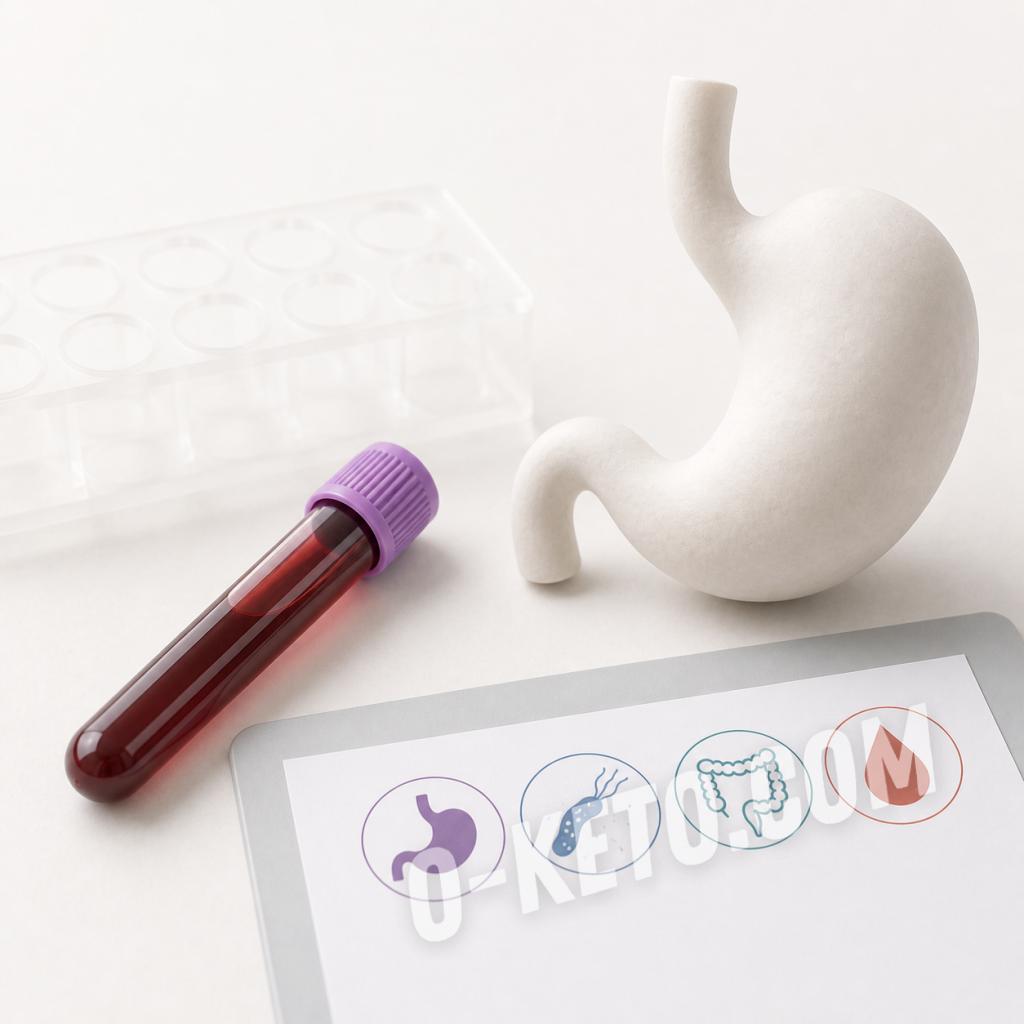
GastroPanel is not a single marker, but a combined blood test used to estimate the condition of the stomach lining, gastric acidity and the likelihood of atrophic change. It usually includes gastrin-17, pepsinogen I, pepsinogen II and antibodies to Helicobacter pylori. Its practical value lies in providing a first functional overview of the stomach without endoscopy. At the same time, it remains a screening and orientation tool rather than a complete substitute for gastroscopy when a person has major symptoms, anemia, weight loss, bleeding or other alarm features.
What the panel can show
Each component contributes a different part of the picture. Pepsinogens help estimate gastric mucosal status and the possibility of body-predominant atrophy. Gastrin-17 contributes to understanding acidity regulation and the antral environment, although interpretation depends on food exposure and acid output. Helicobacter pylori antibodies indicate immune evidence of exposure to a bacterium that matters in gastritis, ulcers and some long-term gastric risks.
The meaning of the panel comes from integrating these pieces rather than reading every number in isolation.
When the test is especially useful
GastroPanel can be useful when a clinician wants a noninvasive first look at suspected low stomach acid, atrophic gastritis, a background for low B12 or iron, or chronic dyspeptic symptoms that need better direction. It may help in people with autoimmune tendencies, long-standing digestive complaints or concern about impaired nutrient absorption when a more structured first step is needed.
However, it should not falsely reassure a person with significant pain, vomiting, gastrointestinal bleeding, progressive weight loss or suspicion of ulcer disease or malignancy. Those situations still require direct clinical and endoscopic evaluation.
What can affect the result
Interpretation may be altered by proton pump inhibitors, antacids, meal timing, prolonged acid-suppressing therapy, recent Helicobacter treatment and preparation errors. Gastrin-17 is particularly sensitive to how actively the stomach is secreting acid and whether acid output has been artificially suppressed. Without that medication and preparation context, individual values may be overstated or misunderstood.
It is also important to remember that Helicobacter antibodies do not always prove active current infection. They may reflect past exposure, and sometimes a breath test, stool antigen or biopsy is needed for clarification.
How it is read with other findings
If the panel suggests atrophy, low acid or gastric mucosal dysfunction, the next step is usually to compare the pattern with symptoms, ferritin, vitamin B12, iron studies, total protein and complaints such as early satiety, bloating, reflux or poor tolerance of protein-rich meals. In some people a low-acid or atrophic background shows itself not only through stomach symptoms, but through nutrient deficiencies and impaired digestion.
On the other hand, a relatively calm panel does not exclude every gastrointestinal problem. It does not replace evaluation of the intestine, gallbladder or pancreas, and it does not rule out structural disease when the clinical picture remains concerning.
Why it does not replace gastroscopy
The major mistake is treating GastroPanel as a final diagnosis. It is useful for sorting risk and choosing direction, but it cannot directly visualize erosions, ulcers, polyps, tumors or many local structural changes. When alarm symptoms, anemia, persistent vomiting, bleeding or age-related risk factors are present, gastroscopy remains more informative.
GastroPanel works best as an intermediate layer between symptoms and deeper diagnostics. In that role it can guide the next step rather than creating a false sense that the stomach has already been fully assessed.
From a nutrition-oriented perspective, GastroPanel becomes especially interesting when stomach function may be linked to low B12, iron depletion, low protein tolerance or poor digestion of meat-rich meals. Even then it works best not as a verdict, but as a guide showing whether acidity, mucosal status or Helicobacter-related pathways deserve deeper investigation.
If you have any questions about the term "Gastro panel", you can ask them to AI. Please note, a low-cost OpenAI model is used. It may answer questions about disease treatment with errors!


 1 / 4
1 / 4
 1 / 4
1 / 4

 1 / 4
1 / 4 1 / 4
1 / 4

 1 / 4
1 / 4