


Helicobacter pylori
Helicobacter pylori is not just a label for gastritis but a chronic stomach-mucosa infection that can raise the risk of ulcers and impair local protection; confirmation, mucosal assessment, and proper context matter more than symptoms alone.



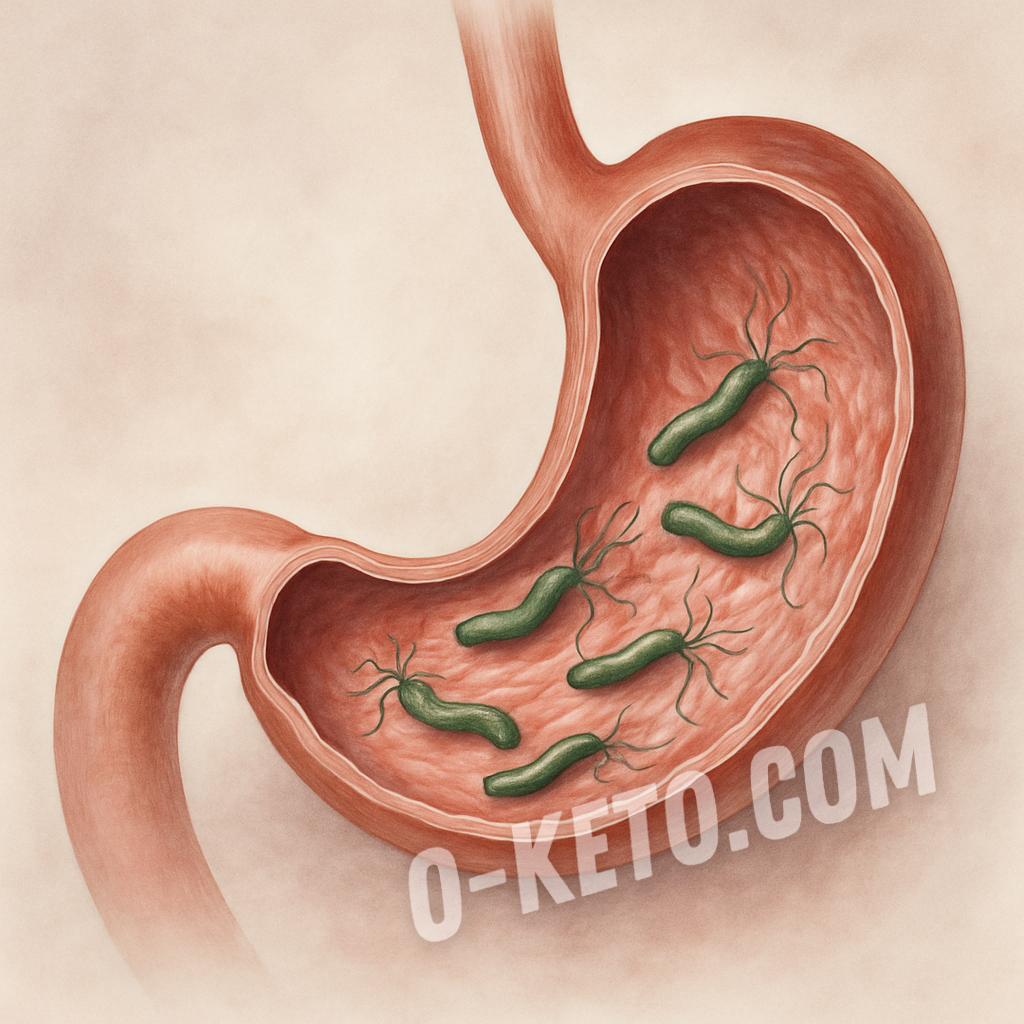
Helicobacter pylori, often shortened to H. pylori, is a bacterium that can live inside the stomach’s mucus layer and maintain chronic local inflammation. It is often reduced to the idea of “just gastritis,” but the practical significance is broader. This infection may contribute to peptic ulcer disease, long-term irritation of the stomach lining, changes in acid regulation, impaired local protection, and in some people almost no obvious symptoms at all. That last point matters because the intensity of symptoms does not always reflect the true scale of the process. One person may have burning, nausea, and post-meal heaviness, while another discovers the infection almost accidentally during testing or endoscopy.
What the bacterium actually does in the stomach
H. pylori is able to adapt to the acidic environment and persist in the mucus barrier that normally protects the stomach wall from its own acid. Because of that, the bacterium does not simply “sit there”; it influences local immune signaling, mucus quality, acid dynamics, and the resilience of the lining itself. In some cases this mainly leads to chronic superficial gastritis. In others it raises the chance of erosions or ulcers. Over time, more advanced changes such as atrophy may appear, and those changes can affect intrinsic factor production, vitamin B12 handling, iron status, and the broader quality of digestion. This is why H. pylori is important not only as a cause of discomfort but also as a factor that can gradually shape nutrient status and mucosal health.
What symptoms are common and what can be misleading
Typical complaints include upper abdominal heaviness, early fullness after meals, burning, sour belching, nausea, bad breath, reduced appetite, and dull epigastric pain. At the same time, these symptoms are not specific. Similar complaints can be seen with functional dyspepsia, bile-related problems, reflux, motility disturbances, medication irritation, and heightened sensitivity of the gastric lining. Some people live with H. pylori for years with very mild symptoms, while others feel worse during stress, alcohol intake, smoking, NSAID use, poor sleep, or chaotic eating patterns. The practical conclusion is that symptoms alone cannot confirm or rule out the infection. Neither every episode of heartburn nor every “calm stomach” tells the full story.
How the infection is usually confirmed
Diagnosis is based on testing, not on guesswork. Common tools include the urea breath test, stool antigen testing, endoscopy with biopsy, and in some situations broader gastric assessment such as gastrin/pepsinogen panels. Blood antibodies must be interpreted carefully because they can reflect previous exposure rather than a currently active infection. Testing can also become harder to interpret if the person recently used antibiotics, bismuth products, proton pump inhibitors, or self-prescribed stomach medication. For that reason, timing and medication history matter. When there is anemia, weight loss, vomiting, persistent pain, suspected bleeding, swallowing problems, or other alarm features, endoscopy becomes especially important because the clinician needs to assess not just whether H. pylori is present but how the stomach lining itself looks.
Why this matters beyond simple stomach discomfort
Chronic inflammation of the gastric lining can influence more than digestion alone. Some people gradually develop poorer iron or vitamin B12 status, reduced appetite, lower meal tolerance, fluctuating energy, or a pattern of avoiding normal protein-rich meals because they associate them with discomfort. Once that happens, the diet can deteriorate secondarily, and fatigue may deepen for more than one reason at the same time. Another common issue is long-term overuse of acid-suppressing medication without understanding whether the deeper problem is infection, mucosal damage, motility, or a combination. So H. pylori is better seen not as a tiny local curiosity but as a meaningful stomach infection that can affect quality of life, food tolerance, and deficiency patterns over time.
What is usually considered in support and mucosal recovery
When the infection is confirmed, the main eradication plan is determined clinically and depends on the full picture, local practice patterns, tolerance, and the state of the mucosa. Alongside that, people often think about reducing irritants, supporting the mucosal barrier, restoring nutrient status, and avoiding behaviors that keep the stomach inflamed. In practice this may mean caution with NSAIDs, alcohol, harsh meal patterns, extreme fasting, and a random stack of “stomach supplements” used without a plan. It can also mean checking vitamin B12, ferritin, folate, or other markers when there are signs of poor absorption or prolonged fatigue. At the same time, even if H. pylori is found, it should not be assumed to explain every complaint automatically; reflux, bile issues, intestinal problems, and functional dyspepsia may coexist and still need attention.
When prompt in-person assessment matters
Red flags include vomiting blood, black stool, significant anemia, progressive weight loss, severe ongoing pain, trouble swallowing, recurrent vomiting, and a family history that raises concern about serious gastric disease. It is also risky when someone spends months masking symptoms without ever clarifying the condition of the mucosa. Helicobacter pylori is best understood as a specific infectious and inflammatory problem of the stomach that deserves proper testing and context rather than casual self-labeling. That approach helps reduce the chance of missing ulcers, deficiency-related consequences, or long-running mucosal injury that can outwardly look like nothing more than an “ordinary gastritis.”
If you have any questions about the term "Helicobacter pylori", you can ask them to AI. Please note, a low-cost OpenAI model is used. It may answer questions about disease treatment with errors!


 1 / 4
1 / 4

 1 / 4
1 / 4
 1 / 4
1 / 4

 1 / 4
1 / 4