


GERD
GERD is a condition in which stomach contents reflux into the esophagus often enough to cause heartburn, regurgitation, cough or mucosal injury, so triggers, weight, meals, sleep and complications all matter, not symptom relief alone.




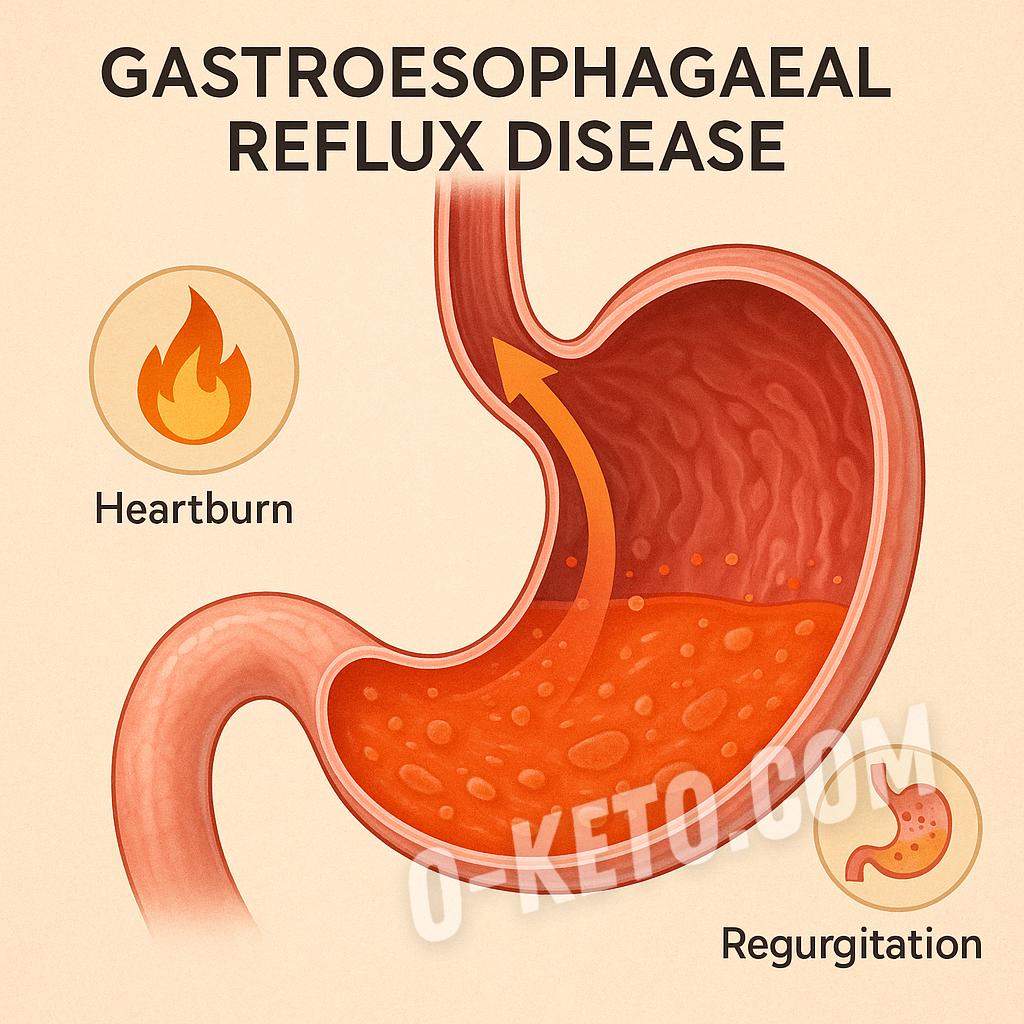
GERD, or gastroesophageal reflux disease, is a condition in which stomach contents repeatedly flow back into the esophagus and cause troublesome symptoms or mucosal injury. Most people think first of heartburn, sour regurgitation and a burning chest sensation, but real-life presentation may also include cough, hoarseness, throat discomfort, a lump sensation and disturbed sleep. For that reason GERD should not be dismissed as “just acid” when symptoms are recurrent and affect daily life.
Why reflux happens
Reflux depends on the tone of the lower esophageal sphincter, the volume of gastric contents, gastric emptying, body position after meals, excess abdominal pressure, hiatal hernia and the sensitivity of the esophageal lining. Some people feel major symptoms with a modest reflux burden, while others may have mucosal inflammation with less dramatic sensations. Symptom intensity and tissue injury therefore do not always match perfectly.
That is why GERD is not only about acidity; it is also about mechanics, pressure and individual sensitivity.
Symptoms that can be misleading
Not everyone presents with classic heartburn. Some people mainly notice nighttime cough, throat clearing, hoarseness, sour taste in the mouth, food regurgitation or chest discomfort. A person may spend a long time treating the throat or airways without connecting symptoms to the esophagus and stomach. Chronic upper-airway complaints can therefore sometimes point back to reflux.
At the same time, not every chest symptom is GERD, so the broader clinical context always matters and more serious causes may need exclusion.
Meals, body weight and routine
For many people symptoms depend on meal size, late dinners, alcohol, coffee, chocolate, fatty food, overeating and lying down soon after eating. Excess body weight and visceral fat can raise abdominal pressure and intensify reflux. Help often comes not only from medication, but from how a person eats, when they lie down, how they sleep and how much pressure the stomach area experiences after meals.
A lower-carbohydrate approach may reduce overeating and appetite swings in some people, but diet alone does not cancel the importance of portion size, timing and overall weight.
Why symptom control alone is not enough
When symptoms are frequent or prolonged, it is important to think not only about temporary relief but also about the esophageal lining. Chronic reflux may maintain inflammation, erosions and other complications. It is also useful to distinguish GERD from functional heartburn, delayed gastric emptying and other similar-looking states that need a different strategy.
That is why the approach of “take a pill and forget it” is not always sufficient when relapses, nocturnal symptoms and lifestyle triggers remain active.
When faster evaluation is needed
More urgent review is needed with difficulty swallowing, painful swallowing, weight loss, vomiting blood, black stool, significant chest pain, anemia or persistent symptoms despite ordinary measures. These signs call for a more careful exclusion of complications and other pathology.
The most useful way to think about GERD is not as simple heartburn, but as a condition at the intersection of mechanics, meals, weight, mucosal vulnerability and routine, where good control often requires both symptom relief and changes in everyday triggers.
Why night symptoms are especially informative
When burning, cough or sour regurgitation repeatedly wake a person at night, the problem affects far more than the esophagus. Recovery, blood pressure, energy and next-day performance may all suffer. Nighttime symptoms often show that body position, late meals and reflux burden matter more than daytime discomfort alone suggests.
That is why useful GERD care often means treating not only the burning moment, but the whole daily pattern in which late meals, body weight, body position and night waking keep recreating the same symptoms.
For some people, real progress begins not when a symptom is suppressed for a few hours, but when relapses become less frequent and normal sleep finally returns.
If you have any questions about the term "GERD", you can ask them to AI. Please note, a low-cost OpenAI model is used. It may answer questions about disease treatment with errors!


 1 / 4
1 / 4 1 / 4
1 / 4 1 / 4
1 / 4 1 / 4
1 / 4

 1 / 4
1 / 4


 1 / 4
1 / 4