


Homocysteine
Shows strain within methylation and methionine metabolism, but it usually rises because of B12, folate or B6 deficiency, hypothyroidism, reduced kidney function or other metabolic disturbances rather than in isolation.


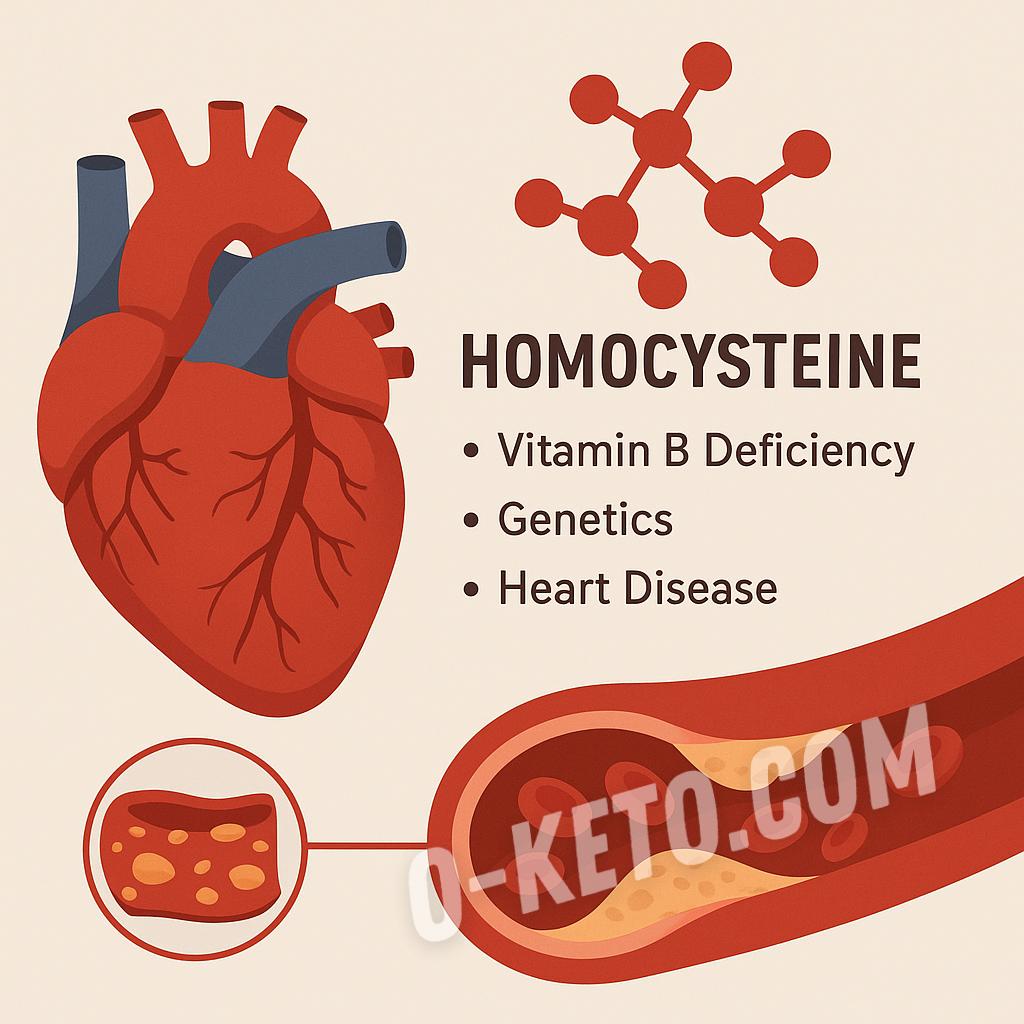
Homocysteine is an intermediate amino acid in methionine metabolism that normally should not remain elevated in the blood for long. The body either remethylates it back to methionine or shifts it into other pathways using enzymes that depend on folate, vitamin B12, vitamin B6 and several related cofactors. That is why homocysteine is useful not as a one-number diagnosis, but as a signal that methylation and cofactor-dependent metabolism may be under strain. When it rises, the key task is usually to look for the reason rather than reacting to the number alone.
What the test shows
The marker helps reveal that remethylation or transsulfuration is not working ideally. In practice, elevated homocysteine is often associated with low B12, low folate, low vitamin B6, hypothyroidism, reduced kidney function, inflammation, smoking, chronic stress, certain medications and inherited features of one-carbon metabolism, including MTHFR variants. However, a high value by itself does not tell which of those drivers is dominant.
That makes homocysteine a directional marker. It suggests that vitamin status, thyroid function, kidney health and metabolic context deserve closer review.
What can influence the result
The level is influenced by more than B12 and folate. Smoking, alcohol, excess coffee, low physical activity, poor sleep, hypothyroidism, kidney disease, age, some antiepileptic drugs, metformin, restrictive diets and inherited enzyme patterns can all contribute. If several of these factors are present, the increase may be more pronounced.
It is also important to remember that a normal homocysteine does not always fully exclude early functional problems if deficiency is only beginning or compensatory mechanisms are still working. For that reason the test should not replace the rest of the B-vitamin picture.
How it is read with B12, folate and other tests
When homocysteine is elevated, it is logical to review B12, folate, sometimes B6, the complete blood count, MCV, ferritin, TSH, creatinine and the clinical picture. Hypothyroidism or reduced kidney function may also push it upward even when the story is not purely vitamin-related. This cross-interpretation is what prevents oversimplifying everything into a single folic-acid solution.
If a person has fatigue, cognitive complaints, mood change, hair loss, anemia-like features or a family history of vascular problems, the result becomes more useful when it is placed inside a full metabolic workup.
When the test is especially useful
Homocysteine is often used when hidden B12 or folate deficiency is suspected, when neurological or cognitive symptoms are being explored, in preconception work, in families with hyperhomocysteinemia or repeated vascular problems, and when clinicians want a sense of how well methylation pathways are functioning. It can also be helpful in restrictive diets and malabsorption states.
Within ketogenic or low-carbohydrate eating, a high homocysteine result should not automatically be blamed on “eating too much meat.” B-vitamin status, thyroid function, kidney function and overall metabolic resilience are usually far more relevant.
Why the number should not be mythologized
A common mistake is turning any elevated homocysteine into a catastrophe, or ignoring it completely when the rest of the panel seems calm. By itself the test does not diagnose the cause, explain every risk or dictate a single treatment. It simply indicates that methylation and cofactor support deserve attention.
The most useful approach is to treat homocysteine as a marker of metabolic strain that points toward B12, folate, B6, thyroid, kidney and lifestyle-related causes rather than as an isolated frightening number.
Practically, homocysteine is valuable because it may point to a problem before it becomes obvious through cruder changes on a standard blood count. Its real strength appears only when it is used to investigate the chain of causes rather than as a target for symbolic “number lowering” at any cost.
If you have any questions about the term "Homocysteine", you can ask them to AI. Please note, a low-cost OpenAI model is used. It may answer questions about disease treatment with errors!


 1 / 4
1 / 4
 1 / 4
1 / 4 1 / 4
1 / 4
 1 / 4
1 / 4
