


Hyperhomocysteinemia
Elevated homocysteine in the blood is often associated with deficiencies of folate, vitamins B12 and B6, as well as other metabolic and somatic factors. With hyperhomocysteinemia, it is important not only to reduce the figure, but also to understand the cause of the folate cycle disorder.




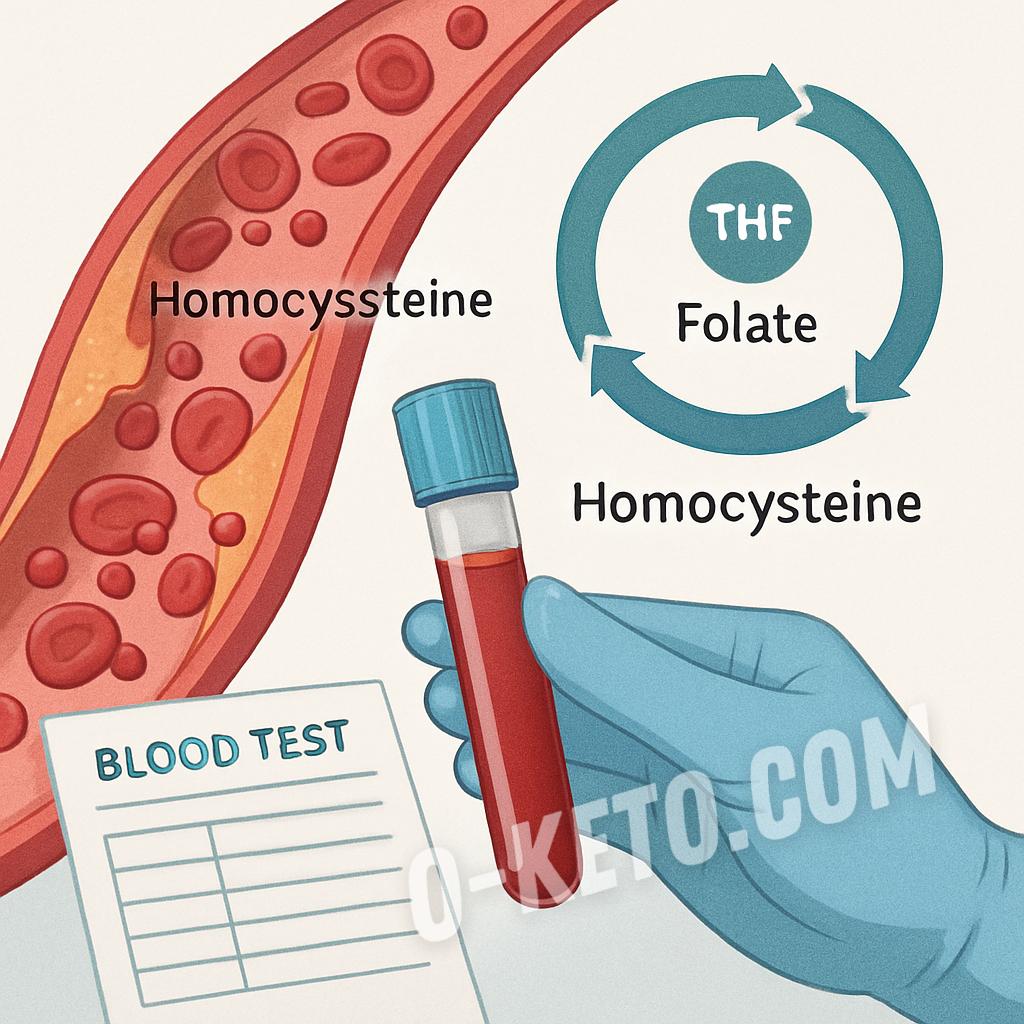
Hyperhomocysteinemia is a condition in which the level of homocysteine, an intermediate metabolic product of the amino acid methionine, increases in the blood. In itself, this indicator is not felt as a separate symptom, so a person usually learns about it through analysis. However, it does have clinical significance: elevated homocysteine is considered a marker of an unfavorable metabolic and vascular background, which may be associated with a deficiency of folate, vitamins B6 and B12, nutritional disorders, kidney disease, hypothyroidism, smoking, certain medications and genetic characteristics of the folate cycle.
It is important to understand that this is not an independent complaint like pain or cough, but a laboratory condition that needs to be interpreted in the context of other tests and the person’s overall health. One elevated indicator without assessing the reasons does not give a complete picture. However, persistently high homocysteine often prompts a closer look at nutrition, deficiencies, metabolism, and cardiovascular risk factors.
What the analysis shows
Homocysteine is associated with methylation, amino acid metabolism and the functioning of enzyme systems that involve folate, vitamin B12, vitamin B6 and a number of other factors. If there is a deficiency of cofactors in this chain or the normal processing of a substance is disrupted, its level in the blood may increase. In practice, the doctor looks not only at homocysteine itself, but also at what is happening with B12, folate, overall diet, kidney function, thyroid, and lifestyle.
For the patient, this means that elevated homocysteine should not be interpreted as an isolated problem without a cause. This is rather a signal to see whether the body has enough of those substances that help the normal course of the folate and methionine cycles, and whether there are conditions that prevent this system from working normally.
Why might the level rise?
Some of the most common causes are deficiencies of folate, vitamin B12 and vitamin B6, insufficiently varied diets, absorption problems, gastrointestinal diseases, chronic kidney disease, hypothyroidism and certain genetic variants that affect the folate cycle. The level may also be higher in people who smoke, with severe stress, alcohol abuse, and with a number of drug interventions.
Sometimes homocysteine increases moderately, and sometimes more noticeably. But even with a not very high figure, it is important to look at the stability of the result and the accompanying clinical situation. A one-time analysis without further context rarely provides a complete answer, especially if there have been recent changes in diet, medications, or overall health.
Why is this important for blood vessels and metabolism?
Elevated homocysteine is often discussed in the context of vascular risk, inflammatory conditions, and adverse metabolic conditions. This does not mean that one number alone automatically predicts disease, but it may indicate an environment in which blood vessels and tissues find it more difficult to remain stable. Therefore, when the indicator increases, the doctor is usually interested not only in the analysis itself, but also in nutrition, blood pressure, lipids, smoking, kidney condition and other factors.
For people with existing cardiovascular or metabolic risks, such an analysis may be an additional hint that it is worth paying more attention to the quality of nutrition and correcting deficiencies. But independent conclusions without a general assessment are undesirable here.
The role of folate and B vitamins
Folates are considered one of the key nutrients in the correction of elevated homocysteine because they are involved in the normal processing of this compound. Adequate folate intake along with vitamins B12 and B6 are often discussed in practice regimens, especially if deficiencies are suspected. That is why, with hyperhomocysteinemia, it is important not just to “reduce the number”, but to understand whether the body has enough necessary cofactors and whether there are reasons preventing their use.
However, you should not reduce the whole problem to just one folic acid tablet. For some, general nutritional correction will be more important, for others, eliminating B12 deficiency, and for others, checking the functioning of the thyroid gland, kidneys or intestines. Homocysteine is best viewed as part of a system rather than as a standalone indicator.
When is a medical evaluation needed?
Discussing the result with a doctor is especially helpful if homocysteine is persistently elevated, there are cardiovascular risks, a family history of early vascular events, suspected B12 deficiency, thyroid, kidney or intestinal disease, or if the person is already taking medications that may affect folate metabolism. The situation requires special attention when attempts at self-correction with supplements are made blindly without understanding the underlying cause.
A doctor’s interpretation helps to understand whether you just need to adjust your diet and add folates, or whether it’s worth deeper examining the causes of the metabolic cycle disorder. This is especially important because outwardly a person may feel quite normal, but the analysis will show a significant deviation.
Practical conclusion
Hyperhomocysteinemia is a laboratory condition that often requires careful causal assessment rather than panic. The better the context is understood: nutrition, deficiencies, concomitant diseases, kidneys, thyroid, smoking and medications, the more accurately the approach to correction can be chosen. Folates do have an important place in this work, but they provide maximum benefit when used not in isolation of the cause, but as part of a more meaningful strategy.
For the patient, this means a simple thing: high homocysteine should not be ignored, but it should not be treated blindly. It is better to perceive it as a useful signal to more accurately assess metabolic and nutritional status, especially if there are already vascular or metabolic risk factors.
If you have any questions about the term "Hyperhomocysteinemia", you can ask them to AI. Please note, a low-cost OpenAI model is used. It may answer questions about disease treatment with errors!


 1 / 4
1 / 4

 1 / 4
1 / 4 1 / 4
1 / 4
 1 / 4
1 / 4 1 / 4
1 / 4 1 / 4
1 / 4