


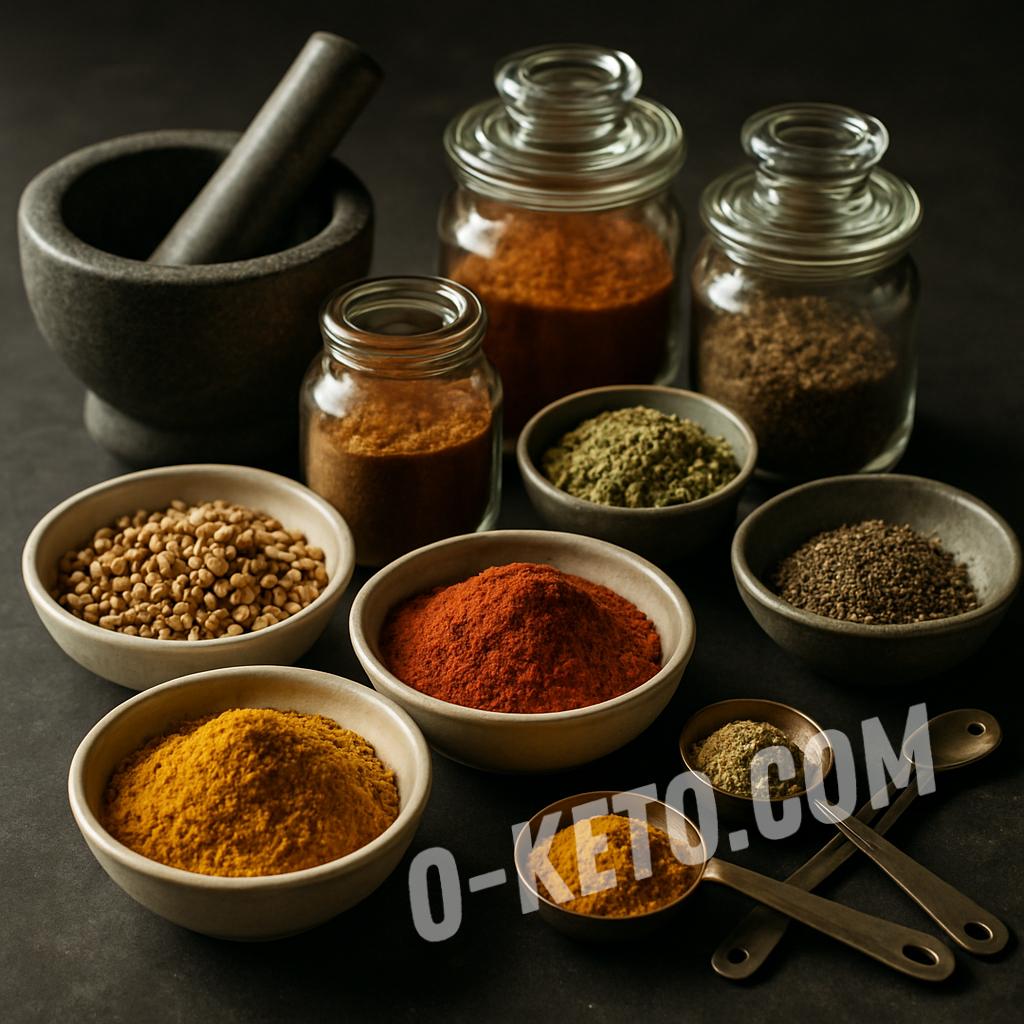

A homemade spice blend is not meant to make cooking more complicated. It makes flavor repeatable: once you find a good formula, you can season meat, fish, vegetables, sauces, cheese spreads, or low-carb desserts without sugar, starch, or random fillers from store-bought mixes.
The main principle is simple: a blend needs a clear base, one or two supporting aromas, and very careful accents. If ten intense spices are mixed in equal amounts, the flavor usually becomes muddy, harsh, or flat.
Start with the purpose of the blend
A blend works better when it is built for a specific use. Meat needs depth, roasted notes, and heat-stable aromas; fish needs a clean fragrance without heavy bitterness; vegetables benefit from warmth and color; desserts and drinks need a sweet impression without sugar.
Begin with one scenario, such as a blend for roast chicken, oven vegetables, or a creamy sauce. This makes it easier to understand which spices actually work and which ones only take up space in the jar.
What a good blend is made of
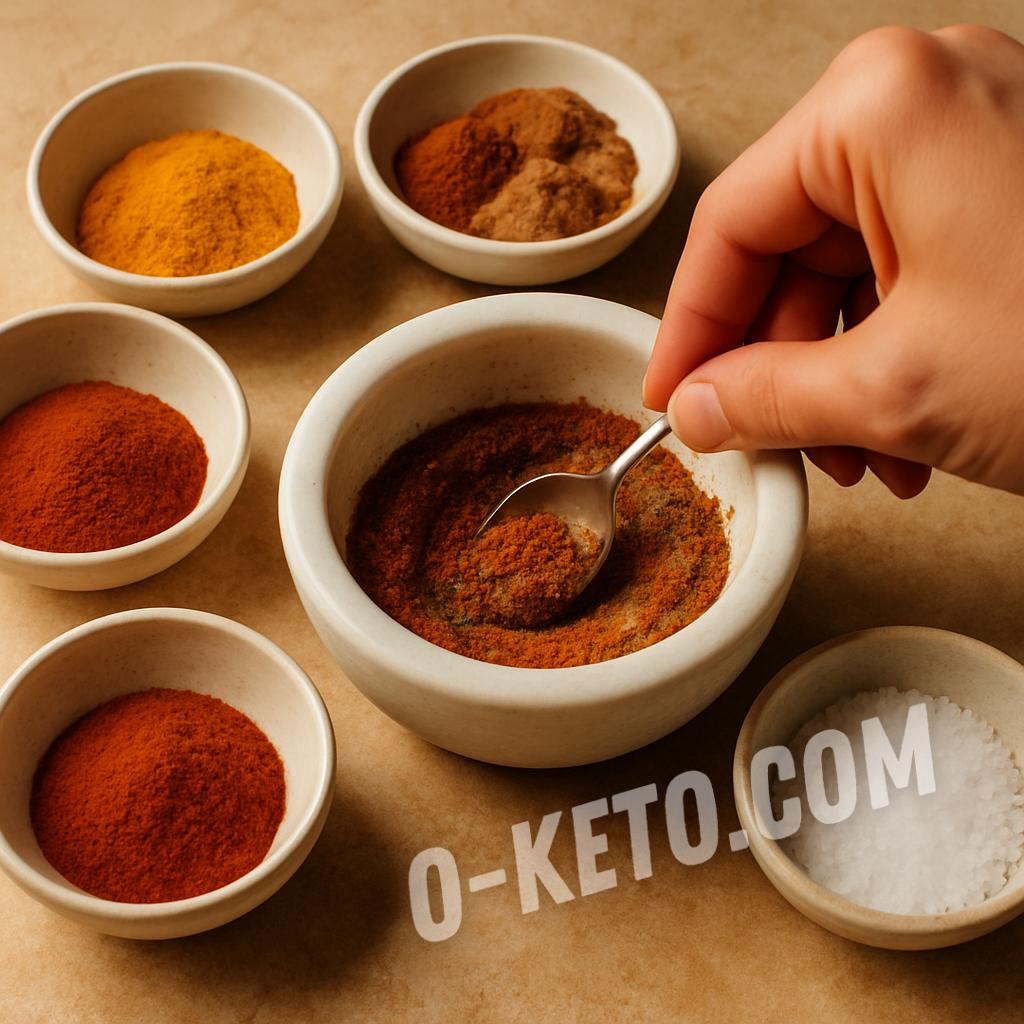
A spice blend has an inner structure. You do not need every group every time, but it helps to know what each spice is doing: some create the background, some add warmth, some bring heat, freshness, or a recognizable signature note.
| Role | What it adds | Examples |
|---|---|---|
| Base | Main aroma and body | coriander, cumin, paprika, dried garlic, thyme |
| Warm background | Depth, roundness, gentle sweetness without sugar | cinnamon, cardamom, nutmeg, fenugreek, ginger |
| Heat | Sharpness and a brighter finish | black pepper, chili, mustard, pippali |
| Freshness | Herbal, citrusy, or green accent | dill, basil, oregano, rosemary, dry lemon zest |
| Strong accent | A distinctive note that is easy to overdo | clove, star anise, asafoetida, saffron, smoked paprika |
A practical starting ratio
For a first version, exact laboratory formulas are unnecessary. A convenient starting point is 3 parts base, 2 parts supporting spices, and 1 part accents. Very strong spices such as clove, nutmeg, asafoetida, chili, and star anise should often be treated as a pinch rather than a full part.
For low-carb cooking, do not add sugar, starch, flour, powdered syrups, or anti-caking agents with unclear composition. A sweet impression can come from cinnamon, cardamom, vanilla, anise, or a small amount of nutmeg.
Make a small test batch
Before making a full jar, mix 2-3 teaspoons. That is enough to test the flavor on a small amount of food: a spoon of sour cream, a piece of cooked meat, roasted zucchini, an egg, or a creamy sauce.
After testing, change only one thing at a time. If you add more pepper, garlic, and coriander all at once, you will not know what improved or ruined the blend.
Whole spices or ground spices
Whole spices keep their aroma longer. Cumin, coriander, fennel, black pepper, mustard seeds, and caraway can be lightly warmed in a dry pan until fragrant, cooled, and then ground. This deepens the aroma, but do not burn them: bitterness appears quickly.
Ground spices are convenient but fade faster. If you use ready-made powders, make enough for 1-2 months rather than a full year.
It is often better to keep salt separate
Salt is useful in a rub, flavored salt, or a seasoning you always use the same way. For a universal blend, however, it is better to leave salt out, so the mix can be used in sauces, marinades, desserts, cheese dishes, bacon dishes, or pickled-ingredient recipes without over-salting.
If you do make a salted blend, label the jar clearly. Otherwise it is easy to forget that salt is already inside and add it again.
Simple homemade blend examples
These formulas are starting points, not strict rules. Adjust them to your ingredients, heat preference, and tolerance for spices.
For meat and poultry
Mix 3 parts coriander, 2 parts paprika, 1 part cumin, 1 part dried garlic, 1/2 part black pepper, and a little thyme or rosemary. It works for roasting, patties, minced meat, and sugar-free marinades.
For fish and seafood
Mix 2 parts coriander, 1 part white or black pepper, 1 part dried dill, 1/2 part fennel, and a little dry lemon zest. Avoid loading delicate fish with clove, smoked paprika, or too much cumin because they can overpower it.
For vegetables
Mix 2 parts turmeric, 2 parts coriander, 1 part cumin, 1 part paprika, 1/2 part dried garlic, and a pinch of chili. It works well with roasted cauliflower, zucchini, eggplant, and mushrooms.
For desserts and drinks
Mix 3 parts cinnamon, 1 part cardamom, 1 part ginger, 1/4 part nutmeg, and a very small amount of clove. Add by pinches to cream, cottage cheese, cocoa, coffee, low-carb desserts, and nut fillings.
How to store a blend
Use a dry clean jar with a tight lid. Write down the composition and date, because after a month many brown powders become hard to tell apart.
Keep the blend away from the stove, sunlight, and wet spoons. Heat and steam quickly damage aroma, and moisture makes the powder clumpy and unsuitable for long storage.
Common mistakes
Most failed blends are not missing a secret spice. They are simply overloaded. A homemade seasoning should make the main food taste brighter, not make every dish taste like the same perfumed powder.
- using too many spices without a clear role;
- treating clove, nutmeg, chili, or asafoetida as ordinary base spices;
- mixing fresh wet zest, fresh garlic, or fresh herbs into a dry powder meant for storage;
- making a large jar before testing the blend on real food;
- forgetting whether the blend already contains salt;
- using stale spices and trying to compensate by adding more.
The main rule
A good spice blend starts with simplicity. Choose 2-5 components, make a small test batch, try it on a specific dish, and only then increase the amount. This keeps the blend controllable, low-carb in composition, and genuinely useful in the kitchen.


