


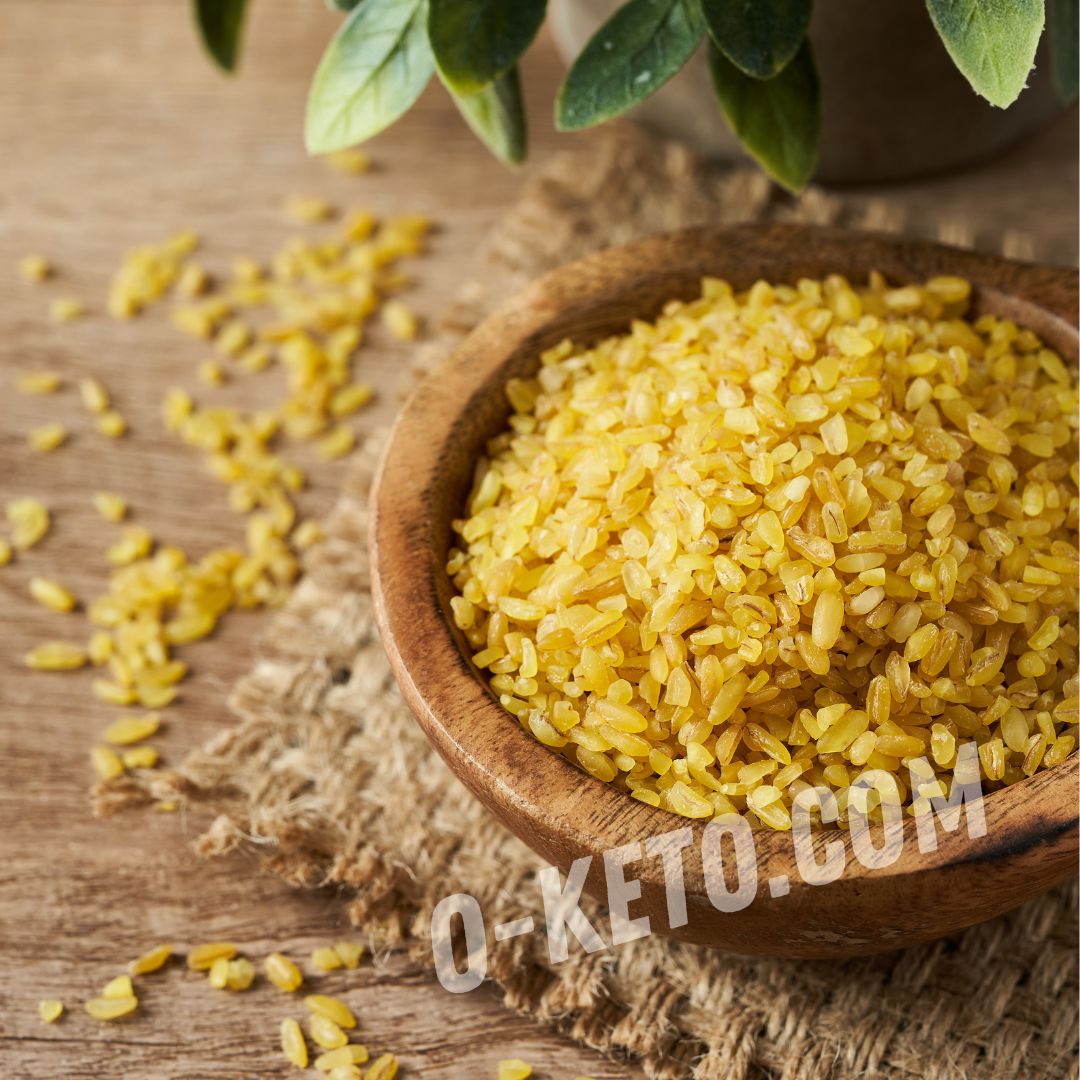

Bulgur is a wheat groat made by parboiling or steaming wheat, drying it, and cracking it. Because of this processing, it cooks faster than whole grain, keeps a firm crumbly texture, and has a mild nutty taste. Bulgur is common in Middle Eastern, Mediterranean, Turkish, Caucasian, and Balkan cooking.
Its place in the diet should be clear: it is not a low-carb product. Even when whole-grain and higher in fiber than white rice, it remains a wheat product with a notable carbohydrate load. For keto it is usually avoided, while in a more relaxed low-carb approach it must be counted carefully and used in a small portion.
How it is made
To make bulgur, wheat is cleaned, soaked, steamed or boiled, dried, and cracked to the desired size. Hard wheat varieties, including durum, are often used. This pre-cooking separates bulgur from simply cracked wheat: it cooks faster and holds its shape better in salads, pilafs, and fillings.
Bulgur comes in coarse, medium, and fine grinds. Coarse bulgur suits side dishes, pilafs, and stews; medium works for salads and fillings; fine bulgur is used for kofte, tabbouleh, and quick dishes where hot water may be enough. The finer the grind, the faster it swells and the easier it is to over-soften.
Nutrition profile
In 100 g of cooked bulgur there are usually about 80–90 kcal, around 3 g protein, less than 1 g fat, and about 18–20 g carbohydrates. In dry groats the numbers are much higher: about 340 kcal and roughly 70–76 g carbohydrates per 100 g. After cooking, weight increases about 2–2.5 times, so dry and cooked values should be compared separately.
Bulgur provides fiber, B vitamins, magnesium, phosphorus, manganese, and iron. Its glycemic index is often listed in a moderate range, but a serving still gives a meaningful carbohydrate load. For strict keto, this is the key point: “whole grain” does not mean “low carb.”
Is it suitable for keto?
For strict keto, bulgur is usually not suitable. Even 100 g of cooked bulgur can take a large part of the daily net carbohydrate limit, while the dry product is far more concentrated. If the goal is very low carbohydrates, cauliflower rice, zucchini, shredded cabbage, mushrooms, or konjac rice are better choices.
In a liberal low-carb diet, bulgur can sometimes be kept as a small addition: 1–2 spoons of cooked grain in a large salad with meat, greens, cucumber, olive oil, and cheese. This gives texture and taste without making it the base of the plate. A large bowl of bulgur, grain pilaf, or tabbouleh with too much grain no longer fits a low-carb logic.
How to cook it
Coarse bulgur is usually boiled or simmered with water, roughly 1 part grain to 1.5–2 parts water. Fine bulgur often needs only boiling water and time under a lid. Before cooking, the grain can be warmed in a dry pan or oil to make the nutty aroma brighter.
Bulgur pairs with olive oil, lemon, parsley, mint, cucumber, tomato, eggplant, lamb, chicken, unsweetened yogurt sauce, cumin, coriander, and paprika. For a keto table, use it as an accent rather than the main side: for example, a spoon in salad instead of a full serving of grain.
How to choose
Good bulgur is dry and crumbly, without musty smell, insects, or dust. Packaging should be intact, with clear grind size and shelf life. If the grain smells rancid or damp, do not use it. Fine bulgur is convenient for quick salads, while coarse bulgur is better for denser hot dishes.
Bulgur contains gluten because it is wheat. It is not suitable for people who must avoid gluten completely or who react poorly to wheat. Check mixes too: some include dried vegetables, sugar, flavorings, enhancers, or a sauce packet.
Storage
Keep dry bulgur in a tightly closed jar or bag, in a dry dark place, away from moisture and strong odors. Cooked bulgur should be kept briefly in the refrigerator and not left at room temperature all day. For salads, cool it quickly and mix with herbs close to serving.
What can replace it?
In regular recipes, bulgur can be replaced with couscous, quinoa, rice, spelt, or cracked wheat, but that will not make the dish keto. In low-carb versions, use cauliflower rice, finely chopped mushrooms, zucchini, cabbage, konjac rice, or a mix of greens and nuts for texture. For tabbouleh, a version heavy on parsley and cucumber works well, with the grain removed or kept only as a tiny accent.


