


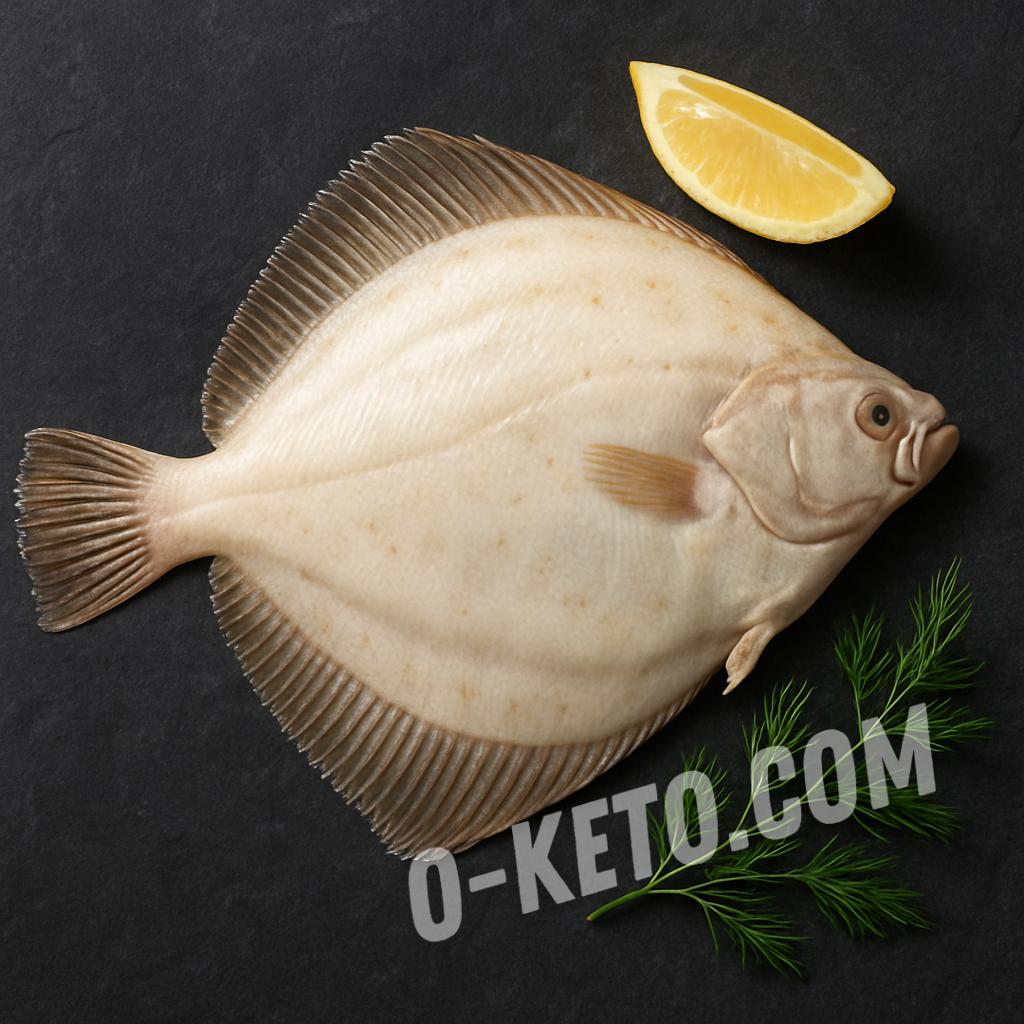

Flounder is a culinary name used for several flatfish with white, mild flesh. In everyday cooking it is valued as a delicate, relatively lean fish that cooks quickly and pairs well with butter, lemon, herbs, capers, garlic, and gentle spices.
What It Is
Adult flounder has a flattened body and an asymmetric eye position, an adaptation to life on the sea floor. In shops it may be sold whole, gutted, filleted, or partly trimmed. The exact species can vary by region, so the label, origin, and cut matter more than the name alone.
Fresh flounder should smell clean and marine, not sharp or ammoniac. Small fish usually have especially delicate fillets, while larger fish can feel meatier. A harsh odor usually points to poor storage rather than a normal feature of the product.
Nutrition and Keto Context
Flounder contains virtually no carbohydrate, so it does not add a meaningful glycemic load by itself. It provides complete animal protein, selenium, phosphorus, vitamin B12, and a modest amount of omega-3 fats. Because it is much leaner than salmon, mackerel, or herring, keto dishes often benefit from added fat such as butter, olive oil, egg-yolk sauce, or sour cream.
The cooking method matters. Breaded flounder, flour dredging, and sweet sauces change the carbohydrate profile. Keto-friendly options include baking, pan-frying without flour, steaming with a butter dressing, or cooking it in a creamy or lemon-butter sauce.
How to Choose
Fresh whole fish should have clear eyes, moist skin, and a clean smell. Frozen flounder should not have heavy ice build-up, yellow patches, or dried edges. Fillets should look firm and pale, without cloudy liquid or a grey-yellow tint.
If a recipe says “1 flounder,” the actual weight can vary a lot. For accurate nutrition calculations, weigh the edible cleaned fish or fillet rather than relying only on the number of fish.
How to Cook
Flounder cooks quickly and can dry out if overheated. Fillets usually need only brief cooking over moderate heat or baking until the flesh turns opaque and flakes easily. Whole fish works well baked with lemon, garlic, thyme, dill, or parsley.
Good pairings include butter, lemon juice, capers, parsley, dill, white pepper, garlic, ghee, olive oil, cream, zucchini, cauliflower, and green vegetables. Strong marinades can overwhelm the delicate flavor, so acid is best used with restraint.
Storage and Safety
Fresh fish should be kept very cold and cooked the day it is bought or the next day. Frozen flounder is best thawed slowly in the refrigerator rather than in warm water, which helps preserve texture and moisture. Refreezing damages the fillet and increases spoilage risk.
As with other fish, flounder should be cooked safely and not left at room temperature for long. People with fish allergy should avoid it, and vulnerable groups should choose reliably sourced fish with good freshness control.


