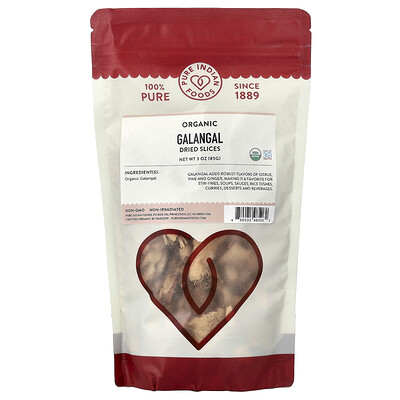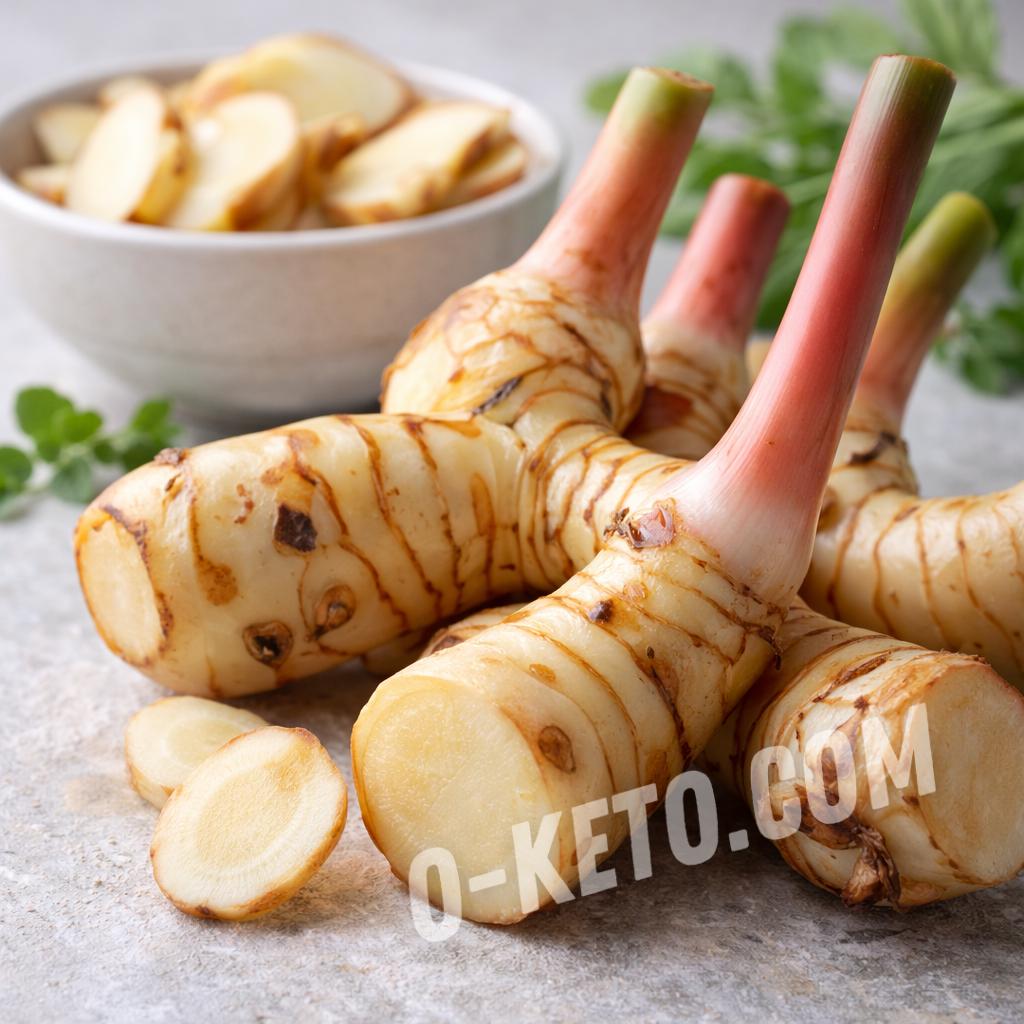

Galangal is a spicy rhizome from the ginger family. It does resemble ginger at first glance, but it behaves differently in food: the aroma is drier, piney-citrusy, with a light camphor note, and the taste is sharper and firmer. For that reason, galangal is often used as an aromatic base for broth, curry paste, or marinade rather than eaten in large pieces.
Several plants can be sold under the name galangal, especially greater galangal, lesser galangal, and related aromatic species. It may be found as a fresh rhizome, dried slices, or powder. Fresh galangal has the brightest, cleanest aroma; dried slices are easier to store; powder is easier to measure but loses volatile oils more quickly.
How it differs from ginger
Galangal and ginger are similar only superficially. Ginger is juicier, warmer, and sweeter in impression, and it is easier to grate directly into a dish. Galangal is denser, more fibrous, and noticeably harder. Fresh rhizome is often sliced very thinly, bruised, or ground into a paste with other aromatics.
In Thai and Indonesian dishes, galangal provides a clean spicy background that is difficult to create with ginger alone. It opens up especially well with lemongrass, kaffir lime leaves, chili, garlic, turmeric, coconut milk, fish sauce, and lime juice.
Nutritional value and keto
In normal culinary amounts, galangal has almost no effect on the overall carbohydrate content of a dish. It is added by the gram, not by the large serving, so it usually fits keto and LCHF as a spice. The more important point is the sauce or dish around it: sweet marinades, ready-made curry pastes with sugar, and starchy sides can change the final composition significantly.
The rhizome contains essential oils, phenolic compounds, flavonoids, and other plant compounds that give it its strong aroma. In cooking, it is mainly a source of flavor rather than a meaningful source of calories, protein, or fat.
If galangal is counted as a fresh root, 100 g does contain carbohydrates and some fiber, but that serving size is almost never used in recipes. A pot of soup or a marinade usually needs only a few thin slices. In practice, the calculation is built around coconut milk, vegetables, meat, fish, and sweeteners in the finished dish rather than around the galangal itself.
How to use it
Fresh galangal is sliced very thinly across the fibers, crushed in a mortar, or blended into a paste with garlic, chili, and lemongrass. If slices are added to soup, they are often left larger and removed while eating: they flavor the broth but remain tough.
Dried slices are best soaked first or added during a longer cooking stage. Powder is convenient for marinades, spice blends, soups, and sauces, but its flavor is flatter, so it is better to begin with a small pinch. Too much can give a sharp dry bitterness.
Galangal is useful in tom yum, tom kha, curries, coconut milk soups, and marinades for chicken, fish, shrimp, pork, and beef. In low-carb cooking it is especially practical when a dish needs intensity without sugar: coconut milk sauces, broths, sharp dressings, and spiced oils all work well.
How to choose
Fresh rhizome should be firm, heavy for its size, and free from mold, wet spots, or a strong sour smell. The surface may be uneven, but it should not look shriveled or overly dry. Young galangal is lighter and a little softer; older galangal is harder and more aromatic, but more difficult to cut.
Dried galangal slices should smell clean, spicy, and slightly citrusy. If the smell is dusty or almost absent, the spice has been stored too long. Powder is best bought in small packages and used quickly, because the aroma fades faster after grinding.
Storage
Fresh galangal can be kept in the refrigerator in a paper bag or a container with some air circulation so the rhizome does not sweat. For longer storage, it can be cut into portions and frozen. After freezing, the texture becomes softer, but this is not a problem for soups, curries, and marinades.
Dried slices and powder should be stored in a closed jar away from the stove, steam, and light. A wet spoon can spoil the powder quickly, so it is better to measure it with a dry spoon away from a hot pot.
What to use instead
There is no exact substitute for galangal: its aroma is drier and more resinous than ginger. To approximate the flavor, ginger can be combined with a little lime zest or lemongrass. In Thai soups and curries, this replacement makes sense, although the dish will be softer and less distinctive.
If galangal is needed only for spicy heat, ginger can work. If citrus freshness is important, lemongrass, kaffir lime leaves, or a little zest can help. In dry spice mixes, it can be replaced with ginger and a pinch of white pepper, but the amount should be adjusted gradually.