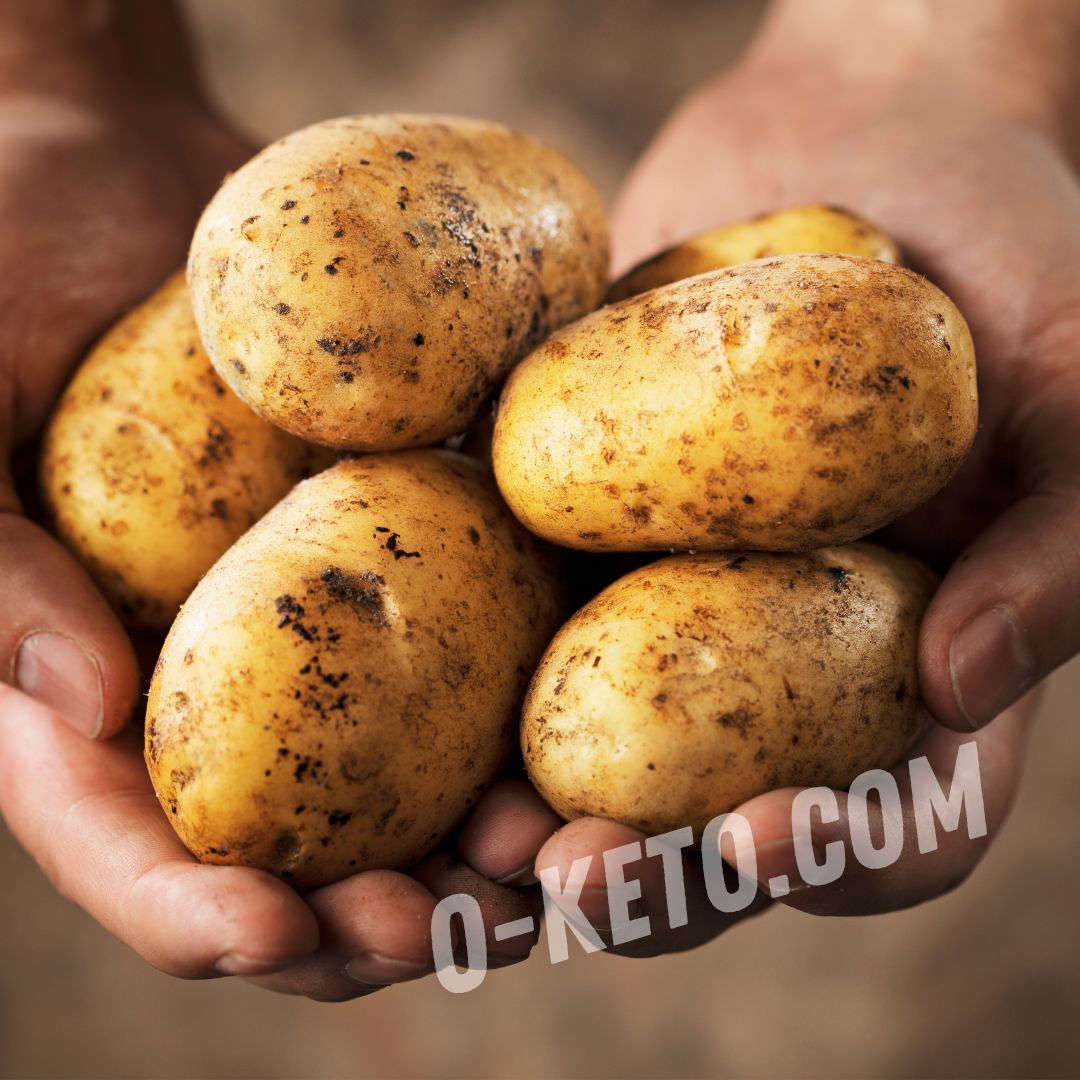

Potato is a starchy tuber and one of the most common foods in world cooking. It is boiled, baked, fried, mashed, and added to soups, salads, casseroles, and side dishes. Because of this versatility, potato is often treated as a neutral base for a meal, although by carbohydrate load it is closer to grains and bread than to low-carb vegetables.
In carbohydrate-controlled eating, potato requires an honest look at portion size. It can provide potassium, vitamin C, vitamin B6, folates, and fiber, but it also brings a lot of starch. So the question is not whether it is “good” or “bad”, but whether it fits a particular eating pattern and how much is actually eaten.
Nutritional value
In 100 g of boiled potato there are usually about 75–90 kcal, roughly 2 g of protein, almost no fat, and about 17–20 g of carbohydrates. In baked potato the numbers can be higher because water is lost, while fried potato changes sharply in calories because of oil. Mashed potato with milk and butter should also be counted as a finished dish, not as potato alone.
The glycemic index of potato varies widely by variety and cooking method. Hot fluffy mash usually gives a faster carbohydrate response than firm boiled potato. After cooling, part of the starch becomes resistant starch, so cold potato in a salad may be tolerated differently from a freshly cooked hot side dish.
Is it suitable for keto?
For strict keto, potato usually does not fit. Even a small portion of 100–150 g can take a large part of the daily carbohydrate limit. If someone wants to stay in ketosis, potato is more often replaced with cauliflower, celery root, turnip, zucchini, or white cabbage.
In softer LCHF or outside strict ketosis, potato is sometimes kept as an occasional side dish. Then the portion is kept small, served chilled or baked in the skin, and paired with protein, fat, and non-starchy vegetables. This does not make potato low-carb, but it helps avoid building the whole meal on starch.
A practical rule is to count potato in advance, not “by eye”. One medium tuber can weigh 120–180 g, which is already more than a small addition. If only a familiar note is needed in soup or salad, a few cubes are often enough, while the rest of the volume can come from vegetables with less starch.
How to cook it
The simplest options are boiling in the skin, baking whole, and steaming. They keep the composition clear without extra oil, breading, or sugar. Fried potatoes, french fries, chips, potato pancakes with flour, and ready frozen mixes are usually much less convenient for portion control.
If potato is needed for a salad, it is better boiled in advance, cooled completely, and cut cold. Eggs, fish, cucumber, herbs, sugar-free mayonnaise, sour cream, mustard, and vinegar support the flavor well. But even in this form, potato remains a starchy ingredient, not a free base for a keto plate.
How to choose
Good tubers are firm, without green areas, deep damage, mold, or unpleasant smell. Green skin and sprouts can indicate solanine accumulation, so such parts should be cut away, and strongly greened tubers are better avoided. Waxy varieties are convenient for boiling, while more floury ones are better for mash.
New potatoes are often more watery and tender, while old potatoes are drier and starchier. For baking, tubers of similar size are best so they cook evenly. If potatoes are sold washed, they should be used faster: after washing, the skin protects the tuber less well during storage.
How to store it
Potatoes are stored in a dark cool place with ventilation, away from onions and strongly scented foods. The refrigerator is not always best: at very low temperature, part of the starch can turn into sugars and the taste becomes sweeter. Light speeds greening, so a transparent bag on a kitchen shelf is a poor option.
Cooked potato should not be kept warm for long. Leftovers are better cooled quickly, moved into a closed container, and used the next day. If a sour smell, slimy surface, or gray wet areas appear, that side dish should not be added to salad or reheated again.
What can replace it?
For mash, cauliflower, celery root, turnip, or cauliflower with butter and cheese are often used. For a fried side dish, zucchini, cabbage, mushrooms, eggplant, or roasted radish can work. In soups, volume can come from cauliflower, white cabbage, celery, and mushrooms. There is no exact copy of potato, but keto replacements keep carbohydrates easier to control.
Green areas, sprouts and acrylamide
Potatoes with green areas, many sprouts or a pronounced bitter taste should not be treated as ordinary food: the skin and sprouts contain higher levels of glycoalkaloids such as solanine and chaconine. Cutting off a small patch is not enough when greening or sprouting is extensive.
Storage also matters for frying. Very cold storage can increase potato sugars, which may lead to more acrylamide during intense heating. Keep potatoes in a dark, cool place rather than the refrigerator and avoid deep browning during frying.
Substitution options in recipes
Colored cauliflower. Plus 2 g of psyllium per 500 g. Cauliflower gives a neutral taste and less starch. Psyllium returns the "viscosity of potatoes." Calories are almost halved.