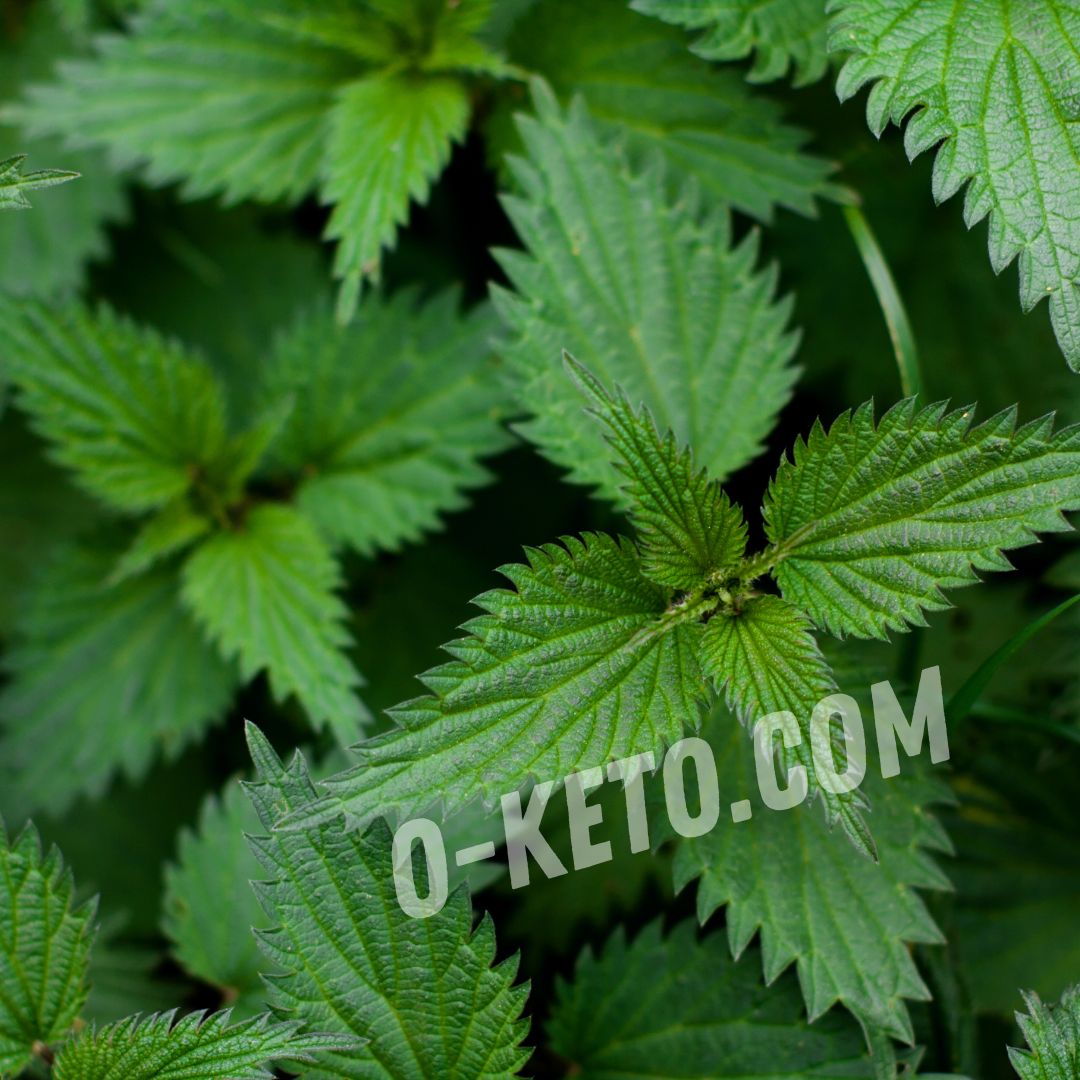

Nettle is a wild green with characteristic stinging hairs on the leaves and stems. Young tops and leaves are used for food, usually after scalding or brief cooking. This removes the sting, and the flavor becomes mild, green, slightly grassy and somewhat similar to spinach mixed with young herbs.
For keto, nettle is interesting as a low-carb green: it adds volume, fiber, minerals and a fresh spring flavor without a starchy side dish. It is not a treatment or a cleansing ritual, but an ordinary plant ingredient for soups, omelets, sauces, fillings and green sides.
Nutrition
Per 100 g, fresh nettle usually contains about 2-3 g of carbohydrates, around 2-3 g of protein and almost no fat. The glycemic load of a normal serving is low. After scalding, the leaves shrink, so the cooked portion may look small even if a lot of greens were used.
Nettle contains vitamin A, vitamin C, vitamin K, some B vitamins, iron, potassium, magnesium, calcium and plant antioxidant compounds. These facts matter, but it should not be promoted as a treatment for anemia, inflammation or fatigue. Medical problems are not solved by a plate of greens.
Is Nettle Keto-Friendly?
Yes, young nettle fits keto and LCHF well when used as a green. It can replace part of spinach, sorrel, chard or other leafy greens in hot dishes. It is low in carbohydrates, but satiety needs protein and fat: eggs, fish, meat, cheese, sour cream, butter or olive oil.
The keto profile is usually spoiled not by the leaves but by additions: potatoes in soup, flour in fillings, sweet sauces, bread bases or large amounts of grains. Nettle soup can be low-carb if made with broth, eggs, cream, cauliflower or another suitable base.
How to Use It
Fresh nettle should not be used like lettuce. Sort it with gloves, rinse it and scald with boiling water or blanch briefly. After that, it can be chopped and added to dishes. Young nettle is more tender; older leaves are tougher and may taste harsher.
Practical options include:
- green soup with broth, egg and sour cream;
- omelet or frittata with nettle and cheese;
- sugar-free pesto with olive oil and nuts;
- filling for rolls, casseroles or flourless savory dishes;
- sautéed greens with garlic and butter.
How to Choose and Prepare
For food, choose young leaves from a clean area, away from roads, industrial zones and chemically treated land. Avoid old, dusty, damaged or unidentified plants. If you are unsure about the plant or the collection place, use food-grade dried nettle or skip it.
Dried nettle works for infusions and sometimes green powders, but in cooking it does not replace fresh leaves one to one. The flavor is rougher and the texture is different.
Limitations and Substitutes
Nettle is rich in vitamin K, so people using warfarin or similar medication should discuss consistent intake with a clinician. Caution is also needed during pregnancy, with kidney conditions, diuretics, anticoagulants or blood pressure medication. Individual reactions and skin irritation during harvesting are possible.
Portion and Common Mistakes
Nettle works best as a green addition rather than the main food in a dish. After blanching, a large bowl of fresh leaves turns into a small handful, which is easy to combine with eggs, cheese, sour cream or a meat base. If only nettle and water are used, the dish will be light but not very filling.
A common mistake is harvesting nettle from any available place. The plant can carry dirt and environmental contamination on the leaves and from the soil, so the collection site matters more than the idea of wild greens. Another mistake is cooking old coarse leaves; they have worse texture and a heavier herbal taste.
In hot dishes, nettle can be replaced with spinach, chard, sorrel, young cabbage greens, beet greens or kale. For an easy green flavor without stinging preparation, spinach or chard is simpler. For acidity, sorrel works, but the flavor is different.
Removing the Sting and Keeping Flavor
The simplest way to prepare nettle is to pour boiling water over the leaves for 30-60 seconds, then drain and cool them quickly. After that, the greens can be squeezed, chopped and added to soup, omelet or sauce. Young leaves should not be boiled for a long time because they lose color and begin to taste like overcooked greens.
For pesto or fillings, remove excess water well after scalding. Wet greens make sauce thin and filling watery. The flavor becomes clearer with fat, salt and acidity: olive oil, butter, cheese, lemon or sour cream.