


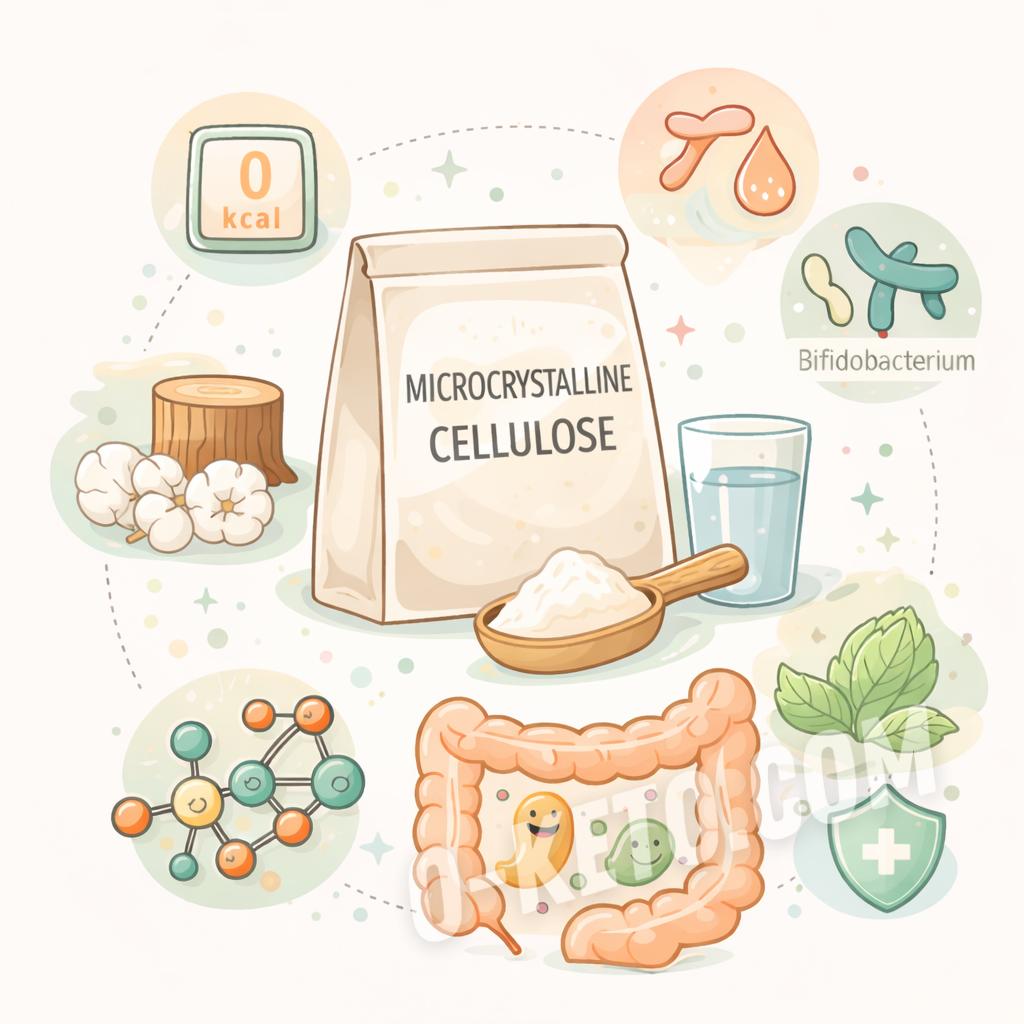

Microcrystalline cellulose is a form of purified cellulose of plant origin, obtained from wood or cotton through controlled hydrolysis. As a result, an inert food fiber without taste or smell is formed, which is not digested in the human gastrointestinal tract and does not participate in energy metabolism. Due to these properties, microcrystalline cellulose is widely used in the food industry, nutrition, and pharmaceuticals.
History and Origin
Cellulose as a component of plant cell walls has been known to science for a long time, but the microcrystalline form was developed in the 20th century as a more technologically stable and predictable ingredient. To obtain it, plant raw materials undergo partial acid hydrolysis, during which amorphous regions of cellulose are removed, while the crystalline fraction is preserved. This allows for the production of a powder with high purity and standard physical characteristics.
Nutritional Value and Properties
From a nutritional standpoint, microcrystalline cellulose is classified as insoluble dietary fiber. It contains no digestible macronutrients and does not raise blood glucose or insulin levels.
- contains no calories;
- contains no carbohydrates, fats, or proteins;
- is not digested by gastrointestinal enzymes;
- has high water-binding capacity;
- mechanically increases the volume of food mass.
Physiological Effects
The primary effect of microcrystalline cellulose is mechanical:
- supports regular bowel movements;
- promotes a feeling of fullness;
- may reduce the energy density of the diet;
- does not cause glycemic fluctuations;
- does not directly affect the microbiota.
It increases the volume of intestinal contents and stimulates peristalsis without being fermented by the microflora.
Daily Requirement and Applications
There is no clear physiological norm for microcrystalline cellulose. In food products and supplements, dosages typically range from 1 to 10 g per day, depending on the intended use.
Main uses include:
- as a filler in low-calorie products;
- as a texture stabilizer in sauces and desserts;
- as a forming component in tablets and capsules;
- in dietary mixtures to increase food volume.
Possible Risks of Excess and Their Manifestations
Excessive consumption of microcrystalline cellulose may lead to undesirable effects, especially with insufficient fluid intake:
- abdominal bloating;
- feeling of heaviness in the intestines;
- irritation of the mucosa at high doses;
- reduced absorption of certain minerals with prolonged excess.
Microcrystalline Cellulose and Low-Carbohydrate Diets
In the context of keto and low-carbohydrate diets, microcrystalline cellulose is used as a neutral source of volume and structure. It does not affect ketosis and does not increase carbohydrate load, but it also does not have prebiotic effects, unlike soluble fibers.
Microcrystalline cellulose can be useful as an auxiliary tool for appetite control and food texture; however, it should not be considered a full replacement for natural sources of fiber.
Thus, microcrystalline cellulose is a technologically convenient and physiologically inert food fiber. When used in moderation, it can complement the diet, but maximum health benefits are achieved when combined with a variety of natural sources of dietary fiber.


