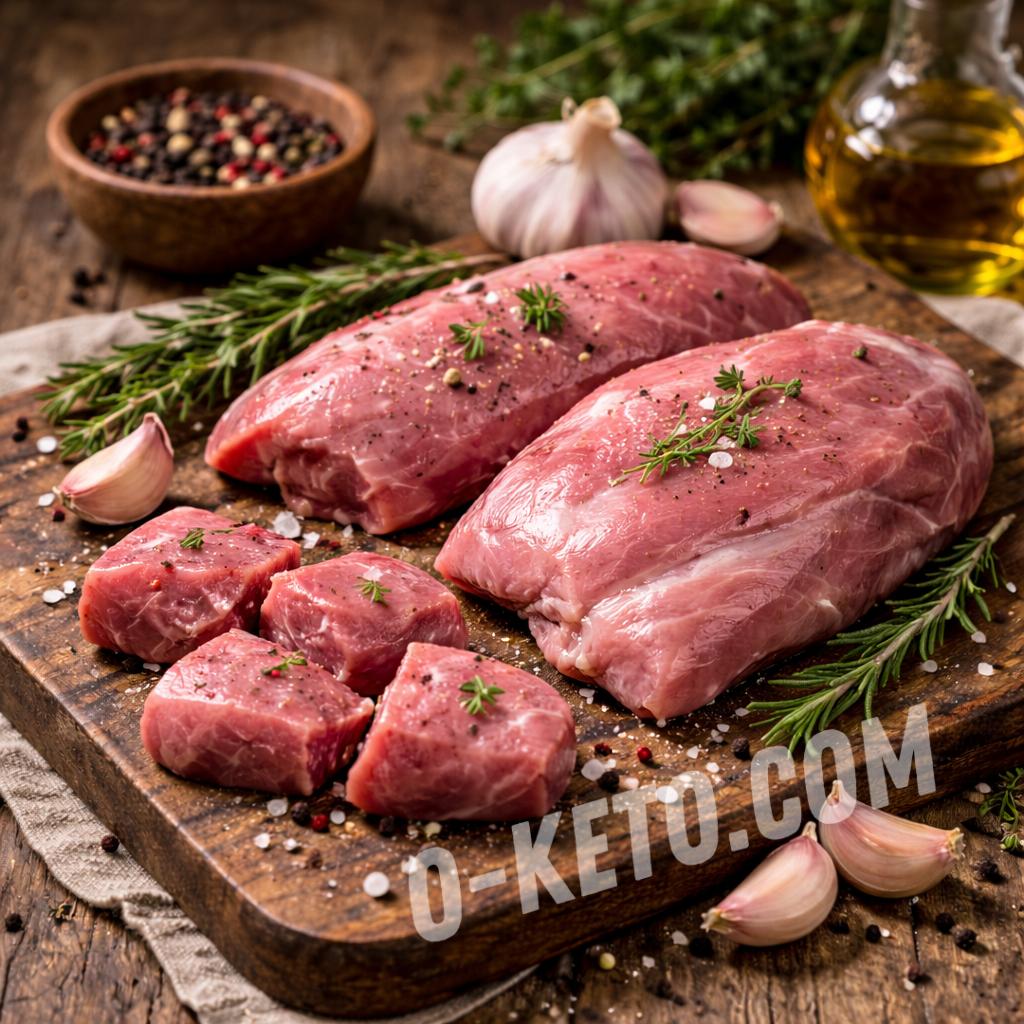

Nutria meat is the tender meat of a semi-aquatic herbivorous rodent, often compared in taste to rabbit, turkey, or young beef. It has fine fibers, moderate density, and a mild aroma without a harsh game note when the raw material is fresh and handled well. Nutria can be stewed, fried in small pieces, used in ragouts, soups, broths, patties, and dishes with vegetables.
For a low-carbohydrate diet, nutria is interesting because it is a meat product with no carbohydrates. It provides complete protein, a moderate amount of fat, and pairs well with classic keto sides: cabbage, mushrooms, zucchini, cauliflower, herbs, creamy sauces, and sour cream sauces.
Nutritional value
Average values per 100 g of raw meat are 140–170 kcal, 20–23 g of protein, 4–8 g of fat, and 0 g of carbohydrates. The glycemic index of nutria meat is zero because the product contains no meaningful carbohydrates. Fat content varies with the cut, age of the animal, and trimming.
Nutria meat contains B vitamins, especially B12 and niacin, plus iron, zinc, selenium, and phosphorus. This does not make it unusual or magical, but it explains its place among other meats. In protein and culinary role, nutria is closer to rabbit and poultry than to fatty pork.
Is it suitable for keto?
For keto and LCHF, nutria fits well: it has no carbohydrates, enough protein, and moderate fat. For a richer serving, cook it with butter, sour cream, cream, lard, sugar-free bacon, or a broth-based sauce. For a lighter plate, stew it with mushrooms, herbs, and low-starch vegetables.
Problems come not from the meat itself but from breading, flour in sauces, sweet marinades, potatoes, grains, and ready-made seasonings with sugar. For strict keto, use salt, pepper, garlic, bay leaf, thyme, rosemary, khmeli-suneli, paprika, and a small amount of dry wine if it fits the meal plan.
How to cook it
Nutria is often marinated to soften the aroma and keep the texture juicier. Good options include salt, pepper, garlic, bay leaf, lemon juice, vinegar, dried herbs, sour cream, or oil. A very acidic marinade is unnecessary because it can dry the surface. Young meat cooks faster; older meat is better stewed longer.
The best methods are slow stewing, cooking in sauce, ragout, soup, or quick frying in small pieces. For oven cooking, use a covered dish, sleeve, or sauce so the meat does not dry out. In minced meat, nutria can be mixed with fattier meat or enriched with butter if patties turn out dry.
Pairings
Nutria works well with garlic, a moderate amount of onion, thyme, rosemary, black pepper, bay leaf, paprika, khmeli-suneli, sugar-free mustard, and sour cream. Suitable vegetables include cabbage, cauliflower, zucchini, eggplant, mushrooms, celery, and herbs. For a richer dish, make a creamy mushroom sauce or a broth-based sauce.
If you want a familiar comparison, use nutria in rabbit recipes: stewed with sour cream, ragout with mushrooms, bone soup, patties, or pieces with garlic and herbs. Do not overcook lean cuts, or the meat may become dry.
How to choose
Fresh meat should smell clean, with no sour, musty, or sharp notes. The color is usually lighter than beef and may resemble rabbit. The surface should not be sticky, gray, or overly wet. If buying a whole carcass, bone-in parts are convenient for broth and stewing, while meatier pieces are better for ragout and frying.
Frozen meat should not have a thick ice layer, torn packaging, or signs of thawing and refreezing. The clearer the origin and processing date, the easier it is to work with the product.
Limitations
Nutria must be fully cooked. Like any meat, it requires a clean cutting board, a separate knife for raw product, and enough heating. Wild or poorly checked raw material is better avoided.
At first, the taste may feel unfamiliar. Start with simple stewing in sauce rather than dry frying. If there is allergy or individual reaction to meat products, introduce a new product in a small portion.
How to store it
Fresh nutria should be kept in the refrigerator and cooked as soon as possible. For longer storage, freeze it in portions, tightly wrapped against air. Thaw it in the refrigerator rather than on the counter.
Cooked dishes should be kept in a closed container in the refrigerator and reheated only in the needed portion. Broth and stewed dishes can be frozen if the sauce does not contain ingredients that freeze poorly.
What can replace it?
The closest replacements are rabbit, turkey, chicken thighs without sweet marinade, or lean veal. For stewing, use rabbit or bone-in chicken; for patties, turkey with added butter; for broth, chicken carcasses or beef bones. The taste will differ, but the culinary role remains.
Traceability and safety
Buy nutria from a seller who can document its origin and compliance with veterinary requirements. Meat of unclear origin, especially when the cold chain may have been broken, should not be made safe by a long marinade: marinating does not replace raw-material control or thorough cooking. Do not taste raw nutria mince, keep cooked meat separate from raw product, and cool leftovers promptly after cooking.