


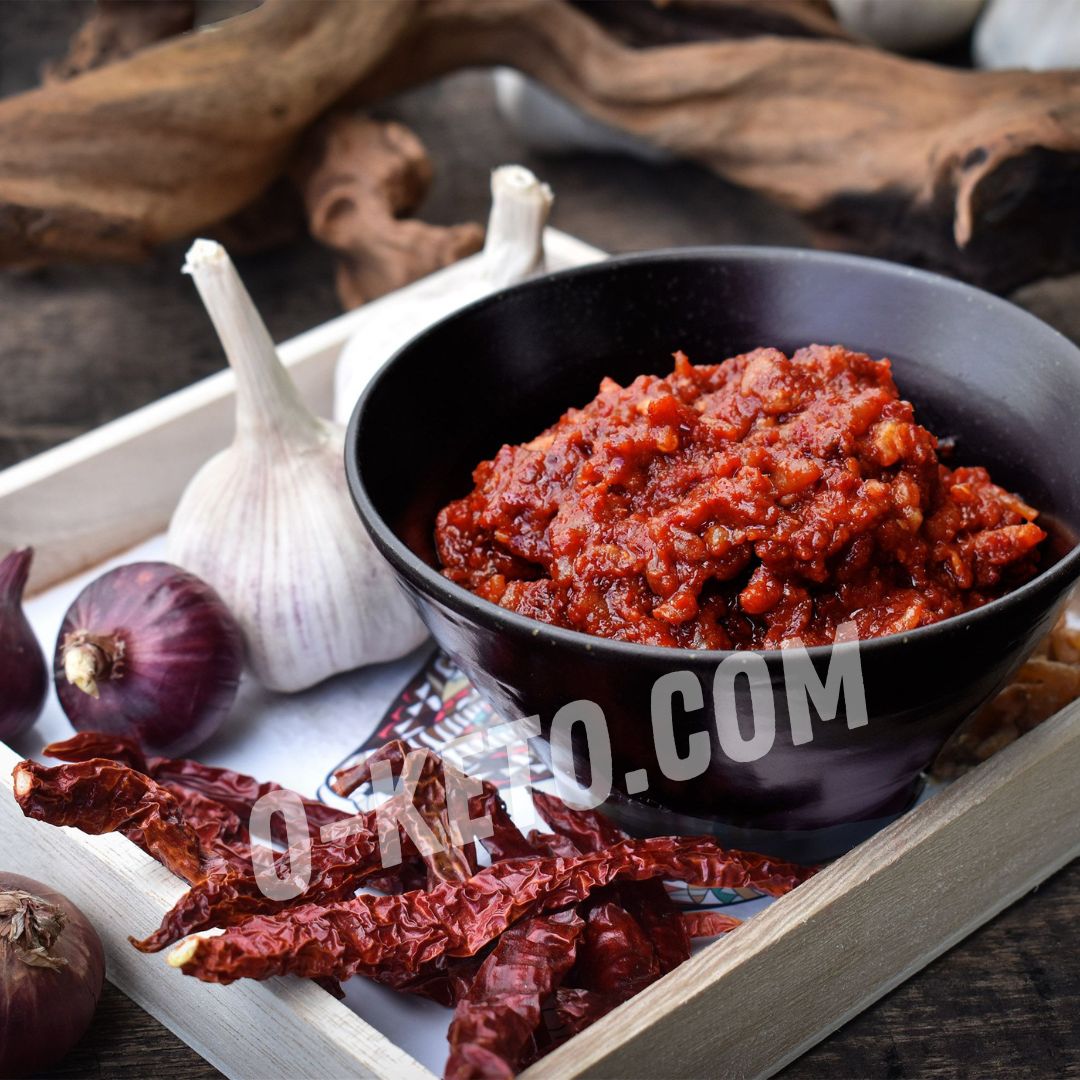

Harissa paste is a hot North African condiment based on chili peppers, garlic, spices and oil. It is most often associated with Tunisian cooking, but versions are found across the Maghreb. Harissa can be a thick paste, a jarred sauce, a dry mix or a homemade preparation diluted with oil, water or lemon juice.
For keto, harissa is useful as a way to add heat and depth without sweet ketchup, ready sauces with sugar or starchy marinades. The ingredient list still matters: some pastes are almost only pepper, spices and oil, while others contain sugar, starch, sweet vinegar syrups or unnecessary fillers.
Nutrition
Values depend on the recipe. The older description listed about 60 kcal, 1 g of protein, 5 g of fat and 5 g of carbohydrates per 100 g of paste. This can be true for a lighter paste, but oilier versions will be higher in calories, while sweet store sauces will have more carbohydrates. The label matters more than an average value.
A normal serving of harissa is small: from half a teaspoon to one tablespoon. In such a serving, carbohydrates are usually low if there is no sugar or starch in the ingredients. Glycemic load depends not on the name “harissa,” but on the specific paste and amount.
Is It Keto-Friendly?
Harissa can fit keto and LCHF well if it is a paste without added sugar, flour, starch or sweet syrups. It makes meat, eggs, fish, cauliflower, eggplant, zucchini, mayonnaise, yogurt sauce or broth brighter without increasing the carbohydrate portion much.
If harissa is very hot, it is better mixed with a fatty base: olive oil, sugar-free mayonnaise, sour cream, unsweetened Greek yogurt, cream cheese or tahini. This spreads the flavor more evenly and less paste is needed.
How to Use It
Harissa can be added to marinades, sauces, stews and dressings. With long heating, fresh heat becomes softer and the spices move into the background. If a bright top note is needed, a small amount of paste is added to the finished dish.
Good options include:
- marinade for chicken, lamb, beef or pork;
- a sauce of harissa, sugar-free mayonnaise and lemon juice;
- an addition to eggs, omelets or sugar-free shakshuka;
- dressing for cauliflower, eggplant, zucchini and mushrooms;
- a hot accent in broth, cream soup or meat stew.
How to Choose
A good ingredient list is short: chili pepper, garlic, spices, salt, oil, sometimes lemon juice or vinegar. Sugar, glucose syrup, starch, flour, sweet fruit purees and vague “sauces” without clear composition are weak signs. The closer the paste is to spices and pepper, the easier it is to fit into keto.
Harissa heat varies. If the product is new, start with a small serving. The color should be deep red or dark red, and the smell should be spicy, without mold, fermentation or rancid oil. After opening, keep the jar in the refrigerator and use a clean spoon.
Limits
Harissa can irritate the stomach and mouth, especially with sensitivity to hot food, reflux or reaction to garlic. In that case, choose milder versions, dilute the paste with a fatty base or use smoked paprika instead of part of the hot pepper.
Salt also matters. Harissa is often salty, and the dish may already contain cheese, olives, bacon, salted fish or prepared broth. Salt the dish after adding the paste, not before.
Substitutes
Harissa can be replaced with sugar-free chili paste, sugar-free adjika, a mix of cayenne pepper with paprika and garlic, fresh chili, sugar-free sambal or a homemade paste of pepper and oil. If heat is not needed and the goal is smoky red aroma, smoked paprika with a small amount of garlic works well.
Serving and Home Adjustment
For most dishes, harissa is easier to introduce through a base sauce rather than straight from the jar. For example, mix half a teaspoon with sugar-free mayonnaise, sour cream or olive oil, taste it, and only then add more. This makes heat, salt and acidity easier to control.
If the paste is used for a marinade, time helps: spices spread through meat or vegetables more evenly. But the marinade should not contain sugar, honey or sweet sauces if the dish is meant to stay keto. Lemon juice, sugar-free vinegar or unsweetened yogurt are enough for acidity.
Common Mistakes
Harissa should not be judged only by heat. A good paste gives not just burning, but the flavor of pepper, garlic, cumin, coriander or other spices. If a product is only hot and salty, it is harder to use carefully: it quickly overwhelms fish, eggs and mild vegetables.


