


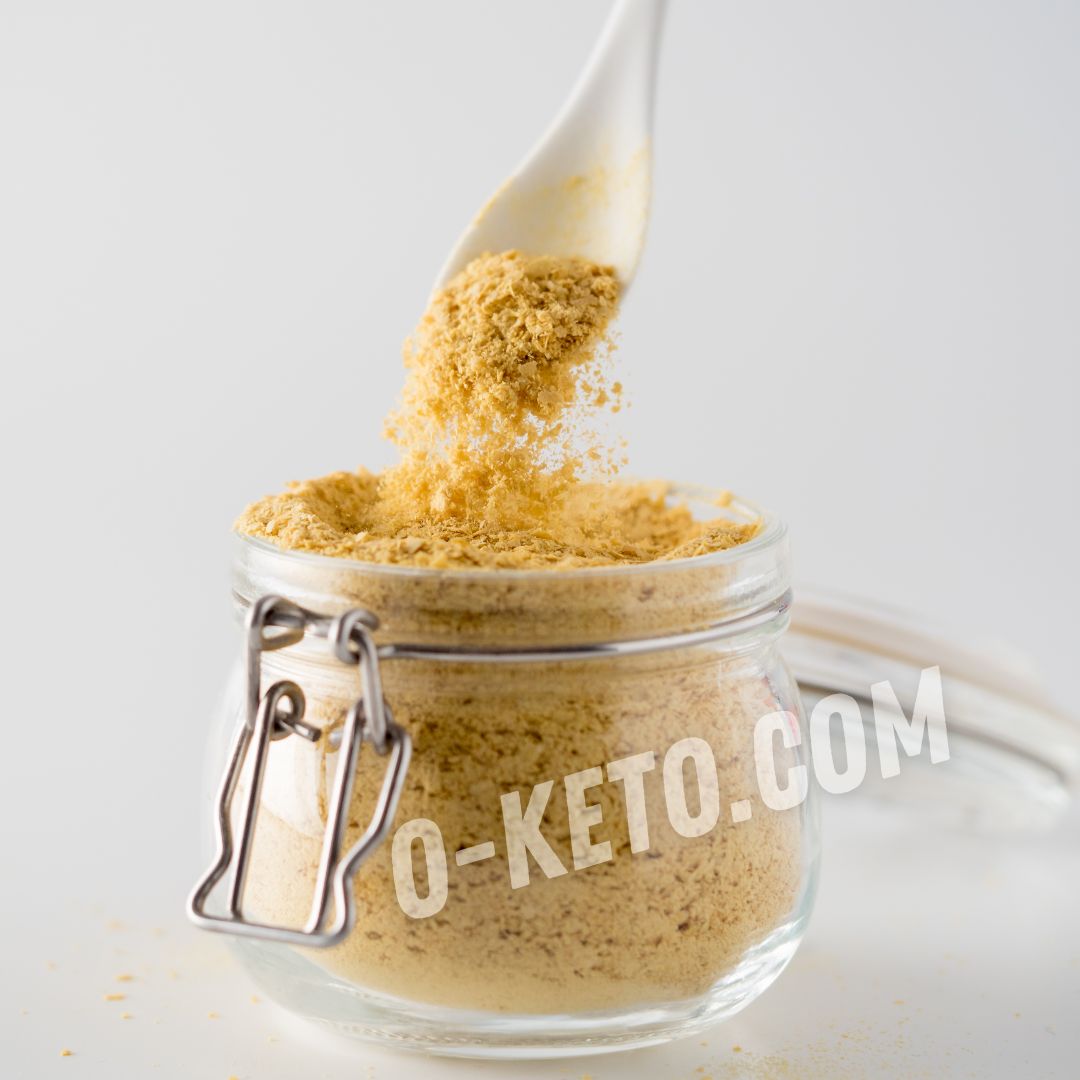

Nutritional inactive yeast is made from dried yeast cells that no longer ferment or raise dough. It is used as a seasoning with a cheesy, nutty, slightly creamy taste. It is not baker’s yeast and not a brewing starter: the product is deliberately deactivated, so it does not start fermentation in a dish and is usually sold as flakes, granules, or powder.
In keto and LCHF, nutritional yeast is best treated as a flavor addition, not as a staple food. It can make vegetables, eggs, sauces, and soups taste richer without sugar or flour. It is often used in dishes without cheese or where a cheesy note is wanted without lactose or a strong dairy taste.
Nutritional value
Per 100 g, nutritional yeast often contains about 330-400 kcal, a lot of protein, noticeable fiber, and varying amounts of carbohydrates depending on the brand. A normal serving is much smaller: 1-2 tablespoons weigh about 5-15 g. For counting, the label and the real serving matter more than values per 100 g.
It often contains B vitamins, zinc, selenium, magnesium, and amino acids. Some producers fortify it with B12, while others do not. If B12 is important as a nutrient, check the package; the name “nutritional yeast” does not mean every brand has the same composition.
Place in keto and LCHF
Nutritional inactive yeast can usually fit keto when used as a seasoning. One tablespoon in an omelet, sauce, or salad rarely becomes the main source of carbohydrates. Large spoonfuls with water are a poor idea: the taste is strong, fiber is high, and carbohydrates plus calories become more noticeable.
For strict keto, check total carbohydrates and fiber if the label gives that split. Numbers differ between brands. Also check that there is no added sugar, maltodextrin, starch, flour, milk powder, or sweetened flavorings.
If nutritional yeast is part of a ready-made “cheese” sauce mix, read the composition even more carefully. Such mixes often contain rice flour, potato starch, dried syrups, or plant creams with carbohydrate fillers. Plain flakes are easier to control because you decide how much to add and what fat to mix them with.
How to use
Yeast flakes work well with cauliflower, broccoli, zucchini, mushrooms, omelets, scrambled eggs, salads, creamy sauces, blended soups, and homemade keto chips made from cheese or vegetables. They can be sprinkled at the end or stirred into a warm sauce for a rounder taste.
For a flourless “cheese” sauce, mix cream or unsweetened coconut cream, a little butter, salt, garlic, sugar-free mustard, and 1-2 spoons of nutritional yeast. Add it gradually to hot dishes; too much can taste dry and yeasty. In salads, combine the flakes with oil or sugar-free mayonnaise so they do not feel dusty.
How to choose
A good product smells nutty and cheesy, without mustiness, mold, or rancid notes. The flakes should be dry and loose. The color is usually yellow or cream, but a very bright color does not prove a better composition. For keto, no sugar and a clear nutrition table matter more.
If you are sensitive to yeast products, histamine, or fermented foods, start with a small portion. Nutritional yeast does not ferment, but its taste and composition may still not suit everyone. People with special restrictions around salt, purines, or additives should read the ingredient list carefully.
Storage
Store nutritional yeast in a tightly closed package, away from light, steam, and heat. A wet spoon quickly damages the flakes: they clump, lose aroma, and may smell stale. After opening, it is often more convenient to transfer the product to a dry jar with a lid.
If a sour, damp, or moldy smell appears, discard it. To keep the aroma, do not keep a large package near the stove. A small jar for daily use and the main supply in a cool cupboard usually works better.
Freezing is usually unnecessary if the package is dry and used quickly. In a hot kitchen or with a large pack, part of the supply can be kept in the refrigerator in an airtight jar. The main thing is to avoid condensation: moisture damages the texture faster than cool storage preserves the aroma.
Substitutes
For a cheesy taste, use grated parmesan, aged cheese, starch-free cheese powder, or a little miso if it fits your carbohydrate and salt limits. For umami, mushroom powder, tamari, anchovy paste, or strong broth can work. There is no full substitute: nutritional yeast gives dry topping texture, nutty aroma, and a cheese-like note at the same time.
Vitamin B1 in the composition
Thiamin (vitamin B1) participates in enzyme reactions involved in energy metabolism and supports nervous-system function. Nutritional yeast can provide thiamin, but the amount depends on the brand and on whether the product is fortified. Check the actual nutrition panel: the product name does not mean that every manufacturer uses the same composition.
Marked thiamin deficiency can involve loss of appetite, confusion, impaired memory, muscle weakness, and cardiovascular manifestations. Anxiety, panic attacks, nightmares, insomnia, hair loss, or dizziness alone do not establish a B1 deficiency. Suspected deficiency requires medical assessment, especially with alcohol-use disorder, impaired absorption, after bariatric surgery, or severe undernutrition.
Deactivated yeast does not ferment and does not turn into an “energy boost” within minutes. In a normal serving, use it as a flavoring and one source of nutrients rather than as a way to treat fatigue, anxiety, or sleep problems.
Sources
- Thiamin — Health Professional Fact Sheet — NIH Office of Dietary Supplements.
- Thiamin — Consumer Fact Sheet — NIH Office of Dietary Supplements.
- Effects of fungal beta-glucans on health — systematic review of randomized controlled trials.


