


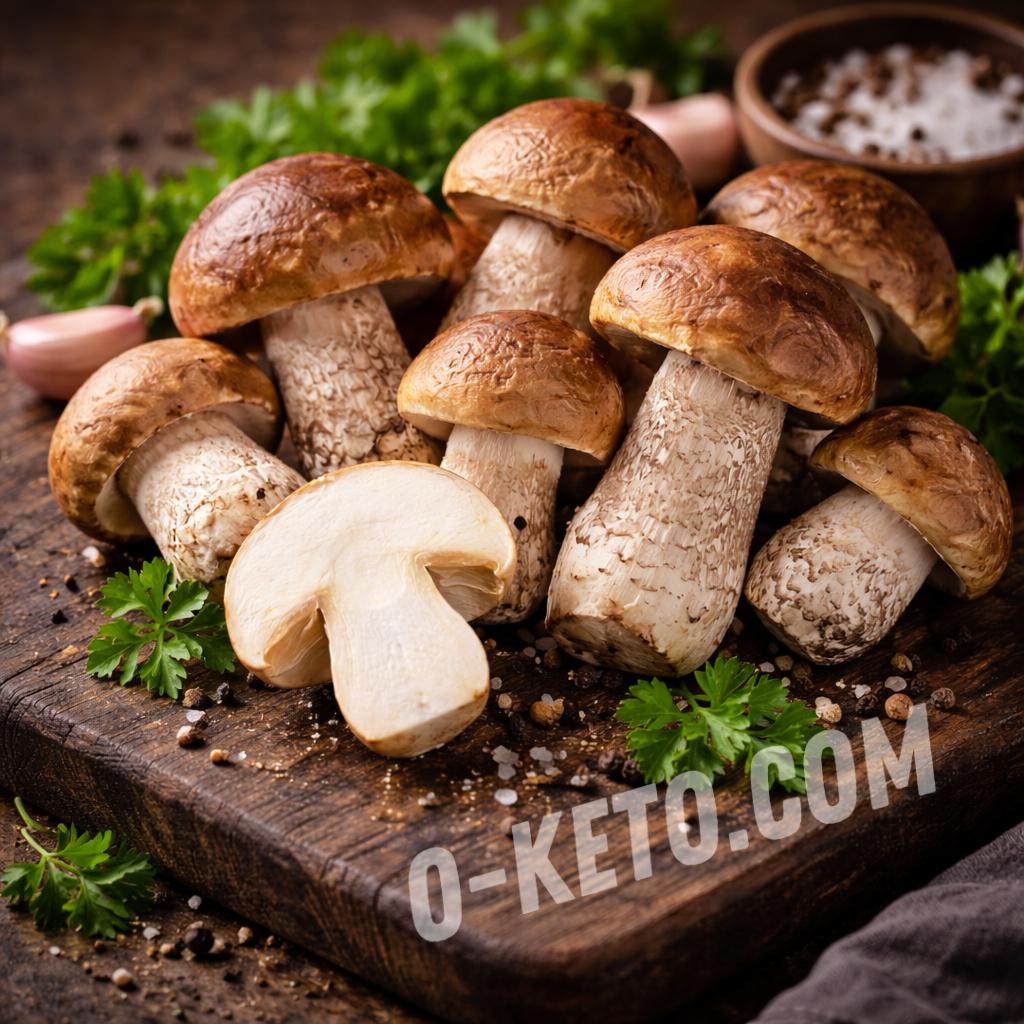

Birch boletes are edible forest mushrooms of the genus Leccinum, most often associated with birches and mixed forests of temperate climates. They are recognized by a brown cap, a tubular layer underneath, and a pale stem with dark scales. Young mushrooms are firm, aromatic, and hold shape well in frying and stewing.
In cooking, birch boletes are valued for mild mushroom flavor and versatility. They are fried with onion, stewed in sour cream, added to soups, dried, frozen, pickled, and used as an aromatic addition to meat, eggs, cabbage, and sauces. The flesh may darken during heating, which is normal for these mushrooms.
Nutritional value
In 100 g of fresh birch boletes there are usually about 20–25 kcal, 2–3 g protein, 0.3–0.5 g fat, and 3–4 g carbohydrates. Like other mushrooms, they contain a lot of water, so after frying or drying their weight drops strongly and the taste becomes more concentrated.
They contain dietary fiber, potassium, phosphorus, magnesium, selenium, B vitamins, and some vitamin D if the mushrooms had enough light. But the real portion is usually modest, so in the diet birch boletes matter mainly as a tasty low-calorie mushroom product.
Are they suitable for keto?
Birch boletes can fit keto and LCHF well: they contain few carbohydrates, have bright flavor, and add good volume to a dish. The main point is not to combine them with potatoes, flour, sweet marinades, or thick starchy sauces.
For keto, frying in butter, stewing in flour-free sour cream, mushroom sauce for meat, omelet with mushrooms, soup without potatoes, or a casserole with egg and cheese are convenient. If dried birch boletes are used, the amount is usually small, but the taste becomes very intense.
How to prepare them
Fresh mushrooms are sorted immediately after picking or purchase. Forest debris is removed, the dirty part of the stem is cut off, and worm damage or soft spots are checked. Old watery mushrooms are better avoided: they fall apart quickly and give weak flavor.
Birch boletes are better washed quickly, without long soaking, otherwise they absorb water. Large mushrooms are sliced, while young ones can be left in bigger pieces. If there is doubt about cleanliness or maturity, the mushrooms are pre-boiled and only then fried or stewed.
Clean firm specimens without worm-damaged areas are suitable for drying. They are sliced thinly and dried until brittle, then soaked and rinsed from sand before cooking. For freezing, it is more convenient to heat or boil the mushrooms first: they take less space and release less extra water after thawing.
How to use them
The classic option is frying with onion in butter or ghee. First the mushrooms release moisture, then the liquid evaporates, and a mushroom crust appears. Salt is better added closer to the end so they do not release too much water immediately.
Birch boletes work well in cream sauce, sour cream, mushroom spread, soup, stew, omelet, and fillings. They pair with onion, garlic, dill, parsley, black pepper, cream, sour cream, beef, chicken, eggs, and cabbage. In keto dishes, potatoes are better replaced with cauliflower, zucchini, or just herbs.
How to choose
Good birch boletes are firm, without mold, and have a clean mushroom smell. The cap can be light brown or dark, but not slimy or falling apart. The stem with dark scales is a characteristic sign, but species confidence should come from an experienced picker.
Mushrooms should not be bought near roads, from doubtful places, or without understanding their origin. Wild mushrooms absorb contamination from the environment, so the collection place matters. If the smell is chemical, sour, or musty, the product is better not used.
Limitations
Mushrooms can be heavy for digestion, especially in a large portion and with a lot of fat. Children, sensitive people, and those who rarely eat wild mushrooms are better starting with a small portion.
Birch boletes should be cooked, not eaten raw. It is also important not to confuse them with unfamiliar mushrooms. If there is no confidence in the species, the mushroom is not used. Pickled versions should be checked for salt, sugar, and vinegar in the ingredients.
How to store them
Fresh birch boletes are best cooked on the day of picking. In the refrigerator they are kept briefly, in a paper bag or open container. For long storage, mushrooms are dried, frozen after preliminary processing, or pickled by a tested recipe.
What can replace them?
The closest replacements are porcini, aspen boletes, slippery jacks, button mushrooms, oyster mushrooms, or dried forest mushrooms. Porcini give stronger aroma, button mushrooms are milder and simpler, and oyster mushrooms are firmer in texture. For keto, it is more important to choose mushrooms without sweet marinade or starchy sauce.


