


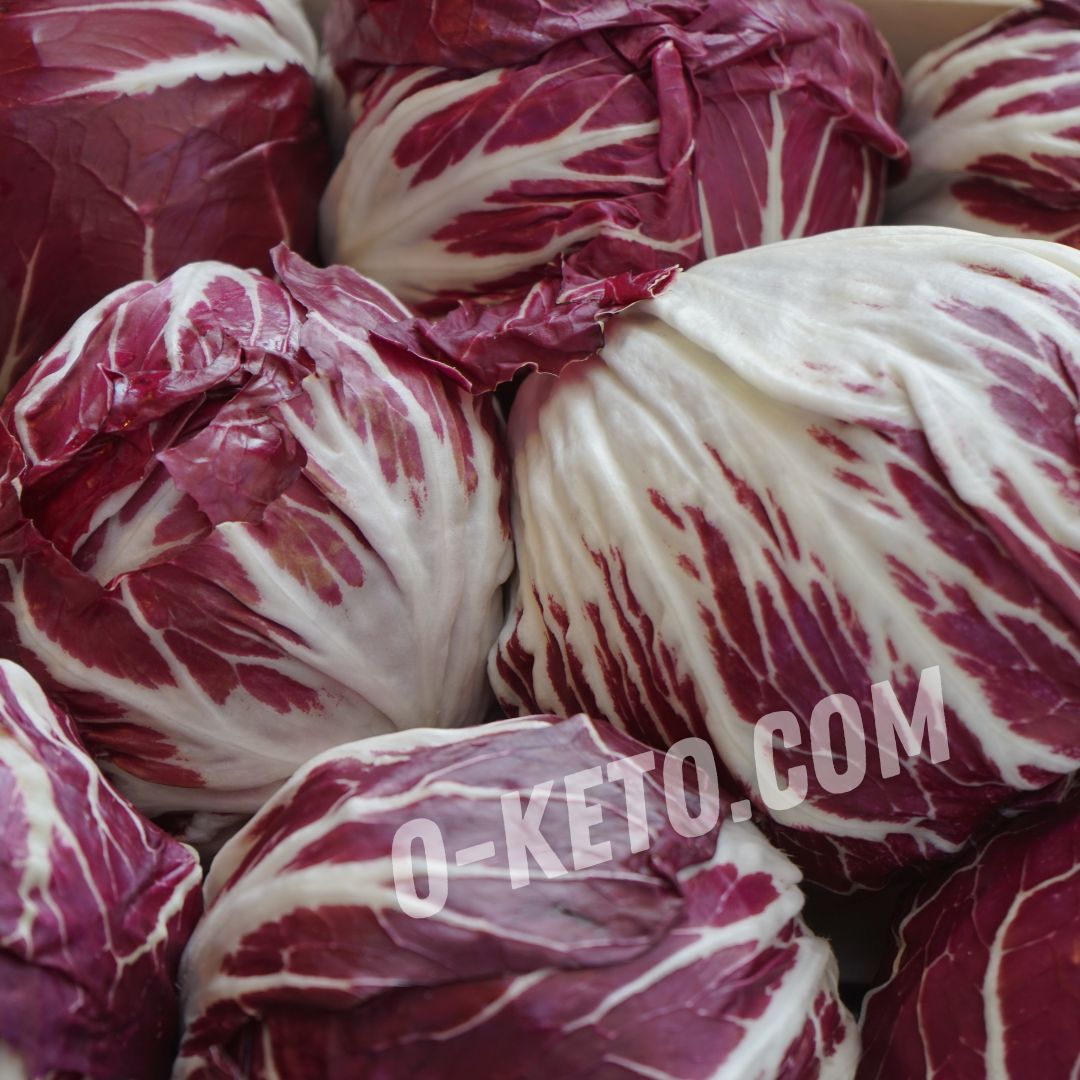

Radicchio is a red-purple leafy chicory with dense leaves and a clear bitterness. It is common in Italian cooking: salads, warm sides, dishes with cheese, meat, fish and nuts. It may look like a small head of red cabbage, but the flavor is different: more bitter, spicy and chicory-like.
For keto, radicchio is valuable as a low-carb green with a strong flavor. A small amount changes a dish more than neutral lettuce, so it works well as an accent: color, crunch and bitterness without sugar or starchy ingredients.
Nutrition
Per 100 g, radicchio contains about 20-25 kcal, around 1-1.5 g of protein, very little fat and about 4-5 g of carbohydrates, some of which is fiber. Its glycemic load is low, especially in a normal salad portion.
Radicchio contains vitamin K, folate, some B vitamins, potassium, calcium, iron and polyphenols, including pigments responsible for the red-purple color. This makes it an interesting part of a varied diet, but not a treatment food.
Is Radicchio Keto-Friendly?
Yes, radicchio fits keto and LCHF well. It gives a lot of flavor for a modest carbohydrate portion and helps diversify green salads. It is best used with fat and protein because the bitterness can feel sharp on its own.
The keto profile of a dish is easy to spoil with sweet balsamic glaze, honey, dried fruit, sweet nut mixes or a large amount of onion. With a sugar-free dressing, radicchio remains a convenient low-carb ingredient.
How to Use It
Raw radicchio works well mixed with milder greens: lettuce, spinach, romaine or endive. When cooked, the bitterness softens and the leaves develop a pleasant roasted aroma. It can be quickly sautéed, roasted in wedges or added to a warm salad.
Practical options include:
- salad with olive oil, lemon and parmesan;
- a warm side for steak, fish or chicken;
- roasted wedges with olive oil and salt;
- a mix with mild leaves and avocado;
- an addition to cheeses, nuts and unsweetened sauces.
How to Choose and Store
The head should be firm, with bright leaves and no slime, wet spots or fermented smell. Some bitterness is normal, but wilted leaves and darkened edges make the flavor worse. Store radicchio in the refrigerator as a whole head and cut it before use.
Portion and Pairings
Radicchio is rarely eaten in large portions as the only green. Usually 30-70 g in a mix with other leaves is enough. Bitterness is balanced by fat, acidity and salt: olive oil, lemon, sugar-free vinegar, cheese, eggs, fish, bacon, chicken and avocado.
If the flavor seems too bitter, try cooking it or mixing it with more neutral greens. Sweet dressings are not necessary: acidity and fat work better and do not add extra carbohydrates.
Limitations and Substitutes
With a sensitive stomach, bitter leaves may feel unpleasant in a large raw portion. Start small. Substitutes include endive, chicory, arugula, romaine, frisée or mixed salad leaves, though not every green gives the same color and bitterness.
Common Mistakes
Radicchio is often “fixed” with sugar because the bitterness seems too strong. For keto, it is better to use fat, salt, acidity and heat. Sautéing or roasting softens bitterness without honey, syrups or sweet glaze.
Another mistake is cutting radicchio too large for salad. Dense bitter leaves in big pieces dominate the dish. Thin slicing or mixing with mild leaves makes the flavor more balanced and removes the need for sweet dressing.
Radicchio should also not be stored pre-cut for long: the edges darken quickly and the bitterness becomes sharper. If prep is needed, separate and dry the leaves, then cut them just before mixing with dressing.
How to Soften the Bitterness
Radicchio bitterness does not need to be hidden completely; it is what makes the leaf interesting next to fat, salt and acidity. But it can be softened. For salad, thin slicing, a short soak in cold water and thorough drying help. Water removes some sharpness, while dry leaves accept oily dressing better.
In hot dishes, radicchio works well when quickly sautéed or roasted in wedges. The edges darken slightly, the flavor becomes rounder, and a sweet dressing is no longer needed. Olive oil, salt, lemon, cheese or a small amount of roasted unsweetened nuts are better choices.


