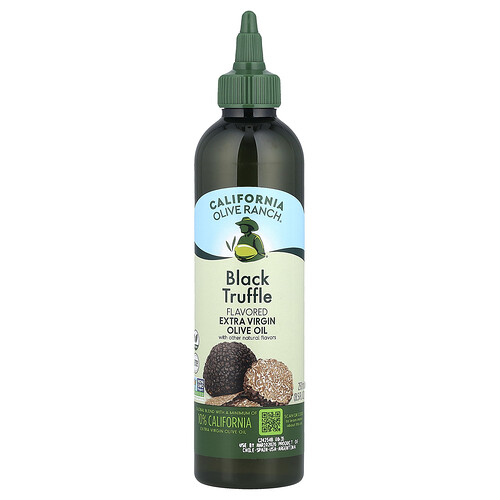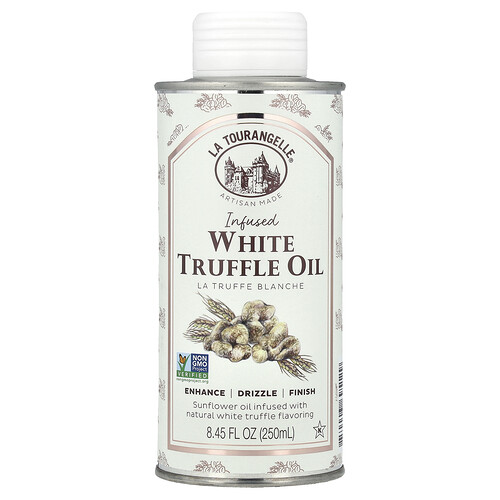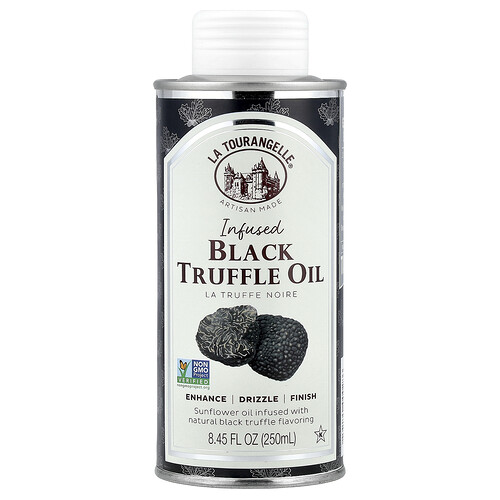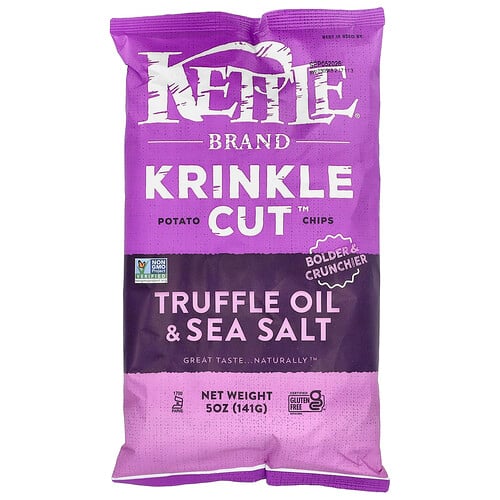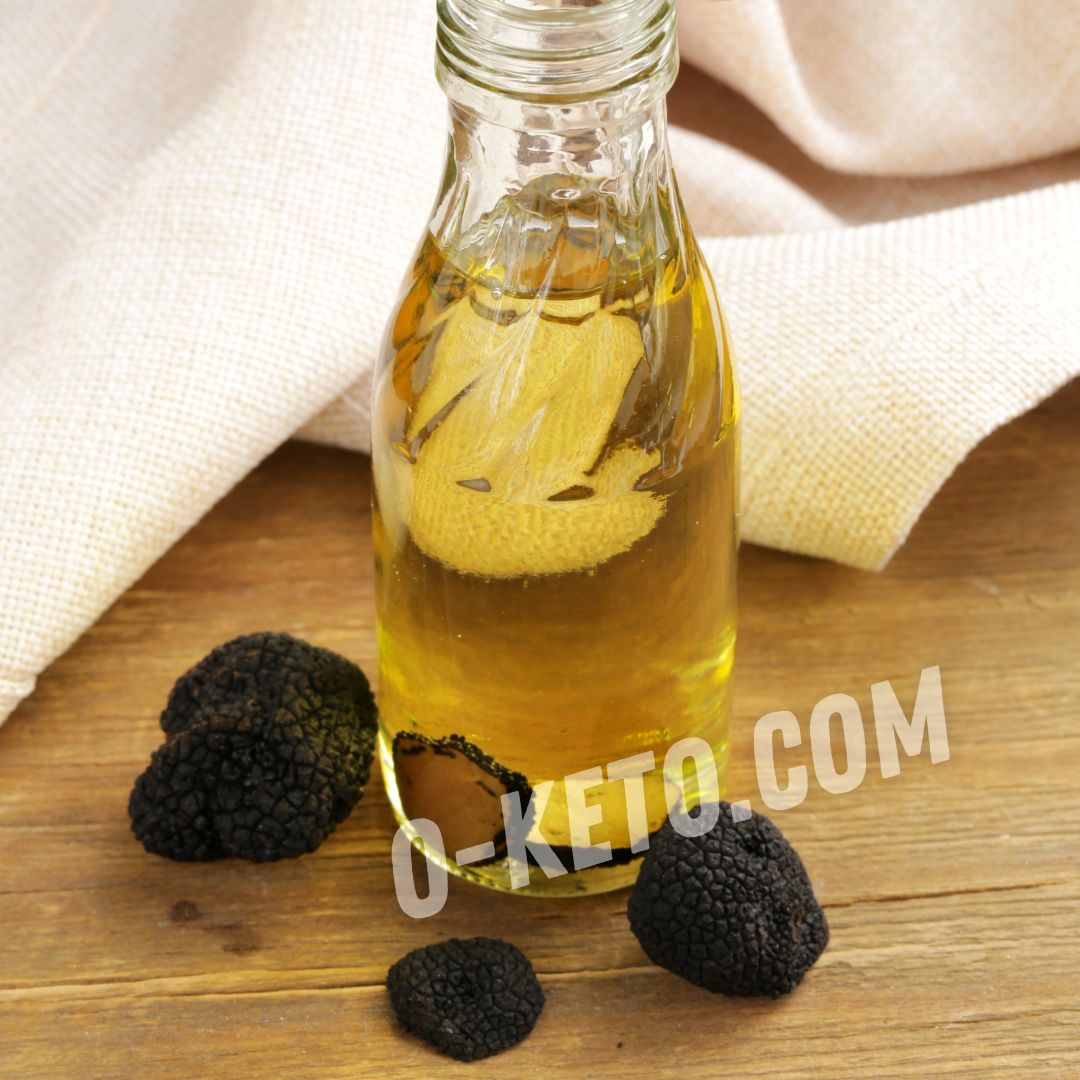

Truffle oil is a flavored oil with a pronounced truffle aroma. The base is most often olive oil, sunflower oil, or another neutral vegetable oil, while the truffle note comes from natural material, extract, or aromatic compounds. In cooking it is not used like ordinary frying oil, but as a finishing accent: a few drops can noticeably change the taste of eggs, mushrooms, meat, fish, cauliflower, or a creamy sauce.
The main value of this oil is aroma. In a good product it is deep, mushroom-like, earthy, sometimes with a garlic or nutty note. In cheaper versions the smell can be sharp and one-dimensional, so truffle oil is best dosed carefully. It easily becomes dominant and can cover the taste of a dish if poured like a regular dressing.
How it is made
Truffle oil varies a lot in composition. The clearest version is oil infused with pieces of truffle or natural extract. But many products on the market get their taste from flavoring, while a slice of truffle in the bottle works more as a visual cue. That does not automatically make the oil useless in the kitchen, but it changes expectations: natural truffle aroma is usually subtler, while a flavored product is often brighter and more direct.
White truffle oil is usually perceived as sharper, with garlic-mushroom notes, and works well with eggs, cheeses, creamy sauces, and potato dishes when they fit the meal plan. Black truffle oil is often softer and darker in tone, better with meat, mushrooms, pâtés, roasted vegetables, and dense sauces. The difference depends not only on the type of truffle, but also on the oil base, aroma dose, and freshness.
Nutritional value
By macronutrients, truffle oil remains oil: 100 g has about 880–900 kcal and almost all of it is fat. Protein and carbohydrates are usually absent or present only in traces if there are no additives. The glycemic load of pure oil is zero, but that does not mean it should be used freely: the energy density is high, and the aroma is meant for small portions.
The fatty acid profile depends on the base. An olive oil base gives more monounsaturated fat and its own characteristic taste. A sunflower base may be more neutral, but different sunflower oils vary in their share of omega-6 and oleic acid. If the oil is needed not only for aroma but also for regular use, the base matters more than the word “truffle” on the label.
Is it suitable for keto?
For keto and LCHF, truffle oil works as a low-carb aromatic addition. It helps make a simple dish taste more layered without sugar, flour, starchy sauces, or sweet glazes. It is especially suitable where there is already a fatty or protein base: omelet, fried eggs, steak, chicken, fish, shrimp, cheese, creamy sauce, sugar-free mayonnaise, mushrooms, broccoli, or cauliflower mash.
The ingredient list is the key point. Truffle oil does not need sugar, syrups, starch, flavor enhancers, or a long list of additives. For strict counting, it is easier to use a product that lists only oil, truffle extract or aroma, and sometimes salt. If the oil is part of a ready sauce, spread, or mayonnaise dressing, the whole product must be counted, not only the aromatic part.
How to use it
Truffle oil is almost always added at the end. It should not be heated for a long time in a pan: high heat quickly carries away the aroma and can make the smell heavy. It is better to cook the dish with ordinary fat, take it off the heat, and add a few drops before serving. For a sauce, the oil can be stirred into a warm base, not a boiling one.
Good pairings include eggs, mushrooms, beef, chicken, turkey, white fish, shrimp, scallops, hard cheeses, cream cheese, sour cream, cream, cauliflower, broccoli, zucchini, spinach, and lettuce leaves. In keto cooking, truffle oil is especially convenient for dishes that lack a more restaurant-like depth: omelet, cauliflower mash, mushroom sauce, warm meat salad, or roasted chicken.
It is better to start with half a teaspoon for several servings or with 2–3 drops on a plate. If a softer taste is needed, the oil can be mixed with olive oil, butter, or sugar-free mayonnaise. This spreads the aroma more evenly and prevents one harsh note from dominating.
How to choose
Look at the oil base, ingredient list, bottling date, and packaging. A dark glass bottle protects the aroma from light better. The smell should be clear but not chemically harsh; the taste should be mushroom-like and warm, without rancidity. If the oil smells like old nuts, paint, or an overly intrusive gas note, it will probably spoil the dish.
A piece of truffle in the bottle does not guarantee quality. Honest labeling is often more important: which oil is used, whether there is natural extract, what flavoring is added, and whether there are unnecessary sweeteners or stabilizers. For occasional use, a small bottle is better because the aroma fades faster after opening than a large volume is usually finished.
Limitations
Truffle oil may not suit people who poorly tolerate strong flavorings, mushrooms, or very intense aromas. Because the aroma is concentrated, it can feel heavy even in a small portion. With a sensitive stomach, it is better to add it to finished food gradually rather than use it as the main dressing.
Allergic reactions to truffle or flavoring components are uncommon, but possible. If the product is new, start with a small amount. For children and for people who do not like mushroom aromas, truffle oil is often too intense.
How to store it
Keep the bottle tightly closed in a dark cool place, away from the stove and direct light. After opening, it is best to use the oil within the period given by the producer, but in practice the aroma may weaken earlier. Spoons, droppers, and the bottle neck should stay clean so the oil does not pick up foreign smells.
What can replace it?
There is no full replacement: truffle aroma is very recognizable. If mushroom depth is needed without truffle oil, dried porcini, sugar-free mushroom powder, fried mushrooms, shiitake, a little sugar-free soy sauce, tamari, or aged cheese can work. If the task is a fatty finishing note, olive oil, butter, or oil with garlic and herbs can replace the texture, but the flavor will be different.