


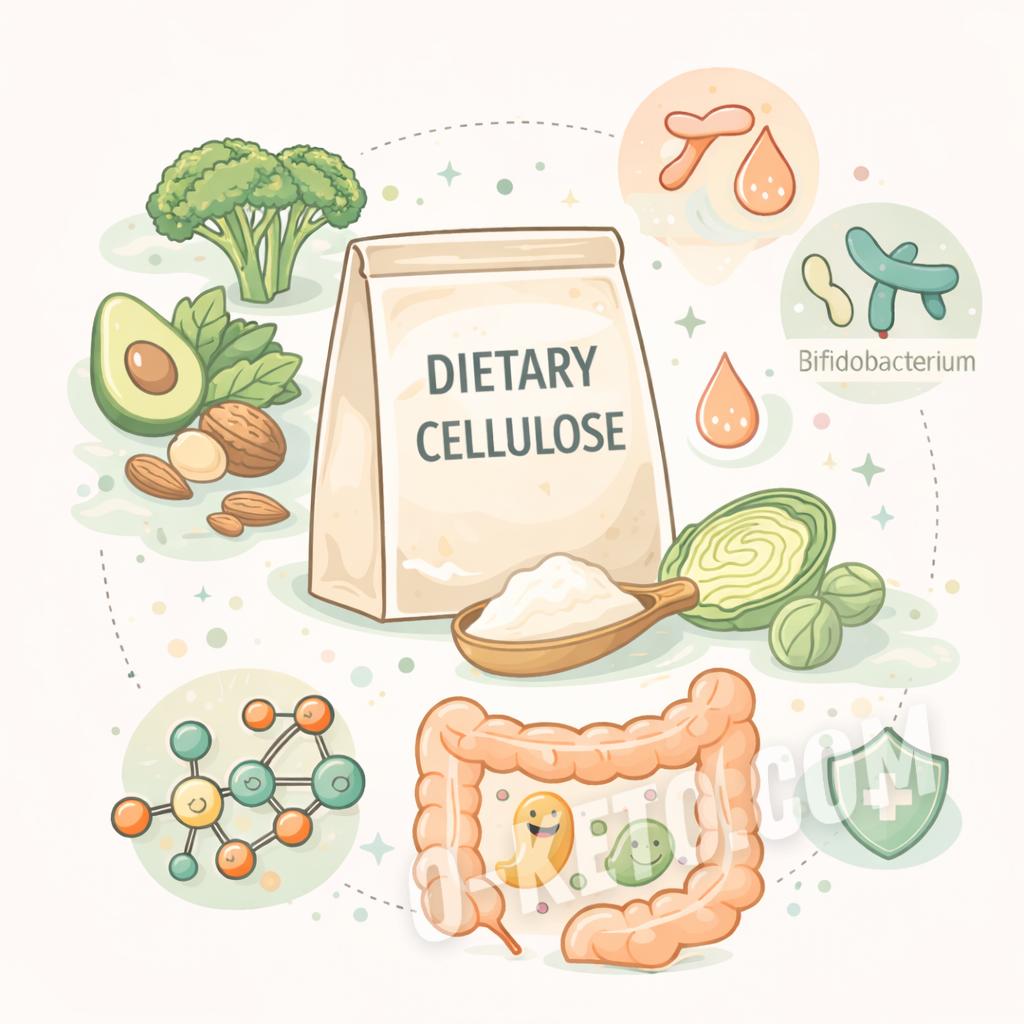

Dietary cellulose is a form of plant fiber that consists of polysaccharides, which make up the cell walls of plants. It is not broken down by the enzymes of the human gastrointestinal tract and does not serve as a source of energy; however, it plays an important physiological role in maintaining the health of the digestive system and metabolic balance.
Health Benefits
The main actions of dietary cellulose are mechanical and functional:
- supports normal intestinal peristalsis;
- helps prevent constipation;
- increases the feeling of fullness after meals;
- reduces the energy density of the diet;
- does not raise blood glucose and insulin levels.
It increases the bulk of the food mass, improves intestinal motility, and promotes regular bowel movements.
Daily Requirement and Sources
There is no specific norm for cellulose consumption, as it is included in the overall fiber intake. For adults, the recommended total fiber intake is on average 25–35 g per day, part of which comes from cellulose.
Main dietary sources of cellulose:
Possible Risks of Excess and Their Manifestations
Excessive consumption of cellulose, especially with insufficient fluid intake, can cause discomfort:
- abdominal bloating;
- feeling of heaviness in the intestines;
- mechanical irritation of the mucosa;
- reduced absorption of certain minerals with prolonged excess.
Dietary Cellulose and Keto Diet
In the context of a ketogenic diet, dietary cellulose is not an essential component of the diet and is not needed for the normal functioning of the gastrointestinal tract. The practice of low-carbohydrate and carnivore diets shows that with adequate fat intake and normal bile secretion, the intestines can function stably without plant fibers.
Cellulose can be used as an auxiliary mechanical component for some people, especially with a mixed diet; however, its absence is not in itself a risk factor for gastrointestinal health.
Thus, dietary cellulose is an optional, rather than a mandatory, element of nutrition, and its appropriateness is determined by individual digestive characteristics, diet type, and the state of the bile-excreting system.


