


E100 (curcumin)
Curcumins give foods a yellow-orange color and are linked to turmeric pigments, but as E100 they primarily work as a color additive. In low-carb eating, the key question is not the color itself, but the surrounding product: sugar, starch, syrups, flavorings, and frequency of use.
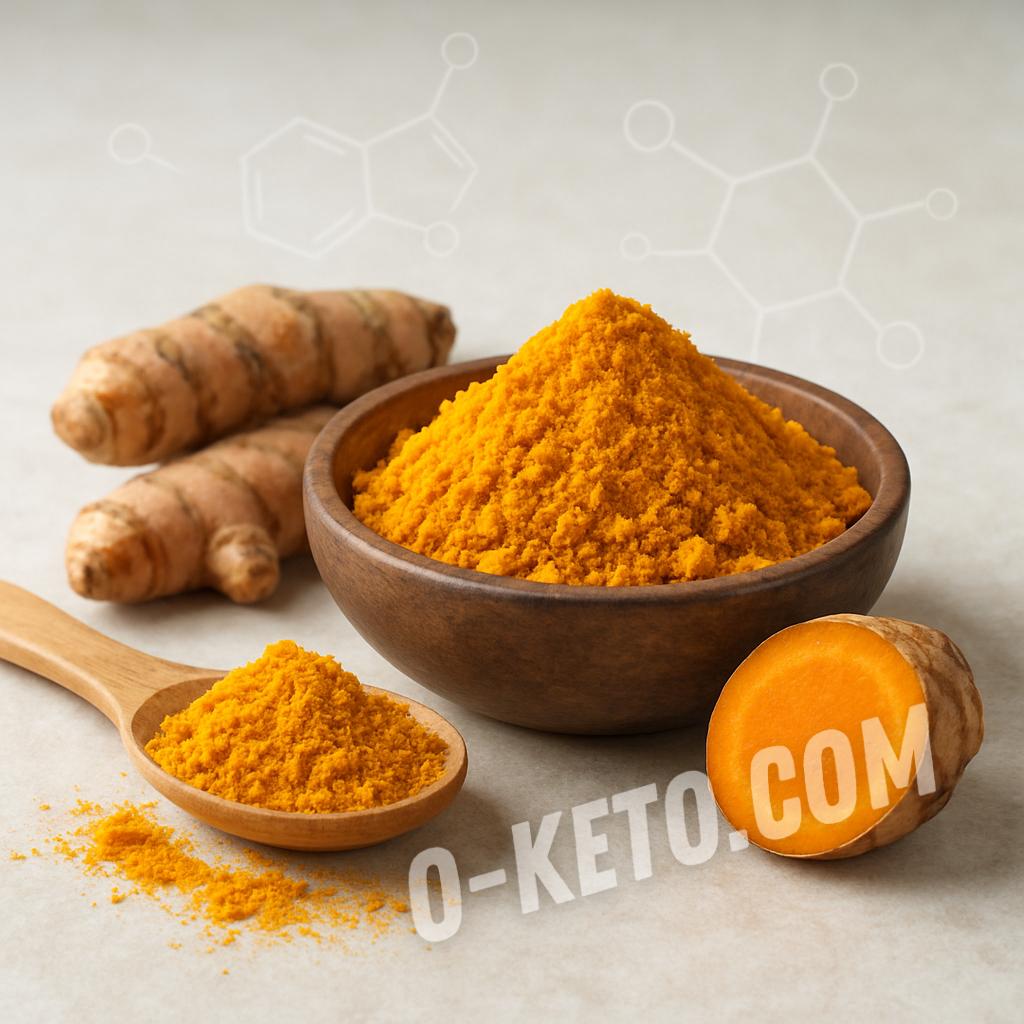
E100 refers to curcumins, a group of yellow-orange pigments associated with turmeric. In foods, they are used as colorants, giving sauces, desserts, drinks, seasonings, confectionery, and processed products a warm yellow or orange shade. It is important not to confuse E100 with using whole turmeric as a spice, and even less with therapeutic curcumin supplements. In the ingredient list of a food, curcumins usually solve a visual task: making the color brighter, more stable, and more familiar to the buyer.
What this colorant is
Curcumins are natural polyphenolic pigments, the main one being curcumin. In turmeric powder they occur together with essential oils, bitter and aromatic compounds, fiber, and other plant substances. In food additive E100, the coloring fractions are purified or standardized and sometimes prepared in a form that distributes more easily in the product. This explains the difference between turmeric in a dish and colorant E100. The spice affects flavor, aroma, and culinary character, while the colorant may be almost invisible in taste but clearly visible in color.
Where E100 is found
Curcumins may be used in mustard, sauces, marinades, cheese products, desserts, ice cream, beverages, confectionery, snacks, and seasonings. Yellow color is often perceived as a sign of creaminess, egg content, cheese flavor, spice, or fruit notes, so a manufacturer may intensify it with a color additive. In a simple homemade dish, the yellow color may come from turmeric or saffron-like spices. In an industrial product, E100 may appear next to flavorings, stabilizers, sweeteners, starch, and oils. The colorant code alone therefore does not tell you the quality of the food.
Relevance for keto and LCHF
Curcumins as a colorant are not sugar or starch and usually do not directly affect glucose. But yellow-colored products can be very different. Sugar-free mustard, a spiced sauce, or a marinade with a clear ingredient list may fit a low-carb diet well. A sweet drink, glazed dessert, cheese-flavored snack with starch, or fitness bar with syrups is a different case. For keto, carbohydrates, sugar, flour, starch, maltodextrin, oils, sweeteners, and serving size matter more. E100 does not make a product keto or non-keto by itself.
Do not confuse it with therapeutic curcumin
Curcumin is often discussed in relation to inflammation, bile flow, liver health, joints, and antioxidant activity. But E100 in a food product is not the same as a clinically dosed curcumin supplement with piperine or a phospholipid form. In foods, the amount of colorant is usually small and its purpose is color. A processed product should not be considered beneficial just because it contains curcumins. If turmeric is wanted as a spice, it is better used deliberately in cooking. If supplements are considered, dose, form, contraindications, gallbladder status, medication, and tolerance all matter.
Tolerance and caution
Most people tolerate E100 in food-use amounts without difficulty. Individual sensitivity to turmeric, curcumins, or other components of the product is still possible. Caution is more relevant for people with strong reactions to spices, gallbladder problems, anticoagulant use, or high-dose curcumin supplements, but that mainly concerns concentrated intake rather than trace colorant. If brightly colored sauces, desserts, or drinks cause reflux, itching, rash, abdominal pain, or worse well-being, the whole formula should be evaluated, including acids, flavorings, sweeteners, and spices.
Practical conclusion
E100 is one of the easier food colorants to understand because it is linked to real plant pigments from turmeric. But even a natural-looking color does not make a processed product a good choice. For low-carb eating, E100 is usually neutral when the rest of the formula fits. The main mistake is seeing curcumin and automatically thinking of health benefits. It is more useful to read the whole ingredient list: what is being colored, why the product needs that color, whether sugar and starch are present, how often it is eaten, and whether bright packaging is replacing real food.
If you have any questions about the term "E100 (curcumin)", you can ask them to AI. Please note, a low-cost OpenAI model is used. It may answer questions about disease treatment with errors!


 1 / 4
1 / 4 1 / 4
1 / 4 1 / 4
1 / 4
 1 / 4
1 / 4

 1 / 4
1 / 4