


HPV infection
Infection with human papillomavirus often occurs without symptoms, but some types require close monitoring if they persist for a long time. In case of HPV infection, the key remains screening, medical supervision and only then discussion of supportive nutritional measures.



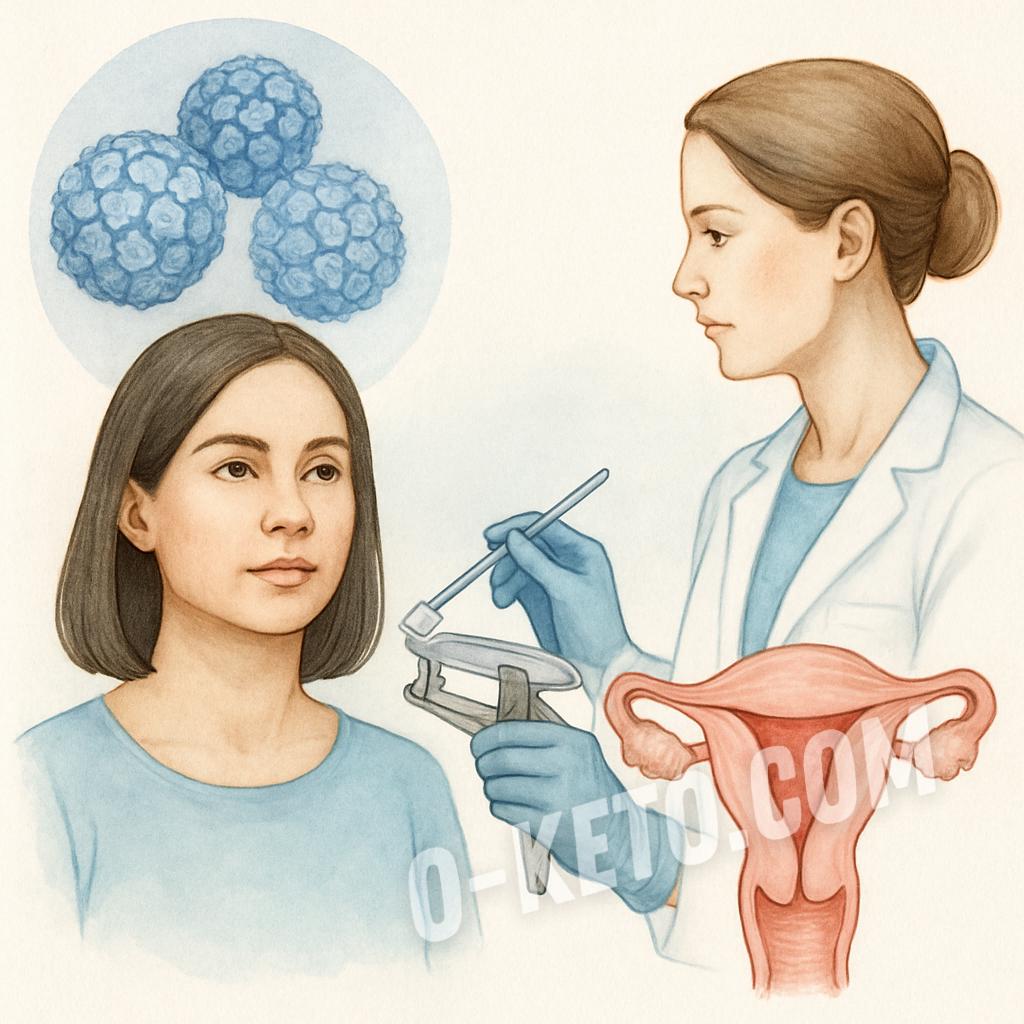
HPV infection is infection with the human papillomavirus, a very common virus that is transmitted mainly through close skin-mucosal contact. There are many types of HPV: some of them can cause warts, some are associated with changes in the epithelium of the cervix, anogenital zone and some other areas. For many people, the infection is asymptomatic and may be temporary, but in some cases the virus persists longer and requires medical monitoring, especially for highly oncogenic types.
It is important to understand that the mere fact of detecting HPV does not equal cancer. The main clinical question is usually not to panic about the word “virus,” but how long the infection persists, whether there are cell changes on the screen, and whether more active surveillance or treatment is required. This is why HPV infection is assessed in conjunction with the results of smears, tests for viral types, colposcopy and other data, and not as a separate isolated finding.
How does the infection usually manifest?
In many cases, a person does not feel symptoms at all and learns about HPV through screening or testing for another reason. Sometimes the virus manifests itself as warts or genital warts, but not all types of HPV behave this way. Some clinically significant types are dangerous not because they are immediately visible, but because if they persist for a long time, they can be associated with dysplasia and an increased risk of oncological changes.
Therefore, regular screening plays a vital role, rather than trying to focus only on sensations. The absence of symptoms does not guarantee that observation is not needed, and conversely, the presence of the virus does not automatically mean severe illness.
What influences the course of HPV
The likelihood of long-term persistence of the virus is influenced by the state of the immune system, smoking, concomitant infections, general health of the mucous membranes, severe chronic stress and the quality of observation. In some people the virus goes away on its own, in others it may persist longer. It is especially important here not to confuse the natural course of infection with promises of quick “full cleanses” without a proven basis.
It is not only the presence of the virus that is considered practically significant, but also how the body interacts with it over time. It is the long-term persistence of some types and changes in cells that require the most careful medical monitoring.
Why is regular screening necessary?
In case of HPV infection, the key is not independent selection of supplements, but competent observation. Cervical screening, tests as indicated, colposcopy and follow-up allow timely detection of changes that really require intervention. This is especially important because some processes develop slowly and are well controlled in the early stages.
If a person knows about HPV, but is not observed, he loses the most useful part of modern tactics: the ability to timely separate a temporary finding from a situation where there are already cellular changes and a clear plan of action is needed.
The Role of Nutrition and Folates
Folate is sometimes discussed as part of nutritional support for HPV infection, especially in the context of overall mucosal status and methylation. This does not mean that folates “cure the virus” on their own. Rather, the point is that adequate folate intake can be considered as a supporting factor in an overall health strategy, especially if a person has a deficiency or low dietary intake.
That is why it is more useful to talk not about the miraculous effect of one supplement, but about basic correction of nutritional status, quitting smoking, paying attention to screening and following doctor’s recommendations. This approach is more realistic and safer than promises of a complete solution to the problem only through nutrients.
When is it necessary to go to the doctor?
Medical observation is mandatory if the HPV test is positive, there are changes in cytology, condylomas are detected, unusual discharge appears, spotting after exposure, or there is a history of dysplasia. It is also important to follow the timing of repeated examinations recommended by the doctor, even if you feel normal.
Situations when a person tries to replace observation only by taking supplements on his own require special attention. For HPV infection, nutritional support can be discussed, but should not replace screening and standard medical management.
Practical conclusion
HPV infection is a common condition that requires neither shame nor panic, but competent observation and understanding of the real risks. The most useful strategy revolves around regular screening, following your doctor’s recommendations, and being attentive to factors that may influence viral persistence and mucosal health.
Folates may be considered as part of supportive nutritional management, but not as a substitute for monitoring. The calmer and more systematic a person approaches this topic, the higher the chance of tracking truly significant changes in a timely manner and not wasting energy on inappropriate expectations from single remedies.
If you have any questions about the term "HPV infection", you can ask them to AI. Please note, a low-cost OpenAI model is used. It may answer questions about disease treatment with errors!

 1 / 4
1 / 4

 1 / 4
1 / 4
 1 / 4
1 / 4
 1 / 4
1 / 4 1 / 4
1 / 4 1 / 4
1 / 4