


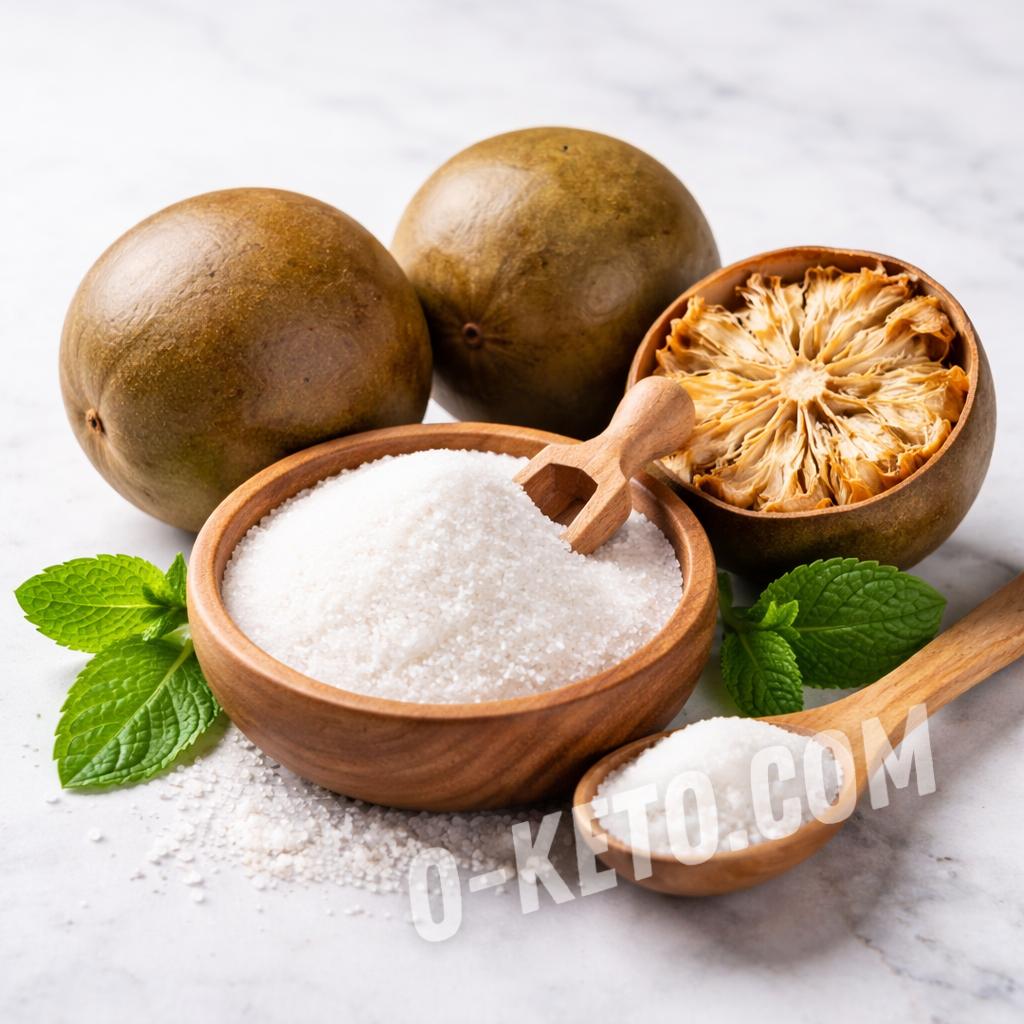

Monk fruit (luo han guo) is a natural intense sweetener that is increasingly used in low-carb and keto cooking. It is valued for its high sweetness, lack of impact on glucose levels, and good technological stability. However, when working with it, it is important to consider a number of features that distinguish it from sugar and even other sweeteners.
Chemical Nature and Flavor Characteristics
The sweetness of monk fruit is provided by mogrosides — natural compounds with a high intensity of sweetness:
- sweetness 150–200 times higher than sugar;
- develops more slowly but lasts longer;
- has additional flavor notes — nutty, woody, sometimes caramel;
- the higher the degree of purification, the more neutral the taste.
They are not carbohydrates in the conventional metabolic sense and do not behave like glucose or sucrose in the body.
These features make it not universal, but rather a tool for specific flavor profiles.
Metabolic Properties and Effects on the Body
Monk fruit is considered a metabolically neutral sweetener. It is not broken down like regular carbohydrates and has little effect on metabolism:
- glycemic index close to zero;
- does not cause insulin release in physiological doses;
- not digested in the small intestine;
- partially metabolized by the microbiota;
- does not cause osmotic effects like polyols.
Reactions from the gastrointestinal tract are more often related not to monk fruit itself, but to additives, such as erythritol, which is often included in commercial blends.
Technological Features in Cooking
Monk fruit is exclusively a sweetener and not a full substitute for sugar in recipes. It does not perform structural functions:
- does not create volume and mass;
- does not retain moisture;
- does not participate in the Maillard reaction;
- does not caramelize;
- used in microdoses.
This means that when baking or preparing desserts, it is necessary to separately compensate for texture — through fats, fibers, proteins, or other ingredients.
Combinations and Use in Recipes
Monk fruit works well as part of combinations with other sweeteners, allowing for a cleaner taste and balanced sweetness:
- with erythritol — for volume and texture;
- with allulose — for a more “sugary” profile;
- with stevia — to enhance sweetness while reducing the dosage of each component.
It particularly shines in products where its flavor nuances become an advantage:
- nut butters and desserts;
- chocolate and cocoa products;
- coffee drinks and desserts;
- baking with vanilla;
- caramel flavor profiles.
In neutral or delicate recipes, its use may be less appropriate due to its characteristic flavor notes.
Practical Recommendations for Use:
- adjust dosage only experimentally;
- consider the concentration of mogrosides in the specific product;
- use minimal amounts — milligrams or grams;
- test combinations with other sweeteners;
- do not rely on it as a structural substitute for sugar.
Conclusion
Monk fruit is an effective tool for creating low-carb and keto desserts with minimal glycemic load. It is stable, safe from a metabolic standpoint, and has an interesting flavor profile. However, its use requires an understanding of technological limitations and skillful combination with other ingredients.


