


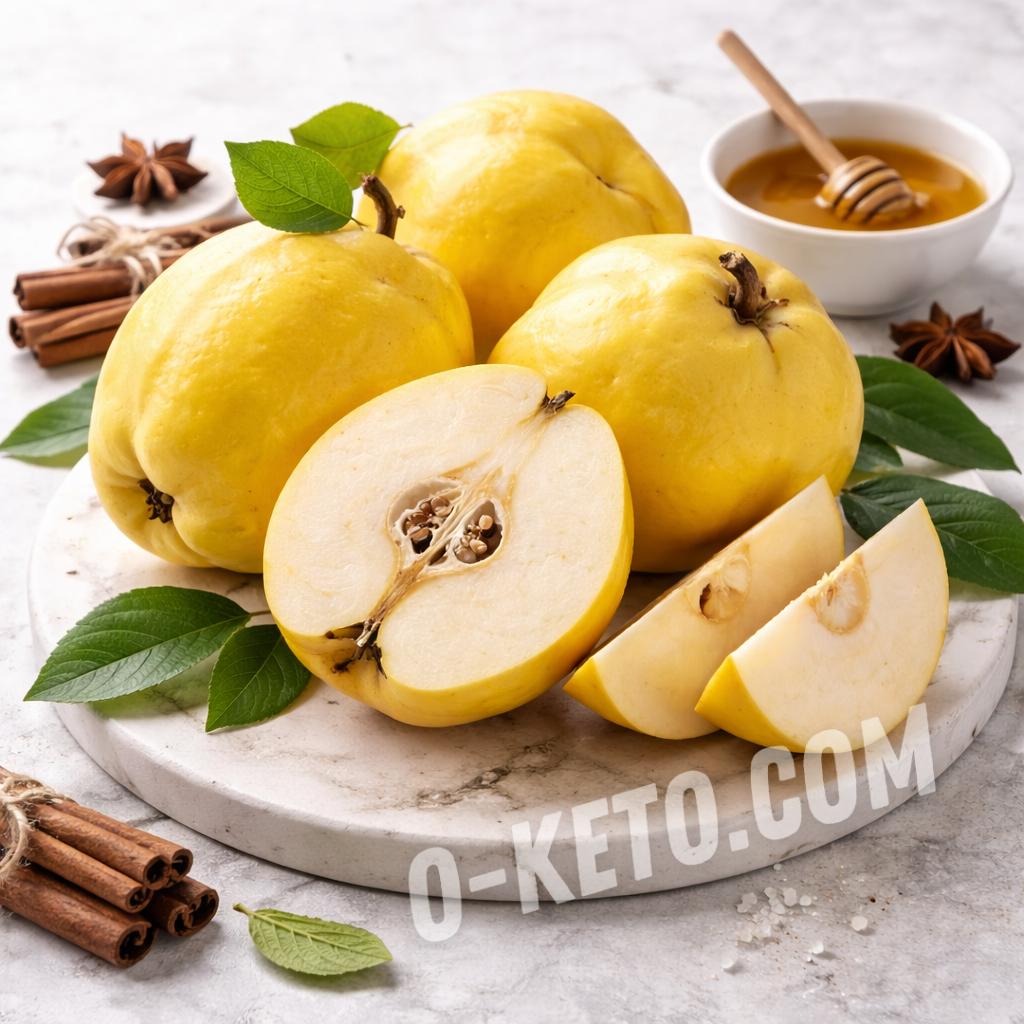

Quince — a fragrant fruit known to humans since ancient times. This fruit is characterized by its dense flesh, astringent taste, and rich aroma. Quince is rarely consumed raw; it is more often used in cooking after thermal processing — baked, stewed, or added to meat dishes and desserts. Due to its high content of plant compounds and fiber, quince holds a special place in the traditional cuisines of many countries.
History and Origin
Quince originates from the regions of the Caucasus, the Middle East, and Central Asia. This fruit has been cultivated for several thousand years and is mentioned in ancient sources as one of the oldest fruits grown by humans.
Over time, quince spread throughout the Mediterranean and Europe. In different cultures, it was used not only as a food product but also as a fragrant plant due to its strong fruity scent.
Nutritional Value
Quince is classified as a fruit with moderate carbohydrate content and a low number of calories. It contains natural sugars, fiber, and various plant compounds.
| Calories | 55–60 kcal |
| Proteins | 0.4 g |
| Fats | 0.1 g |
| Carbohydrates | 14–15 g |
The majority of the carbohydrates in quince are represented by natural sugars and dietary fibers. The dense flesh contains a significant amount of pectins.
Main Vitamins and Minerals:
- Vitamin C is involved in the antioxidant protection of the body;
- Potassium is involved in regulating water-electrolyte balance;
- Copper is involved in enzymatic processes;
- B vitamins are involved in energy metabolism;
- Plant polyphenols are involved in the antioxidant protection of cells.
Health Benefits
Quince contains dietary fibers and pectin, which aid in the functioning of the digestive system. Pectin can bind water and form a viscous structure, which is why the fruit is widely used in making jams and jellies.
Quince also contains various plant compounds, including polyphenols and organic acids, which help protect cells from oxidative processes.
Quince in a Low-Carbohydrate Diet
Quince contains a noticeable amount of carbohydrates, so its consumption in a low-carbohydrate diet is usually limited to small portions. In small amounts, the fruit can be used to add flavor and aroma to dishes.
Most often, quince is used as a component of complex dishes rather than as a main product. Due to its rich aroma, even a small amount of the fruit can change the taste of a dish.
Culinary Uses:
- Baking with meat and poultry;
- Making jams and jellies;
- Adding to fruit desserts;
- Stewing with spices;
- Using in aromatic drinks and teas.
Quince is valued for its bright aroma, dense structure, and ability to retain shape during thermal processing, which is why it is widely used in various culinary traditions.


