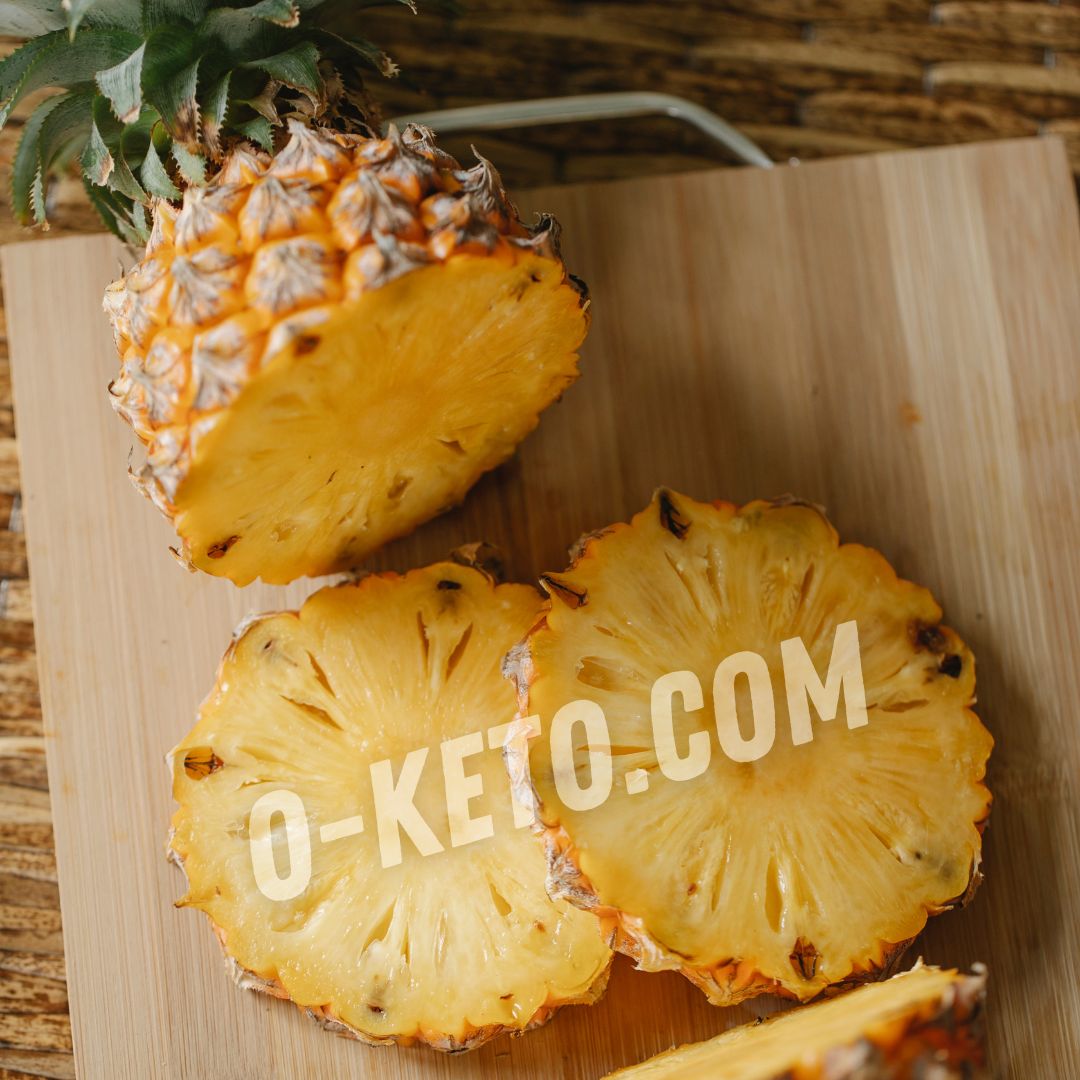

Pineapple is a sweet tropical fruit with bright acidity, juicy flesh and a strong aroma. It is eaten fresh and added to salads, marinades, sauces, desserts and dishes with poultry or seafood. In an ordinary menu it is a fruit ingredient, but for strict keto pineapple remains difficult: it contains a noticeable amount of sugars and little protein or fat.
Per 100 g of pineapple, common values are about 50 kcal, 0.5 g of protein, 0.1 g of fat and around 13 g of carbohydrates. The glycemic index is often listed around 59, and glycemic load of a small serving around 5. It contains vitamin C and the enzyme bromelain, but these facts do not make pineapple low-carb. For keto, the deciding point is not the exotic fruit itself, but the weight of flesh eaten.
Nutrition
Pineapple provides almost no fat and very little protein. Its role is sweetness, acidity, juiciness and aroma. Vitamin C and bromelain can be mentioned as features of its composition, but they should not be turned into promises. On a real plate, pineapple works more often as a sweet-sour accent than as the base of a low-carb dish.
The figure of 13 g of carbohydrates per 100 g matters: pineapple pieces are easy to eat one after another, while juice and canned rings accumulate carbohydrates even faster. If the day already includes berries, nuts, dairy or sauces, even a small fruit portion can take a noticeable part of the limit.
Is It Keto-Friendly?
For strict keto, pineapple usually does not fit as a regular food. It can be used only in a very small portion when carbohydrates are counted in advance. A small piece in a salad or marinade is one thing; a bowl of pineapple, a smoothie or a glass of juice is completely different.
In moderate LCHF, pineapple can sometimes fit the menu, but it is better not eaten alone on an empty stomach. A more reasonable option is adding 20-50 g to a dish with protein and fat: chicken, shrimp, cottage cheese, unsweetened yogurt or salad with avocado. This spreads the sweetness through the dish and makes the portion easier to control.
How to Use It
For a low-carb menu, pineapple is better treated as a fruit-like seasoning. A few small cubes give bright flavor in a sauce or salad without turning the dish into a fruit dessert. For marinades, remember that pineapple juice also contains sugar; if the marinade later becomes sauce, those carbohydrates remain in the dish.
Practical options, if the portion is counted in advance, include:
- 20-30 g of pineapple in a salad with chicken and greens;
- a few cubes with shrimp, avocado and cucumber;
- a small addition to a sugar-free sauce for pork or poultry;
- a piece with unsweetened Greek yogurt;
- lime zest and spices replacing most of the pineapple in a marinade.
How to Choose and Store
Ripe pineapple should smell pleasant at the base, feel heavy for its size and have no mold, wet soft spots or fermented smell. A very green fruit may be sour and tough, while an overripe one can be watery and cloying. Cut pineapple should be juicy, not slimy.
A whole pineapple does not keep for long, and peeled flesh is best refrigerated in a closed container. For carbohydrate control, cut and set aside a small portion immediately, then put the rest away. Canned pineapple is often packed in syrup; even “in juice” versions require checking the ingredient list and serving weight.
Limits and Substitutes
The main limit of pineapple is sugar combined with very easy overeating. Juice, smoothies, dried pineapple, candied pieces, sweet sauces and canned rings are worse for keto than fresh fruit. Pineapple acidity can also irritate sensitive mouths or stomachs, especially in large amounts or on an empty stomach.
If a tart tropical accent is needed with fewer carbohydrates, lime, lemon, a few berries, ginger, sugar-free vinegar or spices are often easier. If pineapple flavor itself is desired, choose a small weighed portion and do not combine it with other sweet fruits in the same meal.
Practical Portion Control
Pineapple is easier to handle with kitchen scales than by eye. A ring, a thick wedge and a handful of cubes can all look modest, yet differ noticeably in carbohydrates. For a keto dish, it is often enough to finely dice 20-30 g and spread it through a salad, sauce or side dish so the flavor is present while the fruit does not become the main carbohydrate source.
Juice, syrup and puree are harder to control than pieces of flesh. They spread through a dish quickly, but they also raise sweetness quickly. If pineapple aroma is wanted without a large serving, part of the effect can come from lime, ginger, chili, mint or smoked paprika. Then a small amount of fruit carries further.