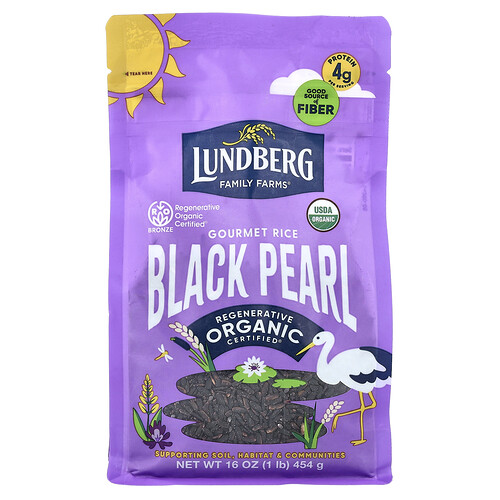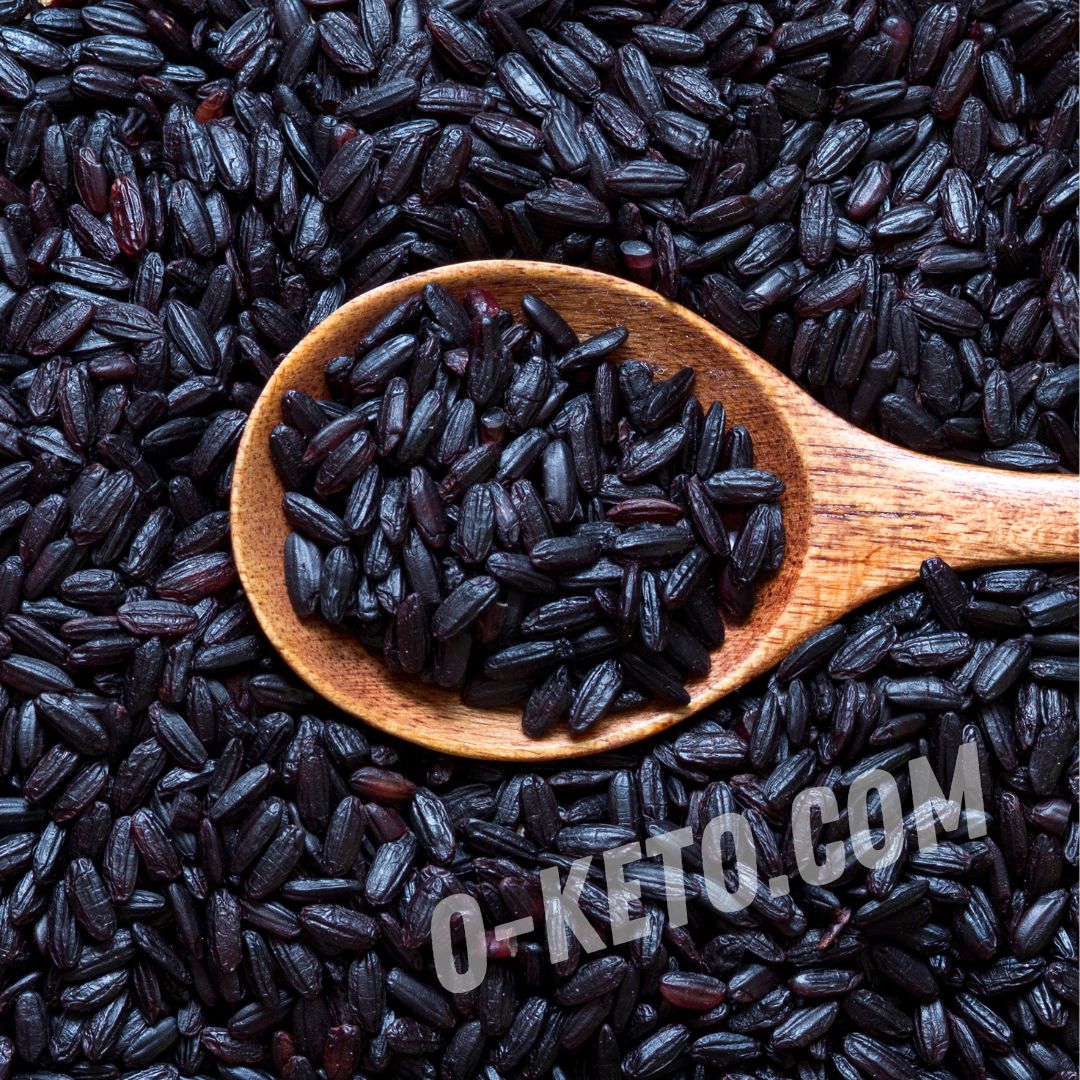

Black rice is a whole-grain rice with a dark outer layer that turns purple-black after cooking. It is often called imperial or forbidden rice because in Asian tradition it was long considered rare and expensive. Its taste is nuttier and denser than white rice, and the texture remains slightly firm after cooking.
The dark color comes from anthocyanins in the outer layer of the grain. This does not make black rice low-carb: it is still a grain, just less refined and more aromatic. It works in pilafs, side dishes, warm salads, bowls with vegetables, dishes with coconut milk, fish, duck, mushrooms, and spicy sauces.
Black rice should be distinguished from wild rice. Wild rice is another plant, with another grain shape and flavor. Black rice is usually a variety of Oryza sativa and behaves in cooking like dense whole-grain rice: it needs more water and more time than white rice.
Nutritional value
In 100 g of dry black rice there are usually about 340–370 kcal, 7–9 g of protein, 2–4 g of fat, and roughly 70–78 g of carbohydrates. After cooking, the weight increases about 2.5–3 times, so values per 100 g of cooked rice are lower, but the starch remains.
It contains fiber, manganese, magnesium, phosphorus, iron, B vitamins, and pigments from the outer layer. Compared with white rice, the taste and composition are richer, but for low-carb eating the main question is unchanged: a portion of rice quickly takes a large share of the daily carbohydrate limit.
Is it suitable for keto?
For strict keto, black rice usually does not fit. Even a small bowl of cooked rice brings a noticeable amount of starch. A low or medium glycemic index does not turn it into a keto food, because the total carbohydrate amount remains high.
In a more relaxed LCHF pattern or in eating without a ketosis target, a small portion may appear occasionally if counted in advance. In that case, it is better not to pair the rice with sugary sauces, dried fruit, sweet coconut milk, or starchy sides. For strict keto, the side-dish role is better given to cauliflower, cabbage, mushrooms, zucchini, or leafy greens.
How to cook it
Black rice is rinsed until the water is cleaner and is often soaked for several hours. Soaking shortens cooking time and makes the texture more even. It usually needs more water than white rice and cooks for 30–45 minutes, until the grain is soft but not mushy.
After cooking, let it stand covered for 5–10 minutes. For flavor, add ghee, butter, olive oil, salt, spices, herbs, or a little acidity. In keto cooking these additions do not make rice low-carb, but they clarify its role: it is a starchy base, not a seasoning.
How to choose
The grain should be dry, whole, and free of mold, insects, musty smell, and excess dust. Good black rice is dark, but should not stain the hands like powdered dye. An unnaturally bright shade and strange smell are warning signs.
Check packing date and origin. Whole-grain cereals store worse than polished grains because the outer layer and germ contain fats. If the rice smells like old oil or damp storage, the cooked flavor will be unpleasant.
Limitations
The main limitation is starch. With strict carbohydrate control, weight loss on keto, or poor tolerance of grains, black rice is better skipped. Gluten-free status does not make it low-carb. Rice crops may also accumulate trace contaminants from soil, so it is not wise to build the whole diet around one type of rice every day.
How to store it
Keep dry rice in a tightly closed container, in a dark dry place, away from heat. Large stocks are not worth buying if the grain is used rarely. Cooked rice should be cooled quickly, kept in the refrigerator, and reheated only in the needed portion. Long standing at room temperature is undesirable for cooked rice.
What can replace it?
In ordinary cooking, black rice can be replaced with brown rice, red rice, wild rice, quinoa, or buckwheat, but for keto these are also too starchy. In low-carb serving, cauliflower rice, finely chopped cabbage, mushrooms, zucchini noodles, broccoli, or greens mixed with oil work better.