


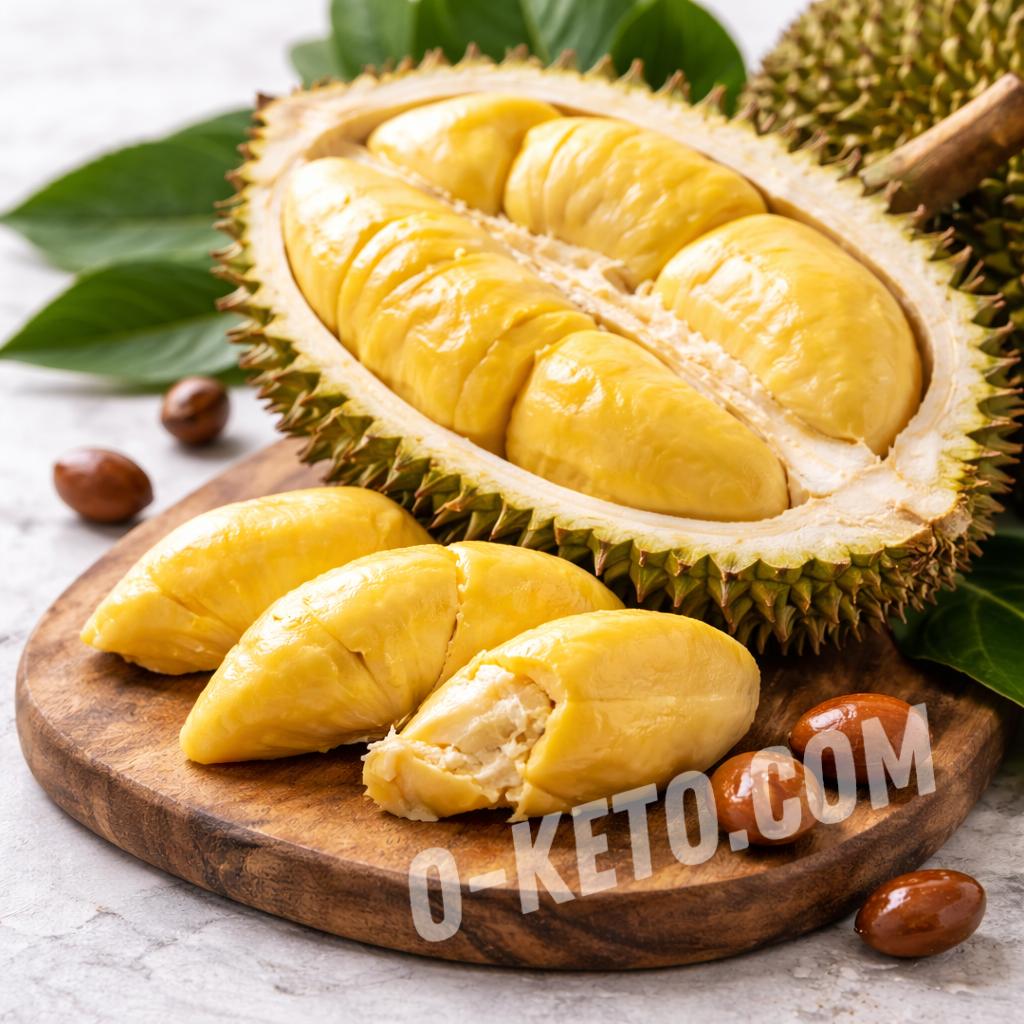

Durian — a tropical fruit known for its large size, spiky skin, and intense aroma. It is widely distributed in Southeast Asian countries and is considered one of the most unusual fruits in the world. With its creamy texture and complex flavor, durian has earned the unofficial title of «king of fruits» and holds a special place in the local culinary culture.
History and Origin
The homeland of durian is considered to be the tropical forests of Southeast Asia. Today, it is cultivated in Thailand, Malaysia, Indonesia, and other countries in the region. Durian trees can reach significant heights and bear large fruits with a dense spiky shell.
In traditional cuisine, durian is used in various desserts, drinks, and sweet dishes. Due to its rich flavor, it has become an important part of the gastronomic culture of many Asian countries.
Nutritional Value
The flesh of durian contains natural sugars, dietary fiber, and various vitamins and minerals. Compared to many other fruits, it has a higher calorie content and carbohydrate levels.
| Calories | 140–150 kcal |
| Proteins | 1.5–2 g |
| Fats | 5 g |
| Carbohydrates | 26–28 g |
The majority of carbohydrates are represented by natural sugars and dietary fibers.
Main Vitamins and Minerals:
- Vitamin C participates in the antioxidant protection of the body;
- B vitamins are involved in energy metabolism;
- Potassium helps regulate water-electrolyte balance;
- Magnesium is involved in metabolic processes;
- Copper participates in the body’s enzymatic reactions.
Health Benefits
Durian contains dietary fiber and various plant compounds, including polyphenols. These substances are involved in metabolic processes and antioxidant protection of cells.
The fruit also contains potassium and B vitamins, which are involved in energy metabolism and the functioning of the nervous system.
Durian in a Low-Carbohydrate Diet
Due to its high carbohydrate content, durian is usually limited in carbohydrate-controlled diets. It is consumed in small portions or used as an ingredient in desserts and drinks.
Despite its limited use in low-carbohydrate diets, durian remains an important product in the cuisines of tropical countries due to its taste and nutritional value.
Culinary Uses:
- Making desserts;
- Adding to sweet drinks;
- Using in ice cream;
- Making creams and sweet pastes;
- Adding to traditional Asian dishes.
With its creamy texture and rich flavor, durian remains one of the most recognizable and discussed tropical fruits.


