


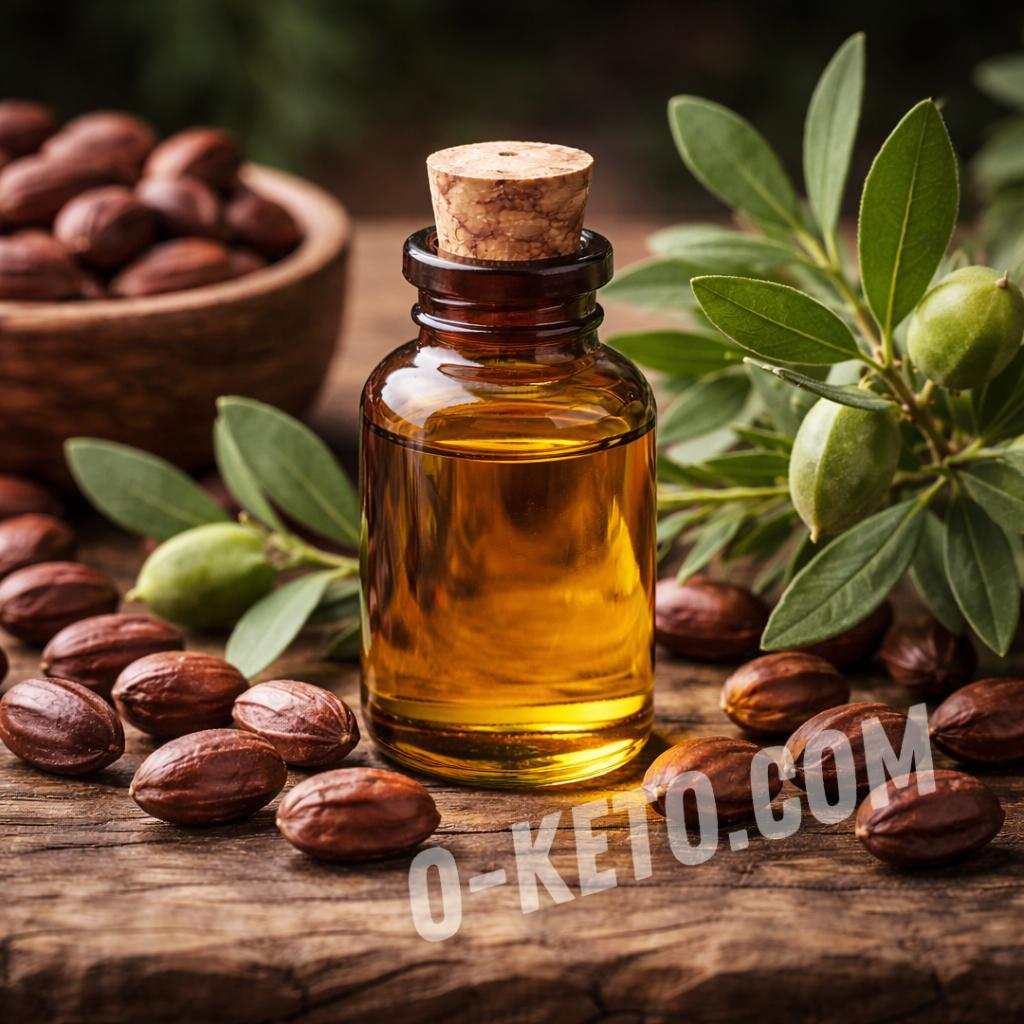

Jojoba oil, obtained from the seeds of the Simmondsia chinensis plant, is not actually an essential oil in the classical sense, but rather a liquid plant wax with unique biochemical properties. This is what distinguishes jojoba from other oils and explains its exceptional compatibility with human skin. Structurally, jojoba wax is similar to skin sebum, which allows it to spread easily, absorb quickly, and not disrupt the skin’s natural lipid barrier.
For centuries, jojoba has been used by Native Americans to protect the skin from dehydration, sun, and wind, as well as for hair care. In modern cosmetology and aromatherapy, jojoba oil is considered one of the basic and universal products suitable for almost any skin type and age. It does not cause irritation, does not oxidize, and is highly stable during storage.
Composition and Biological Properties
Jojoba oil consists primarily of liquid wax esters, which are not found in this form in any other vegetable oil. It also contains fatty acids, fatty alcohols, vitamin E, B vitamins, and trace elements.
Key properties of jojoba oil:
- support for the integrity of the skin barrier;
- pronounced moisturizing effect without occlusive action;
- antioxidant protection for the skin;
- anti-inflammatory and soothing effects;
- regulation of sebum production.
Due to the absence of triglycerides, jojoba oil does not go rancid and does not create a nutrient medium for pathogenic microflora, making it especially valuable for the care of problematic and sensitive skin.
Application in Skin Care
In cosmetology, jojoba oil is used as a standalone product and as a base for creams, serums, and massage blends. It is suitable for dry, oily, combination, and sensitive skin, as it does not disrupt its physiological balance.
Main areas of application:
- moisturizing and protecting dry skin;
- care for oily and problematic skin;
- reducing irritation and redness;
- supporting the skin in cases of acne and seborrhea;
- preventing premature aging.
Jojoba oil can be used in its pure form as a nighttime treatment, as well as added to ready-made cosmetic products to enhance their effectiveness.
Hair and Scalp Care
In hair care, jojoba is valued for its ability to normalize the condition of the scalp and improve hair structure. It does not weigh down the hair and is suitable even for fine and oily types.
Most often, the oil is used:
- to moisturize dry and damaged hair;
- for brittleness and split ends;
- for scalp care in cases of dandruff;
- as an oil mask before washing.
Regular use helps to increase hair elasticity and gives it a natural shine.
Use in Aromatherapy and Massage
In aromatherapy, jojoba oil primarily serves as a carrier oil. It is ideal for diluting essential oils, as it has no pronounced scent, does not irritate the skin, and ensures even release of active components.
It is used:
- in massage blends;
- in body and relaxation practices;
- for skin care after aromatherapy procedures;
- in restorative and care programs.
Safety and Application Features
Jojoba oil is considered one of the safest vegetable oils. It rarely causes allergic reactions and is suitable for sensitive skin, including that of children.
Recommendations for use:
- can be used in its pure form;
- suitable for daily care;
- does not require strict dosage restrictions;
- recommended to be stored in a cool, dark place.
Jojoba oil is a universal base for skin and hair care, as well as an indispensable component in aromatherapy. Its physiological properties, stability, and high compatibility with the skin make it one of the most valuable products in natural cosmetics and wellness practices.


