


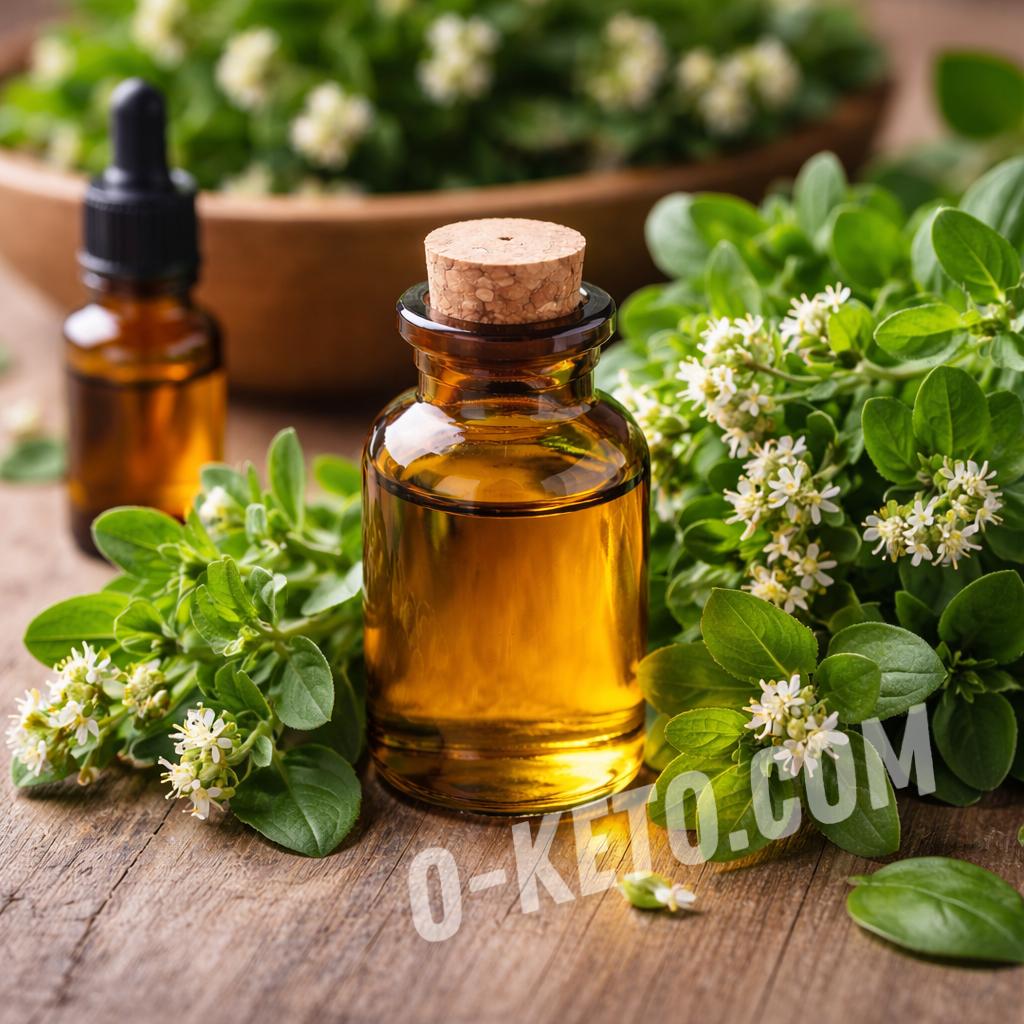

Marjoram essential oil is obtained from the leaves and flowering tops of Origanum majorana by steam distillation. The aroma is warm, soft, herbal-spicy, slightly sweet, and less sharp than oregano. It is a concentrated aromatic product, not dried herb for soup and not an ordinary vegetable oil.
Marjoram as a culinary herb is linked with the Mediterranean and the Middle East, while the essential oil is used in aromatic blends, diluted massage blends, perfume compositions, cosmetics, and sometimes food aromas when the bottle is marked for that purpose. For keto and LCHF, intended use and dose matter more than carbohydrates.
Composition and aroma
Marjoram oil may contain terpinen-4-ol, gamma-terpinene, alpha-terpinene, sabinene, linalool, terpineol, and other volatile compounds. The profile depends on raw material, region, and distillation. In scent, marjoram is softer than thyme and oregano, while keeping a warm herbal character.
Good oil smells clean, dry-spicy, warm, and herbal, without mustiness, rancidity, or a harsh medicinal base. If the smell becomes flat, sour, or heavy, do not use the product on skin or in food blends. In compositions, marjoram often softens sharp herbal and conifer notes.
Is it suitable for keto?
From a carbohydrate perspective, marjoram essential oil has almost no effect on keto because it is used in microdoses. But in cooking, dried or fresh marjoram is usually simpler: dosing is clearer, the taste is familiar, and the risk of spoiling the dish is lower. Essential oil does not replace a spoon of dried herb.
If the product is food grade, it can be used only through weak dilution and in very small amounts. It may add a warm herbal note to meat sauce, creamy dressing, poultry marinade, vegetable stew without potato, or finishing butter. Without food-use labeling, do not add it to food.
How to use it
Essential oil should not be dropped straight into a pot or plate. Dilute it first in a fatty, alcoholic, or otherwise suitable base, then use part of that dilution. In aromatic blends, marjoram pairs with lavender, bergamot, sweet orange, cedarwood, rosemary, black spruce, chamomile, and frankincense.
For skin, use only diluted oil and patch test first. In massage blends, it gives a warm herbal note but should not dominate. In a bath, mix essential oil first with an emulsifier or base, otherwise drops remain on the water surface and reach skin concentrated.
In cooking, marjoram pairs with chicken, lamb, pork, mushrooms, zucchini, eggplant, tomato without sugar, cream, eggs, and cabbage. If an ordinary seasoning is needed, dried marjoram is almost always more convenient than essential oil.
How to choose
The label should show Origanum majorana, plant part, extraction method, country of raw material, shelf life, and intended use. Do not confuse marjoram with oregano: they are related but have different aromatic profiles. If the label says only “marjoram fragrance,” it may be a fragrance, not essential oil.
A dark glass bottle with a dropper and tight cap is preferable. For food, a separate food-use indication is needed. For cosmetics, concentration guidance and producer warnings matter. Cloudiness, sticky cap, and solvent smell are weak signs.
Limits
Marjoram essential oil is concentrated and may irritate skin, eyes, and mucous membranes. Do not use it undiluted, leave it within reach of children, or take it internally without food-use labeling. Pregnancy, childhood, sensitive skin, allergy to Lamiaceae plants, and regular medication use are reasons to discuss use with a qualified professional.
If diffusion or diluted application causes coughing, burning, tearing, skin irritation, or headache, stop use. For food, when in doubt, choose the dried herb: it is easier to dose and more familiar in dishes.
Storage
Keep the bottle tightly closed in a cool dark place, away from the stove, window, and damp bathroom. After opening, write the date on it. Make dilutions in small portions and label the concentration. If the smell changes, do not use the oil for skin or food.
What can replace it?
In food, marjoram essential oil can be replaced with dried marjoram, fresh herb, oregano in a smaller amount, thyme, basil, or parsley with lemon zest. In aromatic blends, lavender, rosemary, linalool thyme, cedarwood, or sweet orange with an herbal note may move in a related warm herbal direction, but they will not match exactly.


