


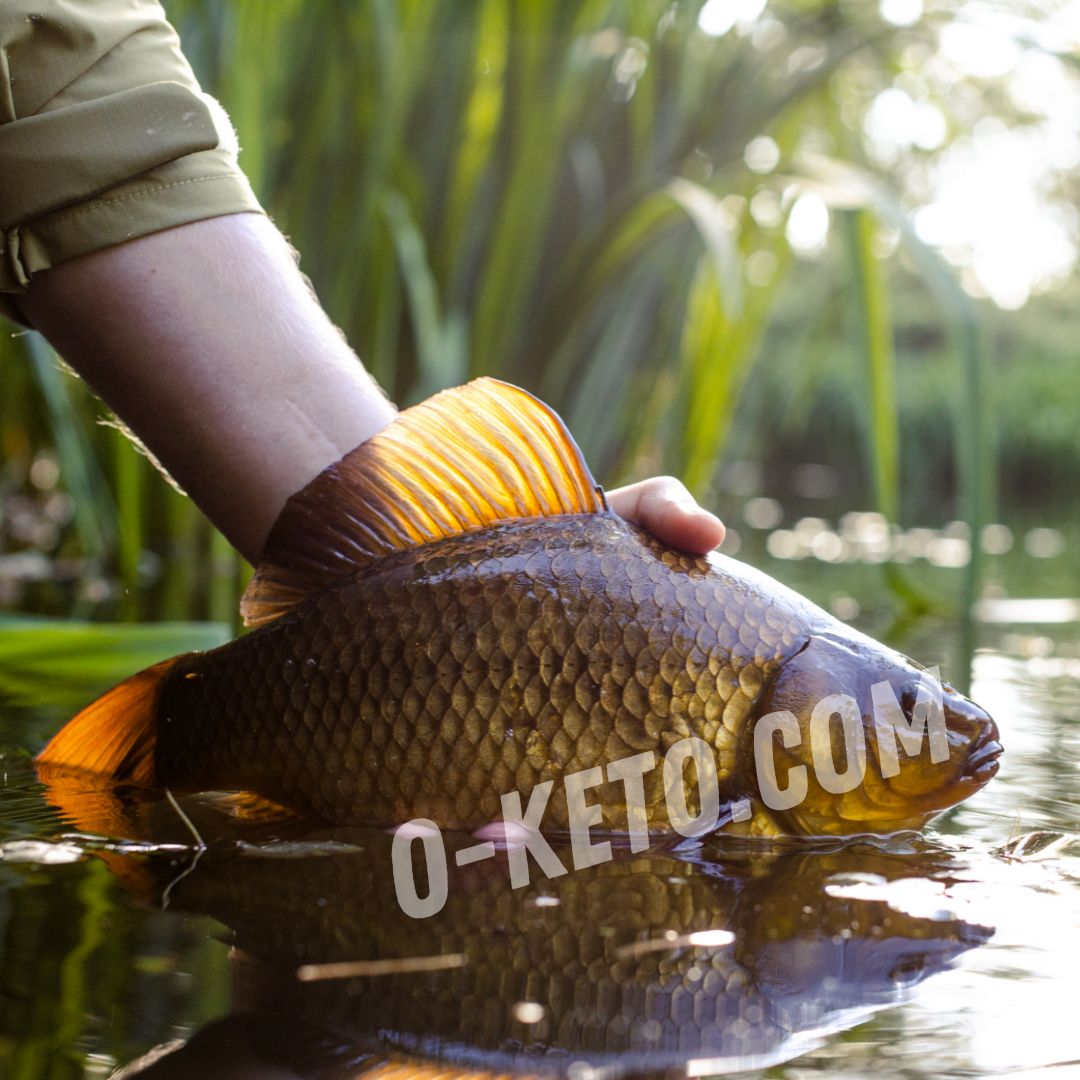

Carp is a freshwater fish with firm, slightly sweet flesh and a noticeable river flavor. It is baked whole, fried in portions, stewed in sour cream, grilled, stuffed, used for fish soup, and served in cold appetizers. It is sold fresh, chilled, frozen, live, smoked, and marinated.
For keto and LCHF, carp is convenient as a carbohydrate-free fish with moderate fat. It is not as fatty as mackerel, but it is usually juicier than many white fish. Its main features are many bones and possible muddy aroma, so fish quality, cleaning, marinade, and cooking method strongly affect the result.
Nutrition profile
In 100 g of carp there are usually about 120–170 kcal, roughly 17–19 g protein, and 5–10 g fat, depending on size, season, and cut. Plain carp contains no carbohydrates, and glycemic load is practically absent. It may provide B12, vitamin D, phosphorus, potassium, selenium, and fatty acids EPA and DHA.
Fat is distributed unevenly: near the skin and belly the flesh is softer and fattier, while the back is denser and drier. If the fish is fried in flour or served with regular potatoes, the final dish is no longer low-carb. If it is baked with butter, lemon, herbs, and vegetables, counting is easier.
Is it suitable for keto?
Carp fits keto well when cooked without wheat breading, sweet marinades, or starchy sauces. Good options include baking with butter and herbs, stewing in cream or sour cream without flour, pan-frying without breading, fish soup without potato, or serving with cauliflower and green salad.
Because the fat level is moderate, carp does not always need a heavy sauce. Butter, olive oil, homemade mayonnaise, sour cream sauce, or ghee may be enough. If the taste feels too river-like, lemon, dill, parsley, garlic, bay leaf, black pepper, and short marinating help.
How to cook it
Whole carp is often scored along the sides in a fine pattern: this makes small bones less noticeable after frying or baking. Salt the fish in advance and add lemon, pepper, herbs, and a little oil. Baking whole keeps it juicy, while portion pieces cook faster and are easier to serve.
Long overheating makes the flesh dry, while too gentle heat can leave an unpleasant smell. For fish soup, carp works well with roots, bay leaf, and pepper; for a keto version, skip potato. In sour cream sauce, avoid flour thickening: reduce the sauce or add a little cream cheese.
How to choose
Fresh carp should smell like clean water, not ammonia, sour brine, or rot. Eyes should be clear, gills red or pink, and skin moist, without sticky slime or gray spots. Live fish should move actively rather than lie weakly on its side.
Frozen carp should not have a thick ice coat, yellow fat spots, or signs of refreezing. Smoked and marinated carp require label reading: sugar, starch, syrups, and excess salt can sharply change nutrition and taste.
Limits
Carp has many bones, so it should be served carefully to children and to anyone who has difficulty separating fish bones. With fish allergy, it should be avoided. Fish from questionable waters can smell unpleasant and accumulate unwanted substances, so source matters. Raw or poorly cooked freshwater fish is not suitable for safe home serving.
If the fish has a sharp smell, cloudy eyes, sticky surface, or flabby flesh, do not buy it. Spices and vinegar can hide a problem, but they do not turn a poor product into a good one.
Storage
Chilled carp should be cooked as soon as possible, preferably on the day of purchase. Before cooking, keep it in the coldest part of the refrigerator. Frozen fish should thaw in the refrigerator, not on the counter. Cooked dishes should be stored briefly and reheated once to avoid drying the flesh and intensifying the smell.
What can replace it?
In recipes, carp can be replaced with wild carp, grass carp, silver carp, pike-perch, trout, or another firm-fleshed fish. For a less bony option, pike-perch or trout fillet is more convenient. For a fattier keto dish, mackerel, salmon, or catfish can work, but the taste will be noticeably different.


