


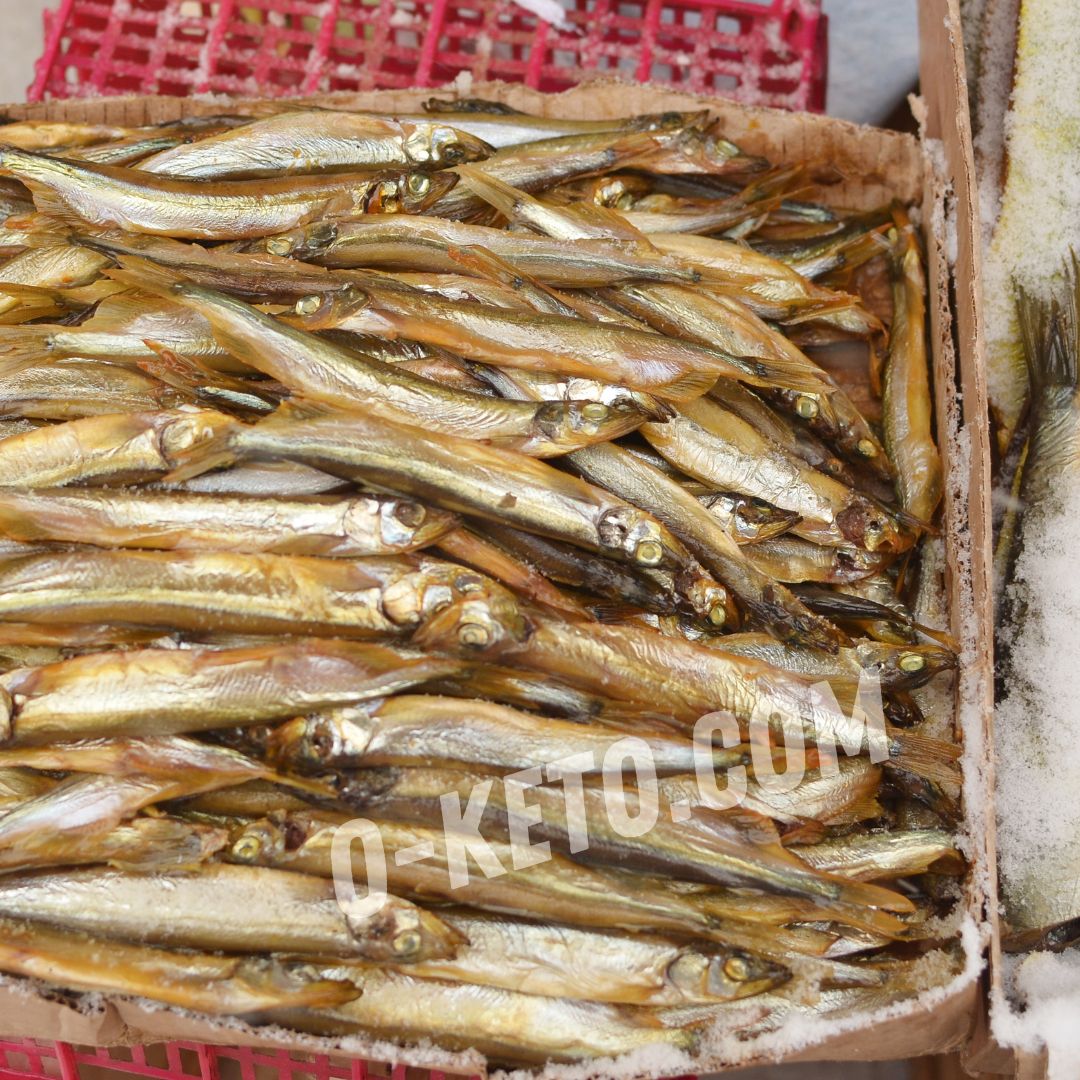

Capelin is a small marine fish from cold northern waters, usually sold frozen, salted, smoked, or with roe. It is one of those foods where the form matters as much as the basic nutrient profile: plain frozen fish, a salty snack, and smoked capelin can fit into meals very differently.
The fish has tender flesh, thin skin, and small bones that often become barely noticeable after careful cooking. Capelin is convenient to cook whole. Because the fish is small, trimming it aggressively can waste a large part of the portion. Its flavor is more pronounced and richer than many lean white fish, so it works well as the main protein on a plate, not only as a side ingredient.
Nutrition
Plain fresh or frozen capelin has almost no carbohydrates. Its main nutrients are protein and fat. Depending on season, size, and batch, 100 g can provide roughly 13-18 g of protein and 7-14 g of fat. The calorie level is usually higher than very lean fish, but lower than very fatty herring or mackerel. Capelin roe and larger oily fish will be denser in calories.
Salted and smoked capelin differs mainly by sodium rather than carbohydrates. With marinades, ready snacks, and preserves, the ingredient list matters: sugar, syrup, starchy thickeners, and sweet sauces can turn a simple fish into a different product. Breading changes the picture too, because flour and crumbs add carbohydrates and absorb oil during frying.
Is it suitable for keto?
Capelin can fit keto and LCHF when it is served without breading, sweet marinade, or thick sauce. It contains practically no starch or sugar, while the mix of protein and fat makes a portion filling. The easiest option is plain frozen capelin cooked in a pan, oven, grill, or air fryer with minimal additions.
A portion still needs to be treated as normal food, not an unlimited snack. Oily fish can add calories quickly, and salted or smoked capelin can raise sodium intake for the day. If it is served with mayonnaise, cheese sauce, or extra butter, the dish becomes richer again. For a lighter plate, pair it with leafy greens, cucumber, salad leaves, cauliflower, broccoli, or other low-carb vegetables.
How to cook
Frozen capelin is best thawed in the refrigerator rather than under hot water. Pat it dry before cooking: a dry surface browns faster and falls apart less. If the aroma feels too strong, use a short marinade with lemon juice, salt, pepper, bay leaf, or dill. A small fish should not sit in acid for long, because the texture can become loose.
In a pan, capelin cooks quickly over medium to moderately high heat. For a low-carb version, skip flour and use only a thin layer of spices, salt, and a little oil. In the oven, arrange the fish in a single layer so it roasts rather than steams in its own liquid. In an air fryer, watch the tail ends: small fish are done sooner than expected.
How to choose
Good frozen capelin has whole fish, no heavy snow layer, no yellow fat stains, and no harsh smell of old fish. A light ice glaze is normal, but the package should not look like a block of ice. If all fish are stuck into a solid mass, it often points to thawing and refreezing or poor storage. With salted and smoked capelin, check the ingredients, date, smell, and skin condition. A sticky surface, cloudy brine, or rancid odor are poor signs.
Capelin roe is sold separately, but it is often mixed with mayonnaise-style sauces, sugar, starch, flavorings, and colors. For stricter keto, judge it by the label, not by the name. Plain roe without sweet additions is closer to fish in composition, but because of salt and dense texture it is usually eaten in small portions.
What to pair it with
Capelin works well with lemon, dill, green onion, parsley, garlic, black pepper, paprika, and bay leaf. Suitable sauces include unsweetened sour cream, yogurt sauce without sugar, homemade mayonnaise, and mustard dressing without honey. For a more substantial plate, serve it with stewed cabbage, salad leaves, egg, avocado, or cucumber.
For snacks, it is better not to bury capelin under bread, croutons, or sweet marinades. Its flavor is already vivid, so acidity, herbs, and crisp vegetables are often enough. Smoked capelin can be added to salad in small pieces, but the salt in the rest of the dish should be reduced from the start.
Limits and storage
Capelin is not suitable for people with fish allergy. Salted and smoked versions should be limited by those who do not tolerate a lot of salt well. Because of small bones, serve it carefully to children and to anyone who finds whole small fish difficult to eat. During pregnancy, fully cooked fish is the safer choice, while questionable preserves with unclear storage are best avoided.
Keep frozen capelin in the freezer until use, and do not refreeze it after full thawing. Cooked fish is best eaten within 1-2 days, stored in a closed container, and reheated gently so the aroma does not become sharper. Salted and smoked capelin should also be moved to a closed container after opening and kept away from foods that absorb smells easily.
Substitutes
For a similar small oily fish, use Baltic herring, sprats, sardines, small herring, or smelt. For a milder flavor, cod, hake, or pollock can work, but those are lean fish and the dish will be less juicy. In recipes based on capelin roe, herring roe or another fish roe without sweet sauces may work if the flavor and ingredients fit the meal.


