


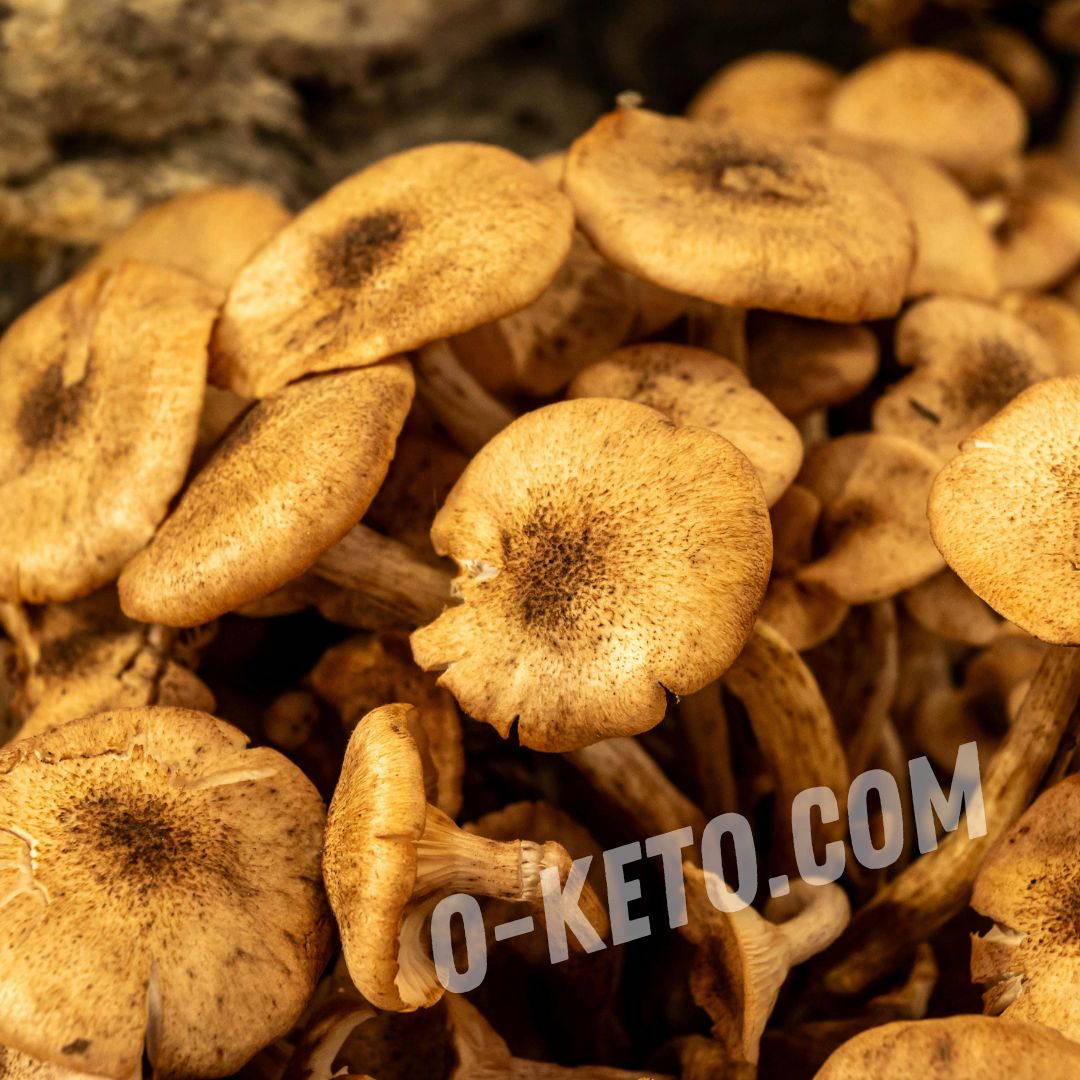

Honey mushrooms are a group of mushrooms with thin stems, small caps, and a typical habit of growing in large clusters on wood, stumps, roots, or nearby soil. In everyday language, the name covers several edible mushrooms: autumn, winter, and meadow honey mushrooms. They have a delicate mushroom aroma, a firm but not heavy texture, and a good ability to absorb butter, cream, spices, and broth flavor.
The main feature of honey mushrooms is not only taste, but also the need for correct identification. They have dangerous look-alikes, so gathering them is suitable only for people who can identify the species confidently. For cooking, it is more reliable to buy verified fresh, frozen, dried, or pickled mushrooms with clear origin, processing, and storage date.
Types and appearance
Autumn honey mushrooms are more common in late summer and autumn in deciduous and mixed forests. Winter honey mushrooms can grow in cold weather on stumps and wood. Meadow honey mushrooms grow in meadows and clearings but look different from wood-growing types. Edible honey mushrooms may have caps from pale honey to brown, thin stems, and in some species a ring.
These signs are not enough as gathering instructions. Color, shape, and ring change with the age of the mushroom and growing conditions. If there is doubt, do not take the mushroom. In practical cooking, a safe batch matters more than using a wild ingredient at any cost.
Nutritional value
In 100 g of fresh honey mushrooms there are usually about 35 kcal, roughly 3.3 g of protein, 0.5 g of fat, and about 6.6 g of carbohydrates, including about 2.3 g of fiber. Net carbohydrates are therefore around 4.3 g per 100 g. The numbers vary with species, moisture, and cooking method.
Honey mushrooms contain riboflavin, niacin, pantothenic acid, selenium, copper, and potassium. Still, they are not a protein replacement for meat or fish: mushrooms contain only a modest amount of protein, and much of their weight is water and fiber. Their strength is taste, volume, low calorie content, and the ability to make a simple dish more satisfying without grains or flour.
Are they suitable for keto?
For keto and LCHF, honey mushrooms fit in a moderate portion. About 100–150 g of cooked mushrooms can usually be included in a low-carbohydrate diet, especially with eggs, meat, poultry, creamy sauce, butter, or herbs. The cooking method matters as much as the mushrooms themselves.
Pickled honey mushrooms often contain sugar, so the label should be read. Fried mushrooms do not lose their carbohydrates, but calories rise because of the oil. In soups and sauces, the problem more often comes from potatoes, flour, starch, or sweet marinade rather than from the mushrooms.
How to use them
Fresh honey mushrooms are usually boiled before further cooking, especially if they are wild. After boiling, they can be fried with butter, a small amount of onion, garlic, sour cream, or cream. They work in omelets, flourless mushroom casseroles, mushroom sauce for meat, fillings for keto pancakes, soups without potatoes, and warm salads.
Frozen honey mushrooms can go straight into a pan or soup, but excess liquid should be cooked off. Dried mushrooms give a more concentrated aroma; soak and rinse them, then use them in sauces or broths. Pickled honey mushrooms are served as a cold appetizer, but for keto it is better to choose versions without sugar or rinse a marinade that tastes too sweet.
How to choose
Fresh mushrooms should be firm, with no slime, mold, sour smell, or dark wet spots. Very old honey mushrooms become tough, and the caps may fall apart. Frozen mushrooms should not be one solid block of ice; that can show thawing and refreezing or poor storage.
For pickled honey mushrooms, check the ingredients: mushrooms, water, salt, vinegar, and spices are a clear base. Sugar, starch, and sweet sauces raise carbohydrates. Dried mushrooms should have no sand, debris, musty smell, or signs of moisture.
Limitations
Honey mushrooms need full heat treatment. Raw or undercooked wild mushrooms can cause serious digestive discomfort. Mushrooms can also be hard to tolerate for people with a sensitive stomach, so the portion should be increased gradually.
Do not eat mushrooms of unknown origin, mushrooms gathered near roads or industrial areas, or mushrooms bought informally when the species is uncertain. Children, pregnant women, and people with reduced tolerance are better served by verified products and small portions.
How to store them
Fresh honey mushrooms spoil quickly. It is better to sort, clean, and cook them on the day of purchase or gathering. In the refrigerator, keep them only briefly, in a paper bag or a container with some airflow. A closed wet bag speeds spoilage.
Boiled or fried honey mushrooms should be kept in the refrigerator in a closed container and reheated only in the needed portion. Dried mushrooms belong in a dry, dark place, away from strong smells. After opening, pickled mushrooms should stay in the refrigerator and be taken out with a clean spoon.
What can replace them?
By role in a dish, honey mushrooms can be replaced with button mushrooms, oyster mushrooms, shiitake, chanterelles, or porcini. For sauces, button mushrooms and dried porcini work well; for frying, oyster mushrooms and chanterelles; for a pickled appetizer, sugar-free marinated button mushrooms. The taste will differ, but the mushroom function remains.


