


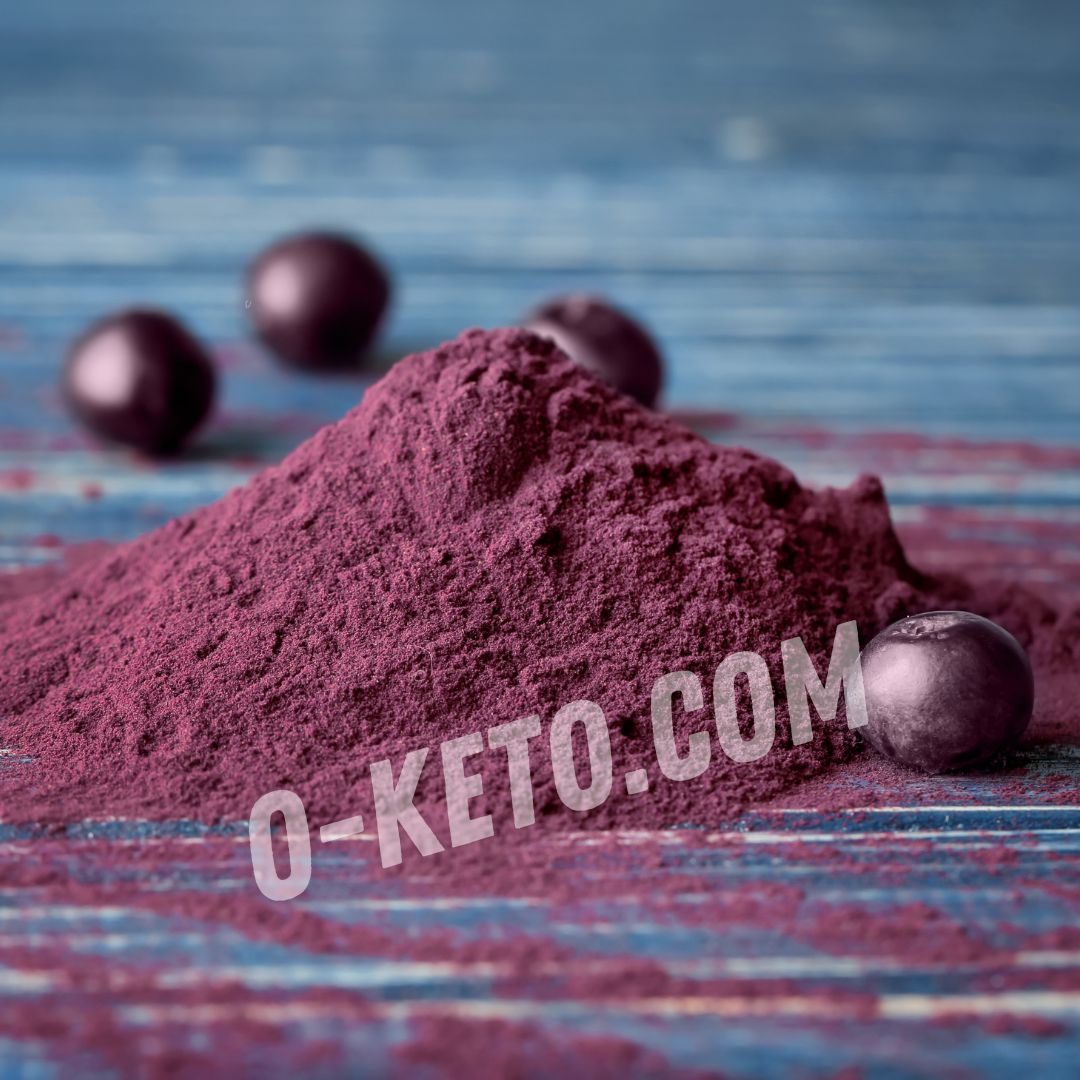

Acai powder is made from acai berries, usually after drying and grinding. It is a dark purple powder with a berry-earthy flavor, added to smoothies, unsweetened yogurt, desserts, creams, sauces and sometimes drinks. It is different from sweet acai bowls: prepared bowls often contain banana, syrups, granola and fruit, while plain powder is much simpler.
The old description listed about 70 kcal, 2 g of protein, 4.2 g of fat and 4 g of carbohydrates per 100 g. Values for acai powders vary widely depending on raw material, drying method, fillers and whether the label shows 100 g or one serving. For keto, it is more important to read the exact label and count the real amount, usually 1-2 teaspoons.
Nutrition
Acai contains plant pigments called anthocyanins, some fat, fiber and minerals such as potassium, calcium, magnesium and iron in varying amounts. But the powder should not be described as a miracle product. In an ordinary diet, it is a tart berry ingredient with deep color and flavor, not a dietary base.
If the powder is plain and unsweetened, the carbohydrate load in a small portion is usually moderate. But many acai products are sold as dessert mixes: sugar, maltodextrin, banana powder, grape juice, flavorings or dry fruit fillers may be added. Those versions should be counted as sweet products.
Is It Keto-Friendly?
Unsweetened acai powder may fit keto and LCHF in a small serving. It gives color, berry tartness and mild acidity without requiring a lot of fruit. But the flavor can seem unusual, so it is easy to oversweeten. For strict keto, use minimal sweetener and a fatty base.
Good pairings include unsweetened Greek yogurt, sugar-free coconut milk, cream, chia, a small amount of berries, almond butter, unsweetened cocoa and a small dose of erythritol or stevia. Poor keto pairings include banana, honey, dates, granola, sweet juices and large portions of fruit puree.
How to Use It
Acai powder is best stirred first into a small amount of liquid to avoid clumps. It colors creams and drinks well, but too much may bring a dry tart sensation. Start with 1 teaspoon per serving, especially if the product is new.
Practical options include:
- unsweetened yogurt with chia and a small amount of berries;
- coconut cream with acai and unsweetened cocoa;
- smoothie with almond milk and no banana;
- berry sauce for unsweetened cottage cheese;
- color addition to a flour-free keto dessert.
How to Choose and Store
The ingredient list should contain acai powder without sugar or fillers. If syrup, maltodextrin, fruit powder, starch-based sweeteners or “bowl mix” are listed, check the product carefully. The color should be dark, and the aroma berry-tart, without dampness or mustiness.
Store the powder dry, tightly closed and away from light. It easily absorbs moisture, clumps and loses aroma. A large package makes sense only with regular use. If the powder smells musty or rancid, it is better not to add it to dessert.
Limits and Substitutes
The main limit is not acai itself but the dessert format around it. A smoothie bowl with banana, sweet granola and syrup may be far from keto even if it contains a spoon of acai. Individual reactions to tart berry powders or a lot of fiber are also possible.
Acai powder can be replaced with unsweetened blueberry powder, cocoa, a small amount of berries, unsweetened raspberry powder or chia mixed with berry puree. If only color is needed, a few berries or cocoa may be enough; if tartness is needed, cranberry, blueberry or a small amount of lemon acidity can work.
Portion and Common Mistakes
For a first try, 1 teaspoon is enough. The powder looks light, but the flavor is dense, and a large dose can make cream dry and astringent. A common mistake is building a fruit dessert around acai with banana and juice. For keto, the opposite logic works better: a fatty unsweetened base, a little powder and only a small berry addition.
Powder, Capsules and Ready Mixes
Plain acai powder is usually an ingredient, not a food to eat by itself. Capsules are less common in cooking and behave more like a fixed-serving supplement. Ready bowl mixes need careful reading: the word “acai” on the front of the package does not tell you how much berry powder is inside and how much of the product is a sweet base.
If the powder is used mainly for color, a very small dose is enough. For flavor, it works better with a fatty base and a tart berry rather than banana or juice. This keeps the dessert closer to keto: less sugar, less fruit puree volume and more control over the final serving.
Substitution options in recipes
Maca powder. In a one-to-one ratio. Maqui contains more anthocyanins, gives a dark purple hue and moderate berry acidity; sweetness is lower — add ½ tsp of erythritol to the smoothie.


