


Adenosylcobalamin
This mitochondrial coenzyme form of vitamin B12 supports conversion of methylmalonyl-CoA to succinyl-CoA; its importance is seen in energy metabolism, nerves, and the methylmalonic acid marker.
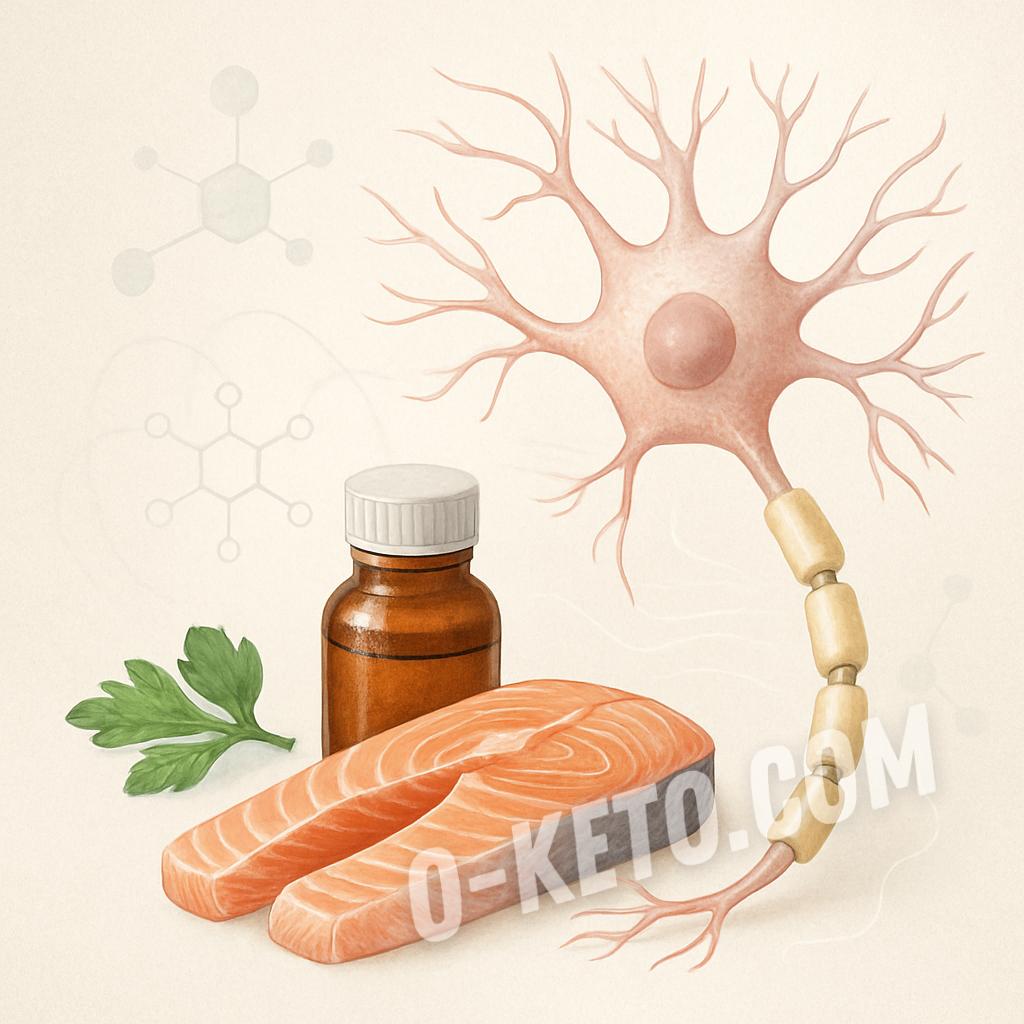
Adenosylcobalamin is one of the two active coenzyme forms of vitamin B12 in the body. Unlike methylcobalamin, which works in the cytosol in methylation reactions, adenosylcobalamin acts in mitochondria. Its key role is participation in the methylmalonyl-CoA mutase reaction, where methylmalonyl-CoA is converted into succinyl-CoA. This links vitamin B12 to the metabolism of certain amino acids, odd-chain fatty acids, and energy metabolism.
Vitamin B12 deficiency affects both active forms, so the problem is rarely only adenosylcobalamin. When B12 is inadequate, methylmalonic acid may rise, myelin in the nervous system may suffer, and numbness, tingling, weakness, anemia, memory problems, and fatigue may appear. Serum B12 does not always perfectly reflect tissue status, especially if a person already takes supplements or has absorption problems.
How it differs from other B12 forms
Methylcobalamin participates in the conversion of homocysteine to methionine, while adenosylcobalamin supports mitochondrial methylmalonyl-CoA metabolism. Hydroxocobalamin and cyanocobalamin can be converted into active forms if absorption and intracellular processing work properly. The form on the label matters, but it is not the only factor. Dose, route, stomach health, intrinsic factor, ileal absorption, medication use, and the cause of deficiency matter as much.
Adenosylcobalamin is often marketed as the energy form of B12 because of its mitochondrial role. That is partly understandable, but easily exaggerated. If a person truly has B12 deficiency, restoring B12 status may improve energy and neurological symptoms. If there is no deficiency, the supplement does not have to produce a noticeable energy boost. Mitochondria depend not only on B12, but also on iron, magnesium, B1, B2, B3, oxygen delivery, thyroid function, sleep, and inflammation status.
Who is at risk
B12 deficiency risk is higher in vegans, strict plant-based eaters, people with low animal food intake, after bariatric surgery, with atrophic gastritis, pernicious anemia, ileal disease, metformin use, proton pump inhibitor use, and some other medications. Age matters as well because stomach acid and B12 release from food may decline. On keto, B12 deficiency is less likely when the diet includes meat, fish, eggs, and organ meats, but it can still occur with malabsorption or a narrow diet.
Status assessment may include serum B12, methylmalonic acid, homocysteine, complete blood count, MCV, ferritin, and symptoms. Elevated methylmalonic acid is especially connected with impairment of the adenosylcobalamin-dependent reaction. It must still be interpreted with kidney function in mind, because kidney problems can raise methylmalonic acid independently of B12. Neurological symptoms deserve attention even when the laboratory picture is not perfectly clear.
Methylmalonic acid matters because it points to the branch that requires adenosylcobalamin. If it is elevated together with neurological symptoms, a normal-looking serum B12 value is not always reassuring. Kidney function still matters, because methylmalonic acid can rise when renal clearance is reduced. It should be read with creatinine, eGFR, symptoms, and the broader clinical picture.
The supplement form should be discussed after answering the main question: why B12 is low. Low intake requires one approach. Malabsorption from pernicious anemia, surgery, or intestinal disease requires another. In that situation, a small dose of an attractive active form may not solve the problem. Route of delivery and follow-up of symptoms become more important.
Supplements and practical choice
Adenosylcobalamin may be part of a B12 complex, especially when a person responds poorly to one form or wants to support both active coenzyme branches. In significant deficiency, however, the priority is reliable delivery of B12 into the body. High oral doses may be enough in some cases, while sublingual forms or injections may be needed in pernicious anemia and malabsorption. The decision depends on the cause, symptoms, and markers.
Large doses of B12 and folate should not be started together without understanding the situation. Folate can improve anemia-related markers while neurological B12 deficiency remains dangerous. Adenosylcobalamin also should not be treated as a separate mitochondrial medicine. It is a vitamin B12 form with a specific biochemical role. Its value appears when deficiency risk, symptoms, laboratory markers, or the need for a better-absorbed form is present.
If you have any questions about the term "Adenosylcobalamin", you can ask them to AI. Please note, a low-cost OpenAI model is used. It may answer questions about disease treatment with errors!


 1 / 4
1 / 4

 1 / 4
1 / 4 1 / 4
1 / 4

 1 / 4
1 / 4