


Bilirubin
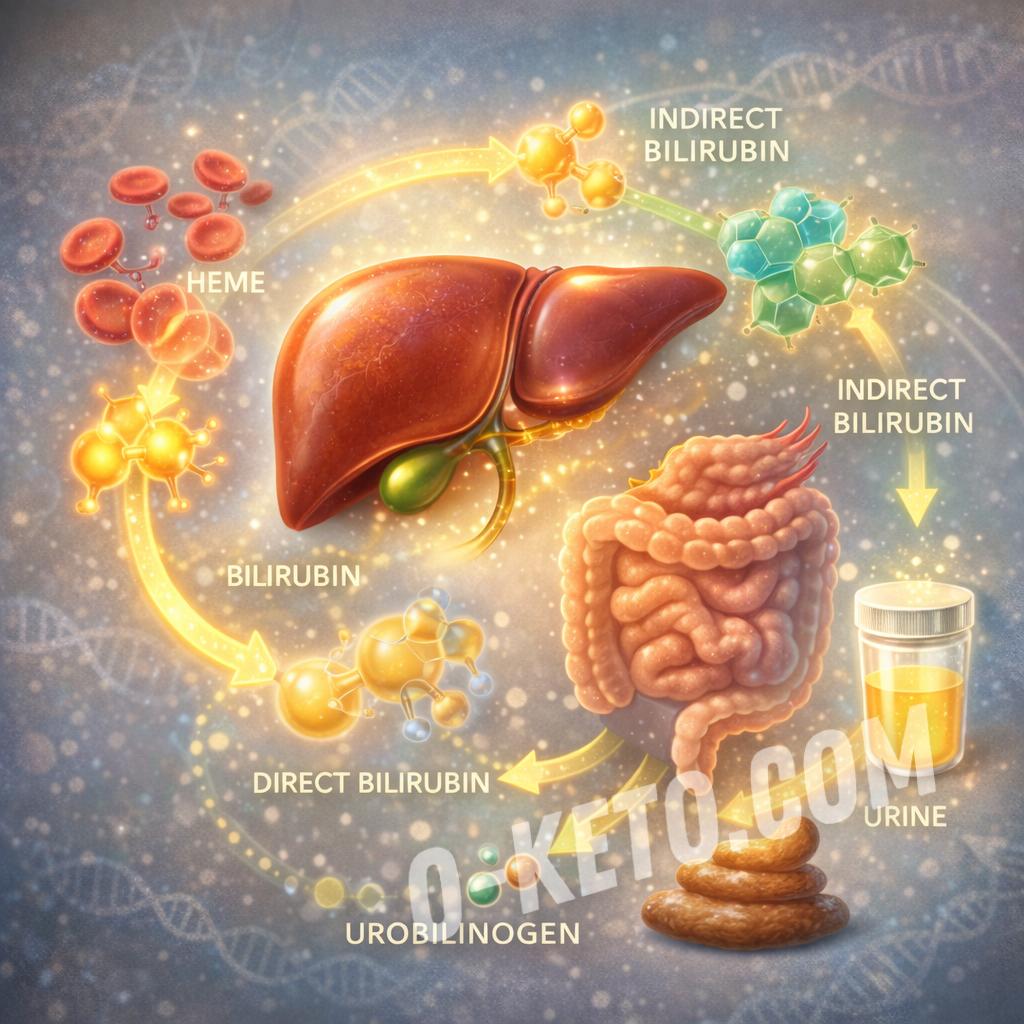
Bilirubin — a bile pigment formed during the breakdown of hemoglobin in red blood cells. In the body, it exists in two forms: indirect (unconjugated) and direct (conjugated).
Indirect bilirubin is insoluble in water and is transported to the liver in a complex with albumin. In hepatocytes, it binds with glucuronic acid and is converted into a water-soluble form — direct bilirubin, which is excreted with bile into the intestine. Subsequently, part of it is metabolized by intestinal microflora, contributing to the color of stool and urine.
For a nutrition specialist, understanding this cycle is important, as the liver and gallbladder play a key role in fat digestion. With a ketogenic diet, the load on the bile secretion system increases, so any disruptions in bile flow or liver function can affect bilirubin levels.
Metabolism and Role in the Body
The metabolism of bilirubin begins with the destruction of old red blood cells in the spleen and liver. Hemoglobin breaks down into globin and heme. Heme is converted into biliverdin and then — into bilirubin. The stages that follow are:
- binding of indirect bilirubin with albumin and transport to the liver;
- conjugation with glucuronic acid in hepatocytes;
- secretion of direct bilirubin into bile;
- metabolism in the intestine resulting in the formation of urobilinogen;
- partial reabsorption through enterohepatic circulation.
Bilirubin has antioxidant properties at physiological concentrations. However, its excess can be toxic, especially to the nervous system.
Clinical Significance
The level of total bilirubin is an important biochemical marker. An increase may be associated with three main mechanisms:
- prehepatic type — increased breakdown of red blood cells with a rise in indirect bilirubin;
- hepatic type — disruption of bilirubin conjugation or transport in the liver;
- posthepatic type — obstruction of bile ducts and increase in direct bilirubin.
Symptoms requiring medical evaluation:
- jaundice of the skin and sclera;
- dark urine;
- light-colored stool;
- itching of the skin;
- pain or heaviness in the right upper quadrant.
Bilirubin and the Ketogenic Diet
The ketogenic diet increases the proportion of fats in the diet, which raises the demands for normal bile secretion. With stable liver and gallbladder function, this is physiological. The risk of increased direct bilirubin arises not from ketosis itself, but from rapid weight loss, significant calorie deficit, or disruption of bile flow.
Factors that reduce the risk of complications on keto:
- gradual adaptation to the ketogenic diet without drastic calorie reduction;
- controlled weight loss without extreme rates;
- in intermittent fasting — sufficient daily caloric intake and protein;
- adequate hydration and electrolyte balance;
- maintaining gallbladder motility through regular physical activity;
- sufficient intake of dietary fiber within allowable carbohydrates.
Short-term intervals without food do not in themselves cause pathological increases in bilirubin in healthy individuals. The risk increases when rapid weight loss, significant catabolic stress, and dehydration occur together. In such cases, bile flow disruptions and laboratory fluctuations in indicators may occur.
Practical Recommendations for Liver and Gallbladder Health
- avoid sharp and excessive calorie deficits, especially when losing weight;
- in intermittent fasting or OMAD, ensure sufficient daily caloric intake and protein;
- lose weight gradually, focusing on stable dynamics without extreme rates;
- preferably use mono- and polyunsaturated fats, limiting trans fats and excess refined oils;
- maintain adequate hydration and electrolyte balance;
- monitor laboratory indicators in the presence of risk factors or symptoms.
Bilirubin — an important indicator of liver, bile duct, and red blood cell breakdown balance. In the context of a ketogenic diet and intermittent fasting, the key factor is not the frequency of meals, but metabolic stability, nutritional adequacy, and absence of sharp catabolic stress. A moderate and controlled rate of weight loss reduces the load on the liver and gallbladder.
If you have any questions о термине "Bilirubin", you can ask them to our bot.
List of videos from YouTube by request "Bilirubin":


