


Total bilirubin
Total bilirubin helps assess bile-pigment metabolism, bile flow, and red-cell breakdown, but it must be interpreted together with direct and indirect fractions, liver enzymes, and clinical context.
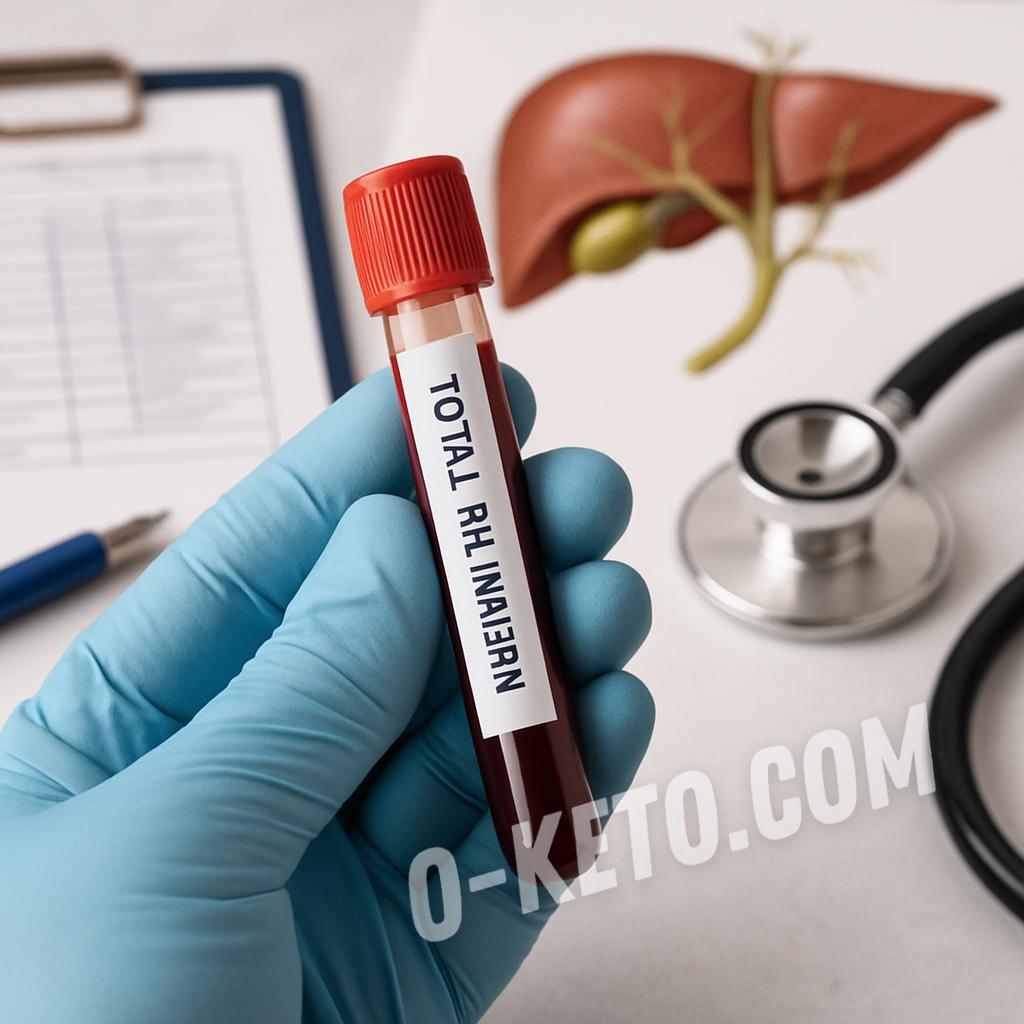
Total bilirubin is a basic laboratory marker used to understand how the body is handling bile pigments, whether the liver is processing them properly, and whether there are signs of bile-flow disturbance or increased red blood cell breakdown. By itself, however, the test does not tell you where the problem is coming from, because total bilirubin is a combined value that includes both direct and indirect fractions. That is why one number on its own can easily be misleading. To make sense clinically, the result is usually read together with direct and indirect bilirubin, ALT, AST, GGT, alkaline phosphatase, symptoms, and often imaging findings.
What the test reflects
Bilirubin is produced during the breakdown of hemoglobin and other heme-containing compounds. The first form is indirect bilirubin, which then has to be processed in the liver and converted into direct bilirubin for excretion through bile. For that reason, total bilirubin reflects several steps at once: the pace of red blood cell turnover, the liver’s ability to bind and process bilirubin, and the patency of the biliary system. When the number rises, the next question is almost always which part of that chain is responsible. Without fractionation and neighboring markers, total bilirubin remains too broad to interpret reliably.
When the test is especially useful
Total bilirubin is commonly checked when there is yellowing of the skin or eyes, dark urine, pale stool, itching, right upper abdominal heaviness, nausea, poor appetite, weakness, or suspicion of liver or biliary disease. But it is also useful when elevation is found incidentally during routine screening. In that situation the test may help raise suspicion of a relatively benign inherited pattern such as Gilbert syndrome, or instead suggest that a fuller liver, biliary, and hematologic workup is needed. Its real value comes from being part of a pattern rather than a stand-alone verdict.
What can raise total bilirubin
Causes of elevation are usually grouped into a few broad categories. One is increased indirect bilirubin, which can occur with red blood cell breakdown, some deficiency-related states, and inherited processing patterns such as Gilbert syndrome. Another is impaired handling inside the liver itself. A third is bile-flow disturbance, where direct bilirubin more often becomes prominent and GGT, alkaline phosphatase, itching, dark urine, or pale stool may also join the picture. This is why clinicians do not stop at a high total bilirubin value alone. They usually move on to fractions, liver enzymes, symptoms, and the broader clinical setting.
When elevation may be relatively mild or benign
Not every elevated total bilirubin result means severe liver disease. In some people the pattern is related to inherited reduced bilirubin processing, which is typical of Gilbert syndrome. In that scenario the increase is often driven mainly by the indirect fraction and may become more visible after fasting, stress, infection, alcohol, sleep deprivation, or intense physical exertion. Other liver markers may remain normal or close to normal. Even so, this should not be self-diagnosed casually. The first step is to make sure the pattern really fits a typical mild unconjugated hyperbilirubinemia rather than a different process.
How to read it with neighboring markers
If total bilirubin is elevated, the first practical question is what the direct and indirect fractions are doing. If indirect bilirubin dominates, clinicians think more about Gilbert syndrome, hemolysis, or impaired intrahepatic processing. If the direct fraction is more prominent, attention shifts toward cholestasis, inflammation, stones, obstruction, or another biliary problem. ALT, AST, GGT, alkaline phosphatase, complete blood count, and sometimes LDH, haptoglobin, or ultrasound help complete the picture. This side-by-side interpretation is what makes total bilirubin clinically useful.
What can distort interpretation
Bilirubin is influenced by more than disease alone. Fasting, dehydration, acute stress, infection, heavy exercise, alcohol, and some medications can shift the value. In people with Gilbert syndrome those fluctuations may be especially noticeable. That means a one-off blood draw after an unusual week may not reflect the person’s usual baseline. A more honest interpretation comes from testing under ordinary conditions and then looking at the fractions and neighboring liver markers rather than guessing from one number. Total bilirubin is a valuable clue, but it is not a diagnosis by itself.
If you have any questions about the term "Total bilirubin", you can ask them to AI. Please note, a low-cost OpenAI model is used. It may answer questions about disease treatment with errors!


