


Shingles
Reactivation of the chickenpox virus usually causes a one-sided band of pain and blistering rash along a nerve; early risk assessment and pain control matter because postherpetic neuralgia may persist after the skin heals.




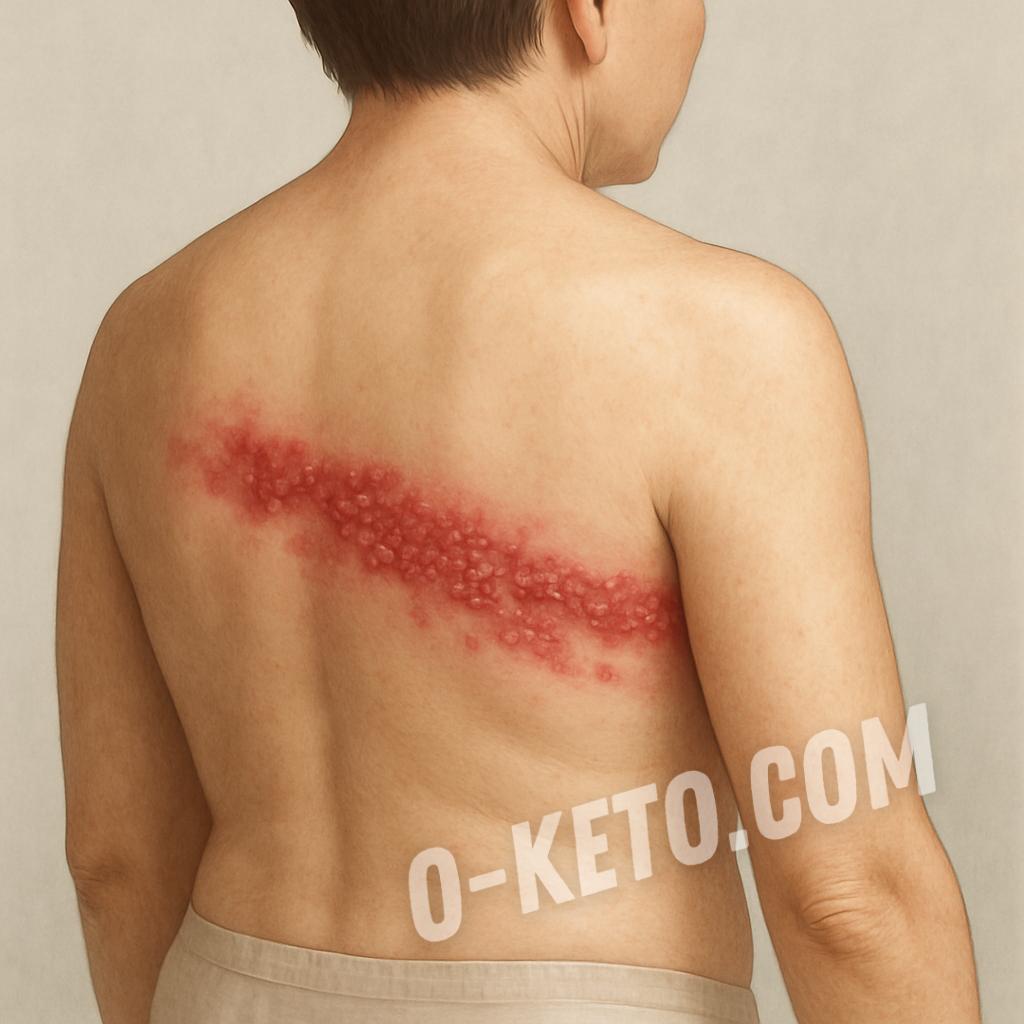
Shingles usually does not begin with blisters. It often starts with pain, burning, tingling, or unpleasant skin sensitivity along the course of one nerve. A few days later, a unilateral strip of rash appears in that same area: first redness, then clusters of fluid-filled vesicles, and later crusts. This pattern is especially typical for the chest, back, abdomen, face, or neck. The main practical problem is not only the visible rash itself but the fact that the process involves nerve tissue. Because of that, the pain can be much stronger than the skin findings would suggest, and in some people the discomfort may persist long after the skin has healed.
How shingles usually presents
Many people first feel as if a muscle, rib, patch of skin, or even an internal organ is hurting. A one-sided band of pain, burning, tingling, or marked sensitivity appears first, and only afterward do blisters erupt in the same zone. The key point is that the eruption is usually asymmetric and follows a dermatome, meaning the skin area supplied by one nerve root. Classic cold sores on the lips or mucosa behave differently: they are more compact and do not usually create such a clear stripe across the body.
The most common complaints include:
- burning, shooting, or aching pain on one side of the body;
- skin tenderness even from clothing, touch, or shower water;
- vesicular lesions that later dry and crust over;
- fatigue, malaise, and sometimes low-grade fever;
- ongoing pain after the rash disappears, especially in older adults.
If the process involves the eye area, ear, nose, or face, the situation becomes more serious. In those locations the risk of complications affecting vision, hearing, facial muscles, and long-lasting neuralgia is higher. That is why localization matters almost as much as the size of the eruption itself.
Why it happens and who is at higher risk
After chickenpox, the virus does not leave the body completely. It remains dormant in the nerve ganglia and can reactivate later if immune control weakens or the body lacks enough resources to keep the latent infection in check. Risk rises with age, after severe infections, during marked stress or exhaustion, with cancer, diabetes, immunosuppressive therapy, and in general in states of immune compromise.
That does not mean every episode is explained by age alone. In younger adults reactivation can also follow major overload, sleep deprivation, severe inflammation, trauma, prolonged pain, or a combination of several stressors at once. In clinical practice it is important not only to ask what to put on the rash, but also why the body allowed this reactivation in the first place.
Nutrition is not the only cause and not the only treatment, but during recovery overall protein status, zinc sufficiency, vitamin D status, certain amino acids, and hydration still matter. On a low-carbohydrate diet these factors are often easier to control as long as the diet does not slide into severe calorie or protein restriction.
What matters in treatment and support
The core medical approach usually centers on timely antiviral therapy when it is appropriate and on pain control. The earlier treatment starts in a higher-risk person, the better the chance of shortening the illness and lowering the risk of postherpetic neuralgia. Management still depends on age, rash extent, location, immune status, and the time elapsed since the eruption began.
In supportive nutrition-oriented protocols, L-lysine is sometimes considered. It is more often discussed in the broader context of herpes-family infections as an amino acid used for additional support when recurrent flares are a concern. In the therapy-scheme block on this site, that point is relevant only as an adjunct to the overall strategy, not as a substitute for medical assessment when pain is severe, the eye is involved, or the course is complicated.
For skin care, the usual goal is to avoid traumatizing the blisters and to avoid removing crusts too early. The main everyday task is to keep the area clean, reduce friction from clothing, and avoid conditions that promote secondary bacterial infection. If the lesions become weepy, purulent, sharply more red, foul-smelling, or are accompanied by higher fever, the question is no longer only about a virus but also about bacterial complications.
Why a prolonged course can be difficult
The main complication is postherpetic neuralgia, when the skin has already healed but pain, burning, or marked sensitivity remain for weeks or months. Risk is higher in older adults, in people with severe initial pain, and when a large area is affected. Eye involvement with risk to the cornea and vision, ear involvement with facial nerve symptoms, and widespread eruptions in immunocompromised people are also especially concerning.
Even when the visible area seems small, severe one-sided nerve pain should not be dismissed. Sometimes the rash does not appear immediately, and a person is first treated for “osteochondrosis,” “intercostal neuralgia,” or a “pulled muscle.” That is why the combination of burning pain, a band-like distribution, and later vesicles is a strong reason to reconsider the diagnosis.
When in-person medical care is needed
Medical evaluation should not be delayed if the rash affects the face, eye, ear, or mucous membranes, if the pain is intense, or if the person is older, pregnant, or immunocompromised. Urgent assessment is also needed when lesions continue to spread, go beyond one typical dermatome, or are accompanied by marked weakness, high fever, confusion, severe headache, or signs of secondary skin infection.
For practical self-orientation, one simple idea helps: shingles is not just “a rash from stress.” It is a viral process with a major nerve component. Because of that, the important questions are not only what to put on the skin, but how quickly the process was recognized, how well the pain is controlled, and whether there is any complication risk that makes home observation insufficient.
If you have any questions about the term "Shingles", you can ask them to AI. Please note, a low-cost OpenAI model is used. It may answer questions about disease treatment with errors!


 1 / 4
1 / 4 1 / 4
1 / 4 1 / 4
1 / 4

 1 / 4
1 / 4 1 / 4
1 / 4