


Panic disorder
Repeated panic attacks and the fear of their recurrence can severely limit daily life. For panic disorder, medical evaluation, working with triggers, and systemic support are important, not just trying to wait out the attack.




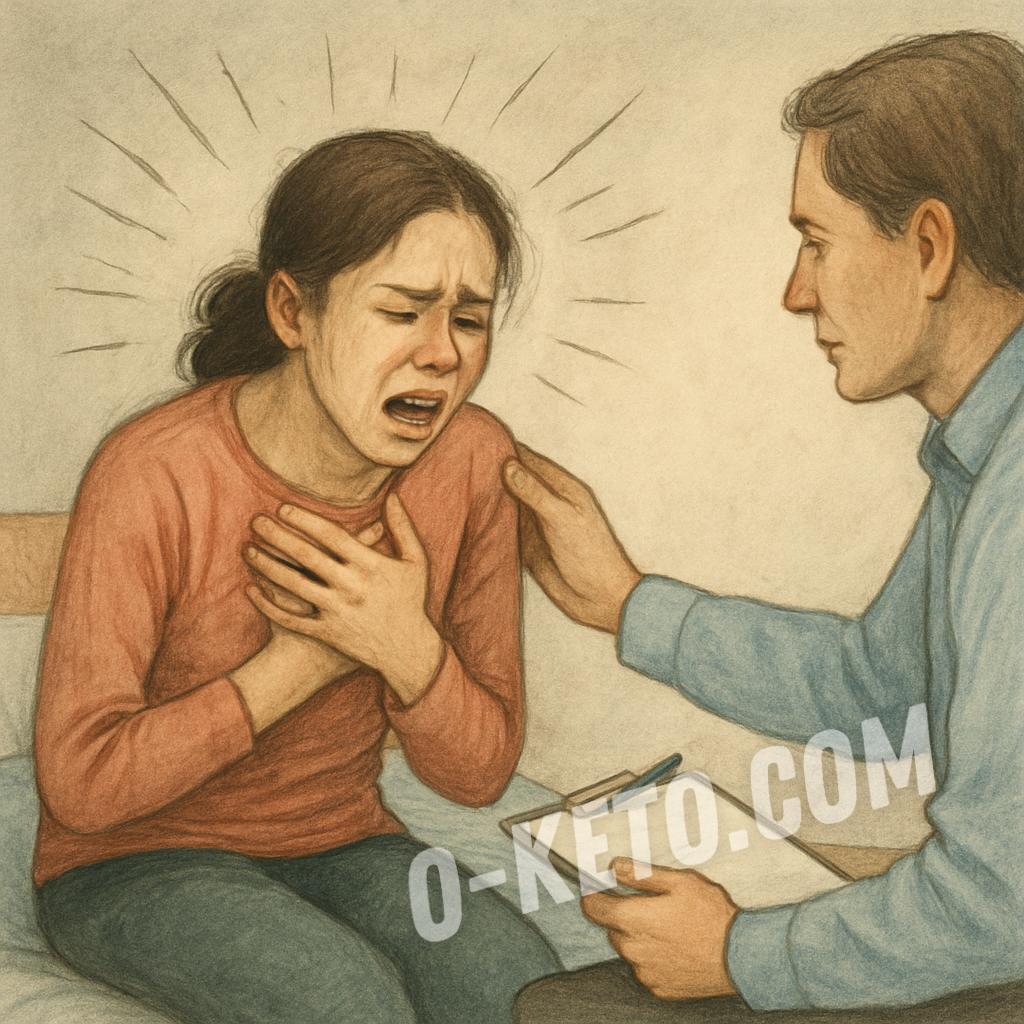
Panic disorder is a condition in which a person has repeated panic attacks and a significant fear of their recurrence. A panic attack usually develops quickly and is accompanied by a strong sense of danger, palpitations, trembling, shortness of breath, sweating, dizziness, nausea, internal trembling or fear of losing control, going crazy or dying. To the person inside the episode, it doesn’t seem like just excitement. Such attacks are perceived as a real threat to health and greatly change behavior even between attacks.
The problem with panic disorder is not only the attacks themselves, but also the constant anticipation of the next episode. A person begins to avoid transport, shops, queues, trips, physical activity or places where he has already become ill. Gradually, the quality of life may decrease more than from the short attacks themselves. This is why panic disorder requires attention as a separate condition, and not as a random nervous reaction.
How to recognize a panic attack
Symptoms usually develop quickly, peak within minutes, and appear very physical. There is often tachycardia, a feeling of heat or chills, trembling, shortness of breath, a feeling of a lump in the throat, weakness in the legs, numbness, unsteadiness, derealization, or fear of immediate disaster. For some people, the attack begins as if for no reason, for others there are obvious triggers: stress, lack of sleep, caffeine, alcohol, changes in blood sugar, overheating, severe fatigue or internal tension.
Sometimes the first panic attack is so frightening that a person is sure: it is a heart attack, stroke or a severe neurological catastrophe. Medical evaluation is especially helpful after initial episodes to rule out conditions that may actually mimic panic.
What can trigger attacks
Panic episodes often become more frequent due to chronic stress, poor sleep, excess caffeine and energy drinks, alcohol, stimulants, long breaks between meals and general exhaustion of the nervous system. In some people, hypoglycemic sensations, thyroid problems, severe anxiety, post-stress, or hyperventilation play a role.
This does not mean that panic disorder is reduced to one trigger. There is usually a combination of predispositions and factors that make the nervous system more reactive. Therefore, even things that are useful in themselves, such as intense training or severe dietary restrictions, sometimes increase the likelihood of attacks in a sensitive person if they are done against the background of overwork and lack of sleep.
Why it’s important to look beyond complacency
Between attacks, a person can try to live as before, but constantly expecting things to get worse creates its own burden. Body scanning, increased sensitivity to any sensations, avoidance behavior and decreased confidence in the safety of ordinary life appear. This makes the disorder self-sustaining even when the external stressor has already subsided.
That is why support usually requires not only the phrase “nothing bad is happening,” but more systematic work: assessment of sleep, anxiety background, habits, triggers, and sometimes psychotherapeutic or medicinal assistance. The longer panic disorder is left unaddressed, the more it begins to control a person’s routes, decisions and level of freedom.
When to see a doctor
It is especially important to seek medical help if attacks are recurring, intensify, lead to avoidance of normal activities, or are accompanied by depressive thoughts, severe insomnia, and physical exhaustion. Separately, you need to be examined after the first episodes if there is any doubt whether the condition is related to the heart, thyroid gland, glucose metabolism, anemia or other reasons.
Panic symptoms can be very convincing physically, so the doctor’s task is not to devalue the experience, but to separate panic disorder from dangerous somatic conditions and then offer adequate assistance tactics.
Supportive approaches
Psychotherapy, addressing hyperventilation and catastrophic thoughts, more regular sleep and eating patterns, limiting excessive stimulants, and gradually reducing avoidance usually help. In some cases, the doctor may discuss drug support if attacks are frequent and severely disruptive. Nutritional measures are sometimes also used as part of overall tactics, but not as a replacement for full-fledged care.
Inositol is a substance that is sometimes considered in support regimens for anxiety and panic conditions. But such support should remain part of a broader strategy, especially if the attacks are severe, recurrent and already changing the person’s lifestyle.
Practical conclusion
Panic disorder is one of the conditions that responds well to help if the person is not left alone with it. The sooner it is possible to understand that repeated attacks and the fear of waiting for them require systemic support, the higher the chance of returning to normal tolerance of everyday life, sleep, transport, work and movement without constant internal anticipation of a new attack.
It is important to remember that a panic attack feels like a disaster, but it does not make a person weak or “wrong.” This is a state of the nervous system that can be worked with if you combine medical assessment, correct psychotherapeutic assistance and reasonable restoration of the general background in which the body lives.
If you have any questions about the term "Panic disorder", you can ask them to AI. Please note, a low-cost OpenAI model is used. It may answer questions about disease treatment with errors!


