




Diarrhea on keto usually does not mean that the ketogenic diet itself is “wrong for your body.” Much more often it means the menu was changed too sharply or built too narrowly: too many liquid fats, too rapid an increase in MCT oil, too much butter coffee, overly rich sauces, or poor tolerance to part of the vegetable base while the microbiota is still adapting. The symptom is unpleasant, but in many cases it can be corrected by tuning the menu rather than abandoning low-carb eating altogether.
Why diarrhea can appear on keto in the first place
When a person moves quickly from a standard diet to keto, almost everything changes at once: the fat ratio, the fiber pattern, the vegetable mix, meal timing, salt intake and hydration habits. The digestive system does not always adapt on the same day. Bile flow, pancreatic response, intestinal motility and the microbial environment all start working under new conditions. If the transition is too abrupt, the gut may answer with loose stools, rumbling, cramping or the feeling that food is moving through too quickly.
It is important to separate this adaptation-type diarrhea from situations that need a different kind of evaluation. If loose stool comes together with fever, blood, strong pain, severe weakness, dehydration or rapid weight loss, that is no longer a typical menu-adjustment story. But if the problem began soon after increasing fats or changing the vegetable base, the first step is usually to examine the meal structure rather than to conclude that keto itself is harmful.
The first common cause: too many liquid fats
One of the most common mistakes at the start of keto is trying to “hit fat targets” by using large amounts of liquid fat. Trouble often shows up with MCT oil, butter coffee, rich fat sauces, coconut oil and too much butter taken almost as a separate food. These fats enter digestion quickly and, in sensitive people, can noticeably accelerate bowel motility. If bile flow and enzyme adaptation have not caught up yet, stools may become very soft or frankly watery.
This does not mean fats are bad on keto. The issue is usually the form and the speed of increase. The body often handles fat better when it is naturally built into meals such as meat, fish, eggs, cheese and avocado rather than delivered as several spoonfuls of oil on top of everything else. That is why, with keto-related diarrhea, it makes sense to reduce liquid fats first instead of cutting all dietary fat at once. Quite often that single change brings visible relief within a day or two.
The second common cause: the wrong vegetable mix for your gut
The second frequent cause is not fat at all, but the vegetables a person suddenly starts eating in large amounts because they seem “keto approved.” Some vegetables and plant foods contain more fermentable carbohydrates and compounds that can intensify bloating, fermentation and loose stools in a sensitive gut. One person may barely notice it, while another gets a clear reaction within a day or two of changing the menu.
Foods that more often cause trouble during this phase include onion, garlic, cauliflower, Brussels sprouts, mushrooms, leeks, beets, artichokes, avocado, blackberries and some sprouted legumes. That does not mean they should be banned forever. It simply means that, during an adjustment phase, it may be smarter to simplify the vegetable base and choose options that are less likely to trigger gas and urgent stools.
Which foods are usually easier to tolerate
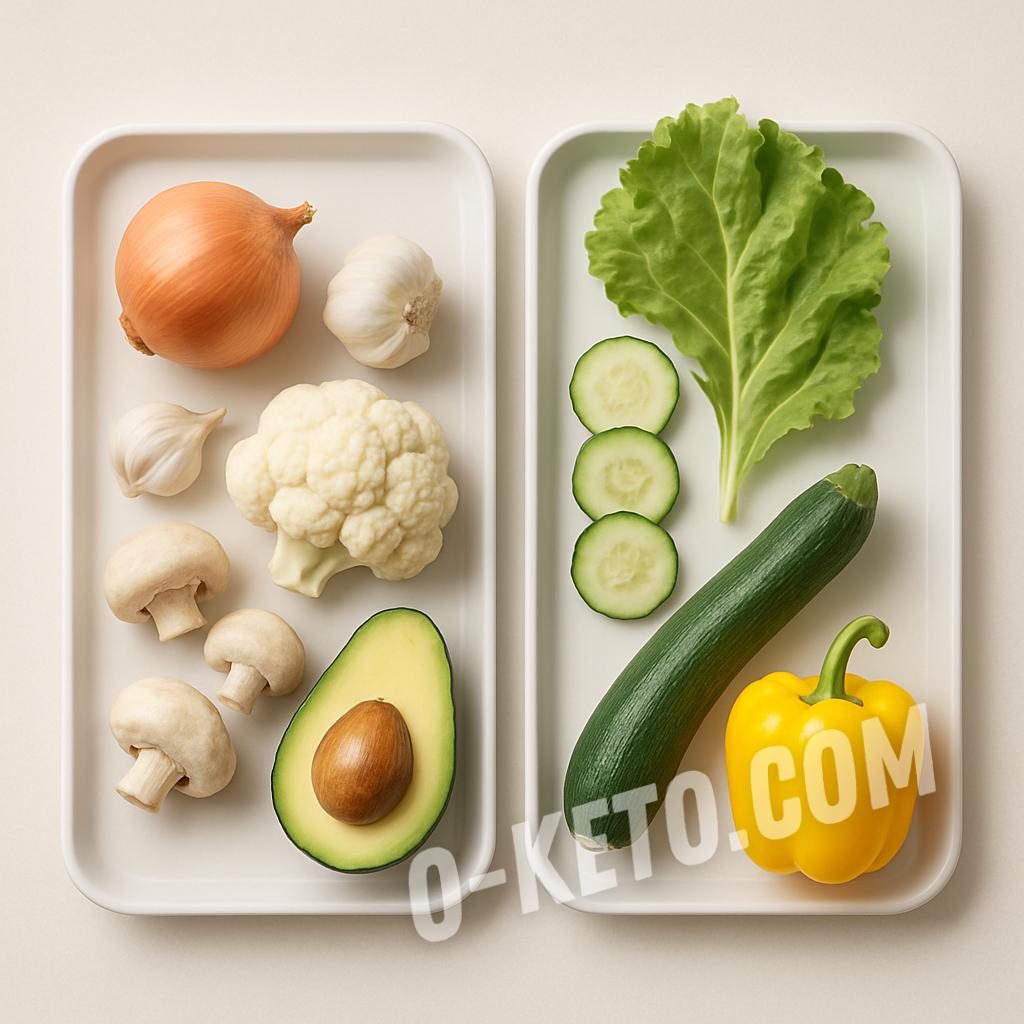
When the goal is to calm the gut down, simpler choices tend to work better: leafy lettuce, cucumbers, zucchini, tomatoes, bell peppers and milder greens. Many people also do better with plain, recognizable vegetables instead of mixed packaged salad combinations with a long ingredient list. In some cases even the difference between a basic green lettuce and a ready-made salad mix turns out to matter.
Fermented vegetables may also help, but only in moderate amounts and not as an aggressive attempt to “fix the microbiome overnight.” If the intestine is already irritated, overloading it with too many new inputs can backfire. In practice, it is usually safer to stabilize the stool first, keep four to six more neutral vegetable choices, and only then broaden the menu again.
How to reintroduce the trigger foods
Keto does not require staying on an ultra-restricted menu forever. If diarrhea improves after simplifying the diet, foods that previously seemed suspicious can usually be reintroduced one at a time after about three to four weeks. It is better not to bring back onion, cauliflower, mushrooms and avocado all on the same day. A gradual step-by-step return makes it much easier to see which food is the real trigger and which one was blamed unfairly.
This protects against two opposite mistakes. The first is eating everything chaotically and being surprised by symptoms every time. The second is deciding that the gut “cannot handle vegetables at all” and then living for months on an unnecessarily poor menu. In most cases the truth sits somewhere in the middle: the intestine needs time, and the person needs a calmer reintroduction strategy.
What else to check if the problem does not improve
If reducing liquid fats and changing the vegetable base do not help, the picture may be broader. Quite often the real issue is not keto itself but an overload of “keto products” added too early: bars, low-carb desserts, powdered mixes, sugar alcohols, inulin, corn fiber, thickeners and other unusual ingredients. On paper these foods may still be low in carbs, yet the gut often handles them worse than ordinary meals. That is why, when diarrhea on keto is unclear, it makes sense to remove bars, sugar-free sweets, nut butters, keto baked goods and similar processed items for a few days and go back to simple whole foods.
It is also worth remembering MCT oil, large amounts of coconut oil, too much nut flour, almonds and some cheeses. In one person they can trigger direct diarrhea; in another they first cause bloating, rumbling or gallbladder irritation and then destabilize the stool. In some cases high-dose magnesium, coffee on an empty stomach, very infrequent but oversized meals, prior surgery, chronic pancreatitis, irritable bowel syndrome or strong FODMAP sensitivity also play a role. At that point the question is no longer only “keto or not keto,” but the overall tolerance of the exact menu.
If diarrhea lasts more than a few days, interferes with normal eating or causes marked weakness, it is better not to glorify “adaptation” and just push through. Keto is usually tolerated better when the transition is calmer: fewer liquid fats, a simpler vegetable base, enough water and salt, moderate meal size, new foods added one at a time and gradual menu expansion. That slower structure solves the problem far more often than abandoning the entire strategy.
Sources
- Diarrhea — National Institute of Diabetes and Digestive and Kidney Diseases
- Treatment of Diarrhea — National Institute of Diabetes and Digestive and Kidney Diseases
- Symptoms and Causes of Food Poisoning — National Institute of Diabetes and Digestive and Kidney Diseases
- Influence of Carbohydrate Intake on Caprylic Acid (C8:0)-Induced Ketogenesis: A Systematic Review and Meta-Analysis
- Efficacy of a Low-FODMAP Diet in Irritable Bowel Syndrome: Systematic Review and Network Meta-analysis
- Low FODMAP Diet and Probiotics in Irritable Bowel Syndrome: A Systematic Review With Network Meta-analysis


