
A stainless steel pan often seems difficult: pancakes stick, eggs tear, chicken leaves a crust on the bottom, and after frying it is tempting to go back to a non-stick coating. In most cases, the problem is not the pan itself, but the temperature and the order of actions.
Stainless steel does not have the familiar non-stick layer. It works differently: first the pan must be heated properly, then the temperature should be lowered slightly, fat should be added, and only after that should the food go in. Once this order is clear, you can cook pancakes, fried eggs, omelets, poultry fillets, fish, cheese pancakes, fritters, and patties on stainless steel without constant sticking.
Why food sticks to a stainless steel pan
Sticking most often happens because the food contacts the metal at the wrong temperature. If the pan is too cold, proteins and starches have time to grab the surface before a crust forms. If the pan is overheated, the fat starts to smoke, the food burns quickly on the outside, and the inside may remain raw or wet.
The main causes of sticking look like this:
- the pan was used before it was fully heated;
- oil was added to a scorching-hot surface and started smoking;
- the heat was not lowered after the water-drop test;
- food was added too early, before the fat spread over the surface;
- the food was moved or flipped before it started releasing from the pan;
- there was too much moisture in the pan: wet fillet, very liquid batter, or food straight from the fridge;
- the heat was too high for delicate foods such as pancakes or eggs.
Stainless steel likes precision. It does not require complicated tricks, but it does require a habit: heat the metal first, then control the temperature.
How to prepare a new stainless steel pan
If the pan is new, it is better not to start cooking in it immediately. The surface may still have factory residue, dust, a technical film, or traces of packaging. Before the first frying, wash and heat the pan.
Basic preparation of a new pan looks like this:
- wash the pan with hot water and baking soda or mustard powder;
- avoid harsh detergent before the first seasoning-style heating if you want a gentler surface preparation;
- dry the pan thoroughly so no water drops remain;
- place it over medium heat and warm it up;
- add a little oil or animal fat and spread it in a thin layer over the surface;
- keep it over low heat for a few minutes, then wipe off the excess with a paper towel.
This does not turn stainless steel into Teflon and does not create a permanent coating. But it removes excess residue from the surface and makes the first use calmer.
The water-drop test: the main temperature guide
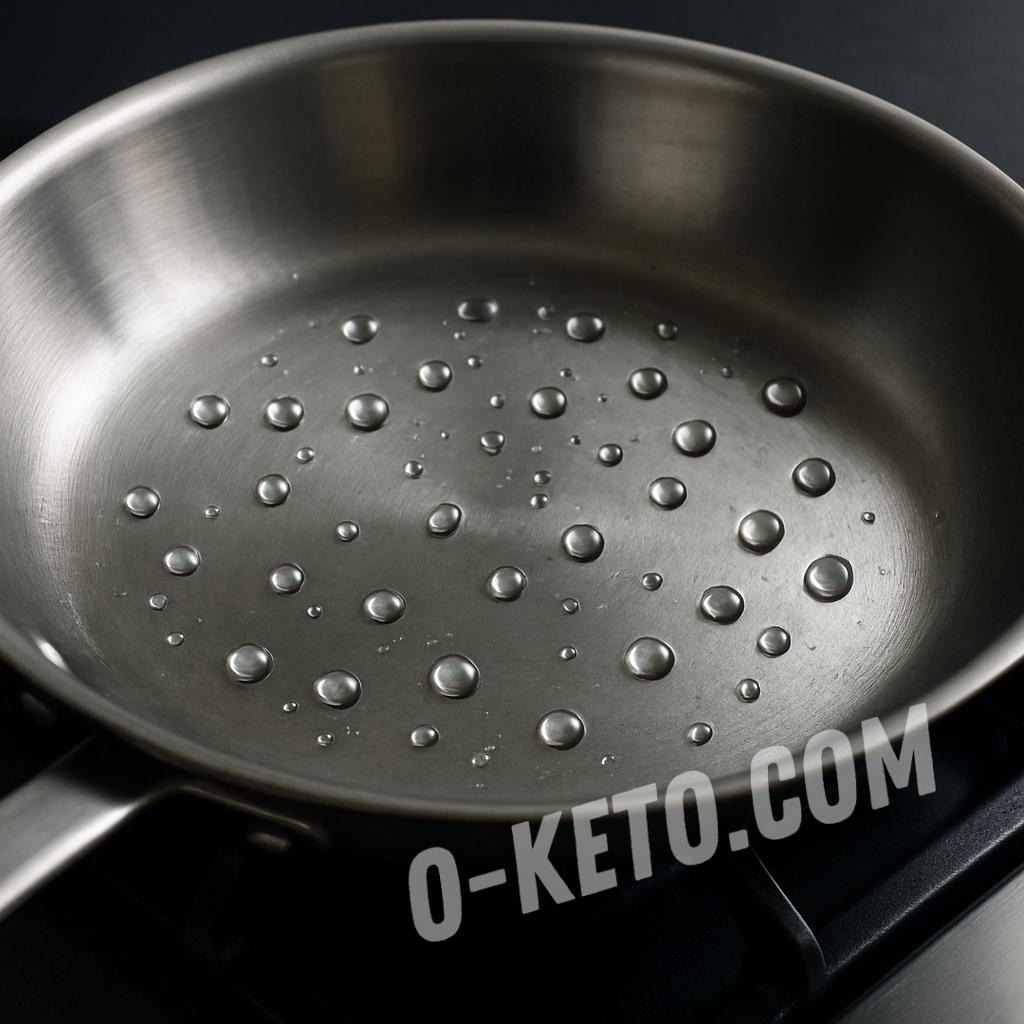
The easiest way to understand whether a stainless steel pan is heated correctly is the water-drop test. It shows not an abstract temperature, but the condition of the surface right now.
The test works like this:
- place a dry pan over medium-high heat;
- let it heat for about 1–2 minutes, but adjust for your stove;
- drop one small drop of water onto the surface;
- watch how the drop behaves;
- if the drop evaporates immediately, the pan is not in the right state yet;
- if the drop hisses and disappears slowly, the surface is warm, but may not be stable enough;
- if the drop forms a small ball and runs around the surface, the pan is ready.
The “dancing” drop is the useful signal. The water should not simply vanish in steam. It should bead up and move around the pan.
It is helpful to time the process once on your phone. For example, if your pan on your burner reaches the right state in 2 minutes 20 seconds, it will be easier to repeat the result next time.
Why you should not pour oil onto a scorching-hot pan immediately
After a successful water-drop test, the pan is already very hot. If you pour oil or fat in immediately, it can quickly start smoking. Smoke means the fat has overheated. At that point food is more likely to burn, the flavor becomes harsher, and the kitchen fills with the smell of scorched oil.
The correct order is:
- check the pan with a drop of water;
- wipe the drop away with a paper towel so water does not mix with the fat;
- lower the heat to minimum;
- let the pan cool slightly, but do not turn the heat off completely;
- add oil, butter, beef tallow, ghee, or another suitable fat;
- spread the fat in a thin layer over the surface;
- after a short pause, add the food or pour in the batter.
If the fat still starts smoking, do not keep cooking as if nothing happened. Remove the pan from the burner or move it aside briefly. When active smoking stops, return the pan to low heat for about 20–30 seconds, then add the food.
How to choose fat for a stainless steel pan
For stainless steel, temperature matters, but fat matters too. It should tolerate heat and spread evenly across the surface. Fats that contain little water and do not burn quickly are especially convenient.
Good options for frying on stainless steel include:
- clarified butter or ghee;
- beef tallow;
- duck fat;
- refined olive oil suitable for frying;
- neutral coconut oil, if the flavor works for the dish;
- butter at moderate heat or combined with a more stable fat.
Unrefined oils with a strong flavor should be used more carefully. They can smoke sooner and become bitter at high temperatures. Such oil may be excellent for a salad, but while learning stainless steel cooking, a more stable fat is easier.
How to cook pancakes and thin batter without sticking
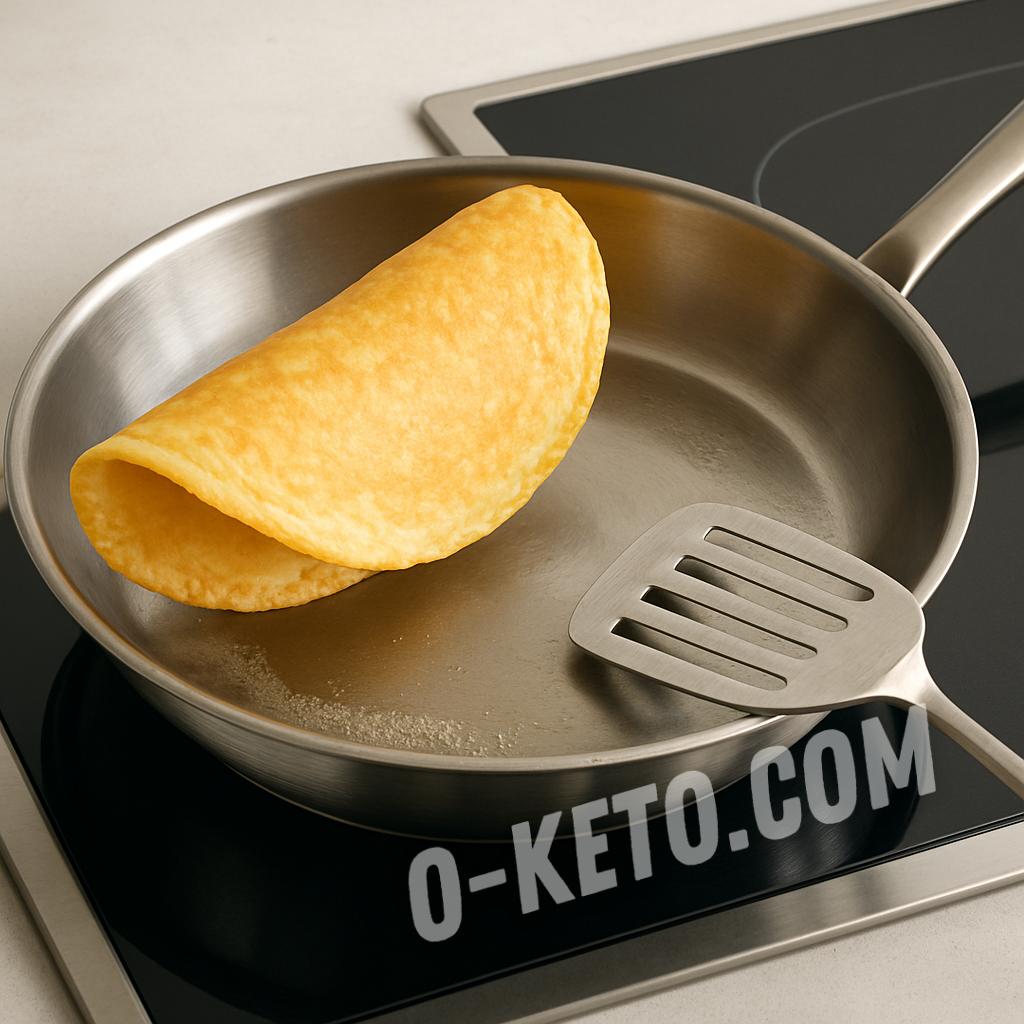
Pancakes clearly show whether the pan is heated correctly. If the temperature is low, the batter sticks and tears. If the temperature is too high, the pancake darkens quickly but does not have time to set properly.
For pancakes, use this order:
- heat the dry pan and check it with the water-drop test;
- wipe away the water drop with a paper towel;
- lower the heat to minimum and add a thin layer of fat;
- let the fat warm gently, but do not let it smoke;
- pour a small amount of batter into the center;
- quickly rotate the pan so the batter spreads in a thin layer;
- cook over medium or slightly below medium heat, adjusting to your stove;
- flip when the batter has set and the edges have started to lift slightly.
The first pancake often acts as a temperature test. If it sticks, you do not necessarily need to change the recipe. First check the preheating, the amount of fat, and the heat level. Often the second or third pancake already turns out much better.
How to cook eggs and omelets on stainless steel
Eggs are especially sensitive to overheating. Egg white quickly sticks to metal if the pan is heated incorrectly or the fat has started smoking. For fried eggs and omelets, the goal is not maximum heat, but calm controlled heat.
A working egg method looks like this:
- heat the pan until the water drop “dances”;
- wipe the water away with a paper towel;
- lower the heat to minimum;
- add fat and wait until it spreads calmly;
- if the fat starts smoking, remove the pan from the heat and cool it slightly;
- return the pan to low heat briefly;
- pour in the egg or omelet mixture;
- cook without rushing, letting the bottom layer set.
For a more tender fried egg, do not keep stainless steel on high heat. First heat it properly, then use minimum or gentle medium heat. The white sets more softly and releases from the surface more easily.
How to cook chicken, fish, and patties
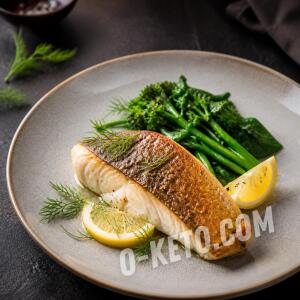
Dense foods behave differently from pancakes and eggs. Chicken fillet, fish, or patties may initially “hold” onto the surface a little. This is normal: protein contacts hot metal, a crust forms, and only then does the food release more easily.
For protein foods, several rules matter:
- dry the food with a paper towel before frying, especially fish and chicken fillet;
- avoid putting a cold wet product straight from the fridge into the pan if it can warm up slightly first;
- do not overcrowd the pan, otherwise the temperature drops sharply;
- do not move the food during the first minutes, while the crust is forming;
- flip only when the edge lifts easily with a spatula;
- after searing, finish thick chicken fillet under a lid over lower heat.
If the food does not release, it does not always mean it is stuck forever. Often it simply needs a little more time. Stainless steel releases meat and fish well once the crust has formed.
How to clean a stainless steel pan after frying
Stainless steel is not as afraid of water as cast iron with a built-up seasoning layer. If something remains on the bottom, there is no need to scrub a dry surface for a long time. Hot water and a short boil make cleaning easier.
After frying, you can do this:
- let the pan cool slightly to avoid a sharp temperature shock;
- add a little water;
- place it on the heat and bring the water to a boil;
- use a wooden or silicone spatula to lift stuck bits from the bottom;
- pour out the water and wash the pan with a sponge;
- dry it thoroughly so water spots do not remain.
If traces of fat or protein remain after cooking, it is not a failure. Stainless steel cleans easily when you do not try to scrape everything off cold.
The most common mistakes
When a stainless steel pan “does not cooperate”, the cause is almost always repeated. Fixing one or two mistakes is often enough to make the result predictable.
These actions most often get in the way:
- pouring oil into the pan before it is heated;
- adding oil immediately after the water-drop test, while the metal is still too hot;
- cooking eggs over high heat;
- flipping pancakes and meat too early;
- pouring too much batter into one pan;
- frying wet food without drying it first;
- assuming that one failed attempt means “this pan is bad”.
A stainless steel pan does take a little practice. But a few attempts are usually enough to understand your stove, heating time, and comfortable heat level.
Conclusion
A stainless steel pan does not need a non-stick coating if you control temperature correctly. The main method is simple: heat the dry pan, test it with a drop of water, wipe away the water, lower the heat, add fat, let it spread calmly, and only then start cooking.
This technique is not only for pancakes. The same principle works for eggs, omelets, chicken fillet, fish, patties, cheese pancakes, and fritters. The better you feel the moment of heating and the strength of the heat, the less food sticks and the easier the pan is to clean.
Sources
- Leidenfrost transition temperature for stainless steel meshes
- Vegetable Oils and Their Use for Frying: A Review of Their Compositional Differences and Degradation
- Safe Minimum Internal Temperature Chart: USDA Food Safety and Inspection Service
- Food Thermometers: USDA Food Safety and Inspection Service
- On Food and Cooking: The Science and Lore of the Kitchen