


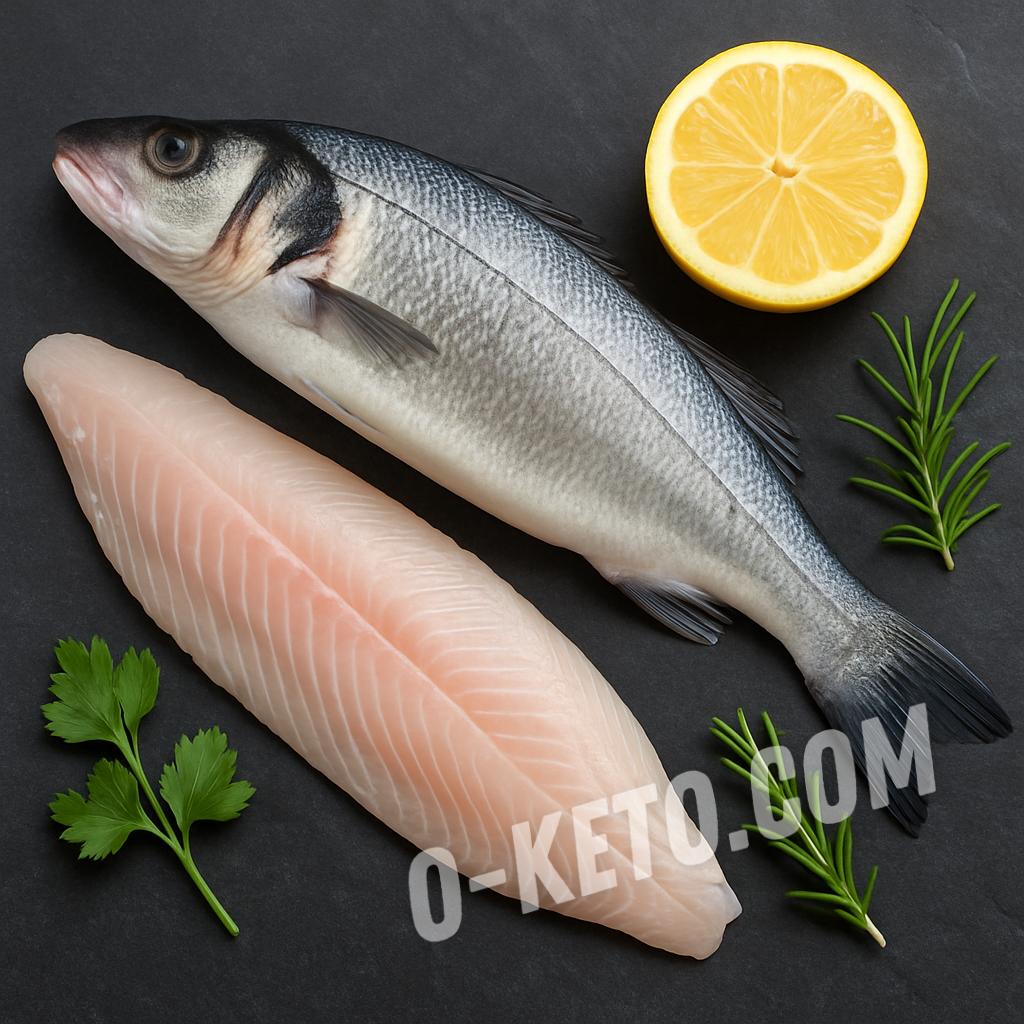

European sea bass is European sea bass with white flesh, firm skin, and a clean flavor, popular for baking whole. Recipes should count the plain fish itself, without flour, breading, sweet marinade, glaze, or excess salt.
European sea bass is often sold whole at 300-600 g. One fish usually makes one generous portion or two smaller portions.
Nutrition
Nutritionally it is moderately lean: high protein, no carbohydrate, and medium fat. On keto it pairs well with olive oil, butter, herbs, and vegetables.
European sea bass has essentially no glycemic load as a plain fish: there is no starch or sugar in the flesh. What changes the keto result is the preparation, especially flour, bread crumbs, sweet marinades, sugary glaze, or ready-made sauces served with the fish.
How to Use
Best methods are whole baking with rosemary, thyme and lemon, grilling, salt crust, or skin-on fillet pan-frying. Sweet sauces are usually unnecessary.
For European sea bass, weigh the edible part you actually cook or serve: fillet without large bones, trimmed steaks, or the cleaned whole fish portion. Its own fat can carry flavor, but sauces and added fats should still be counted separately when the portion is generous.
How to Choose
When buying European sea bass, look for clean smell, resilient flesh, natural color, and packaging without excess cloudy liquid. Whole fish should have clear eyes and intact skin; fillets should not be dry at the edges or sticky on the surface.
Storage and Safety
Keep European sea bass chilled until cooking and thaw frozen pieces slowly in the refrigerator. Cook fish thoroughly when the source is uncertain, avoid repeated thawing, and treat any strong ammonia smell as a reason to discard the product.


