


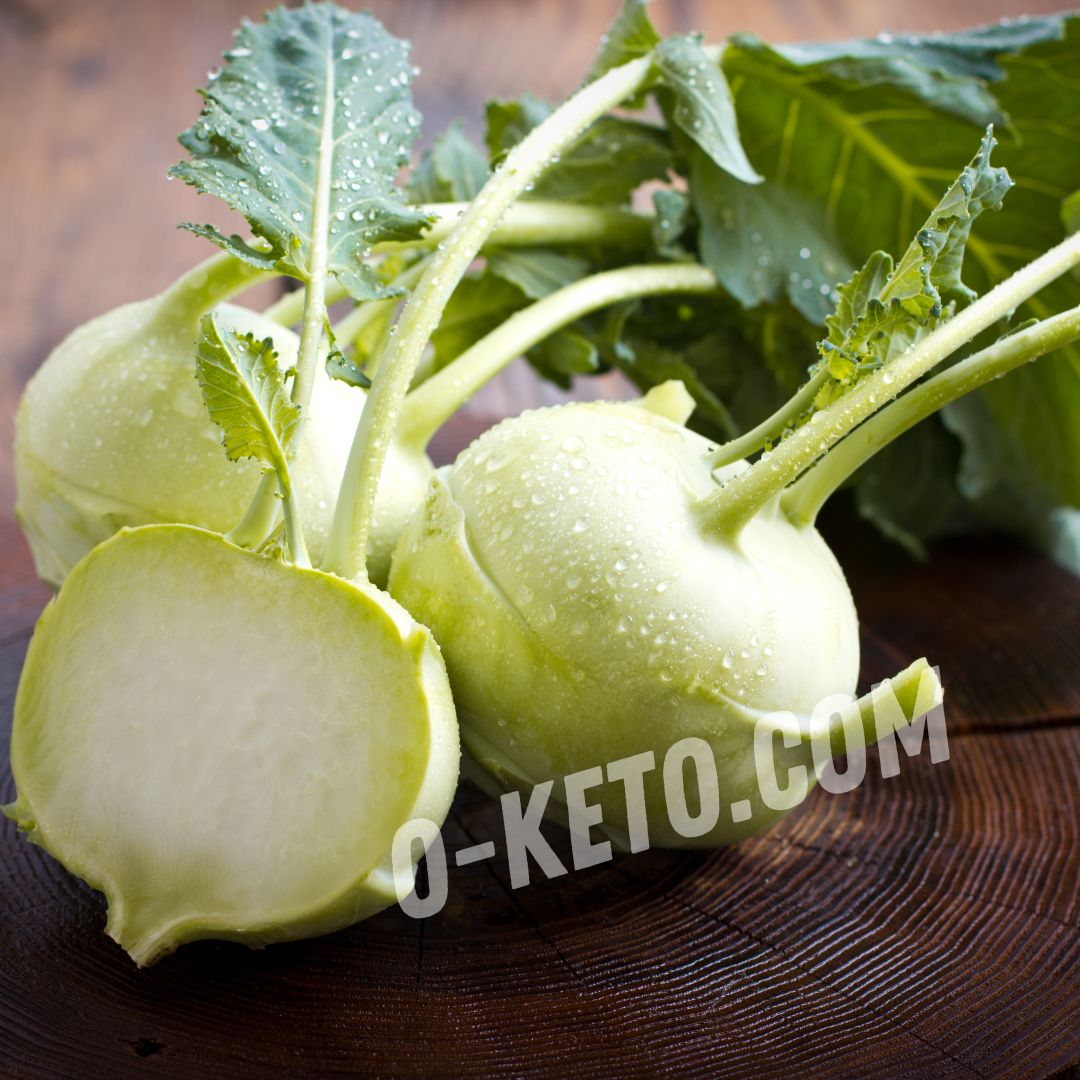

Kohlrabi is a cabbage-family vegetable with a swollen stem that looks like a round turnip with leaves. It tastes like sweet cabbage stem, radish, and a little broccoli, but is usually milder and juicier. It can be eaten raw, sautéed, cooked in the oven, grated into salads, and used as a low-carb replacement for starchier vegetables.
For keto, kohlrabi is interesting because of its moderate carbohydrate content and crisp texture. It is not a leafy green, so the portion should be counted, but compared with potatoes, beets, or parsnips it fits low-carb eating much more easily.
Nutritional value
Per 100 g, kohlrabi usually contains about 25-30 kcal and around 5-6 g of carbohydrates, much of which is fiber. Net carbohydrates are often about 2-3 g per 100 g, though exact values depend on variety and data source. A normal serving has a low carbohydrate load.
Kohlrabi contains vitamin C, vitamin B6, potassium, magnesium, and plant compounds typical of cabbage-family vegetables. It is a good vegetable for variety, not a food with miraculous properties. Its keto value is crunch, moderate carbohydrates, and the ability to replace starchier sides.
Is it suitable for keto?
Kohlrabi fits keto in moderate portions. Raw kohlrabi works in salads and sticks for dips, while cooked kohlrabi works in sides, soups, and oven dishes. On strict keto, weigh the portion, especially when kohlrabi is the main vegetable on the plate.
Sweet marinades, flour, breading, starchy sauces, and large amounts of carrot or apple in salads can spoil the keto profile. Kohlrabi works much better with butter, sour cream, cheese, meat, fish, and eggs.
How to use
Kohlrabi is usually peeled before cooking because the outer skin can be tough and fibrous. Young small bulbs are more tender and better raw. Larger ones are better sautéed, sliced thinly, or cooked until tender in the oven.
Practical options include:
- raw salad with lemon, oil, and herbs;
- kohlrabi sticks with cheese or sour cream dip;
- thin slices with oil, garlic, and spices from the oven;
- cream soup with cauliflower and cream;
- a sautéed side for meat or fish;
- a grated salad base instead of part of the carrot or apple.
Portion and texture
Raw kohlrabi is easy to overeat because it crunches almost like an apple. For keto, it is reasonable to start with 80-120 g and see how it fits daily carbohydrates. Fat and protein increase satiety: cheese, eggs, meat, fish, sour cream, sugar-free mayonnaise, or olive oil.
A common mistake is treating kohlrabi as a complete potato replacement in every recipe. It contains less starch and more water, so mash and oven dishes have a different texture. For density, combine it with cauliflower, cheese, cream, or egg.
Raw kohlrabi tastes softer if the slices are mixed with salt, lemon juice, and oil for a few minutes before serving. For warm dishes, it is better not to cook it until watery: kohlrabi is pleasant when it keeps a slight bite. If a very soft texture is needed, cut it smaller and cook it together with the sauce.
How to choose
Choose firm small or medium bulbs without cracks, soft spots, or mold. Very large kohlrabi is often tougher and more fibrous. Leaves, if present, should look fresh, without slime or full wilting.
The skin may be green or purple, but color matters less than firmness and freshness. If the vegetable feels light for its size, it may be dry inside. For raw salad, the youngest bulbs are usually best.
How to store
Store kohlrabi in the refrigerator, in the vegetable drawer. Remove the leaves separately so they do not draw moisture from the bulb. The bulb can be kept in a bag with a little airflow or in a container, but without excess moisture.
Cut kohlrabi quickly loses its crunch, so it is best sliced just before serving. If pieces are already prepared, keep them in a closed container and use them within the next day or two.
Limits and substitutes
As a cabbage-family vegetable, kohlrabi may cause bloating in sensitive people, especially raw and in large portions. If discomfort occurs, cook it more softly or reduce the amount. Lemon juice, salt, oil, and sour cream sauce make the flavor calmer and reduce the cabbage sharpness.
Substitutes include turnip in a small portion, cauliflower, broccoli, zucchini, radish, or broccoli stems. If the goal is a crisp fresh texture, radish, cucumber, and young cabbage are closest, but the taste will differ.


