


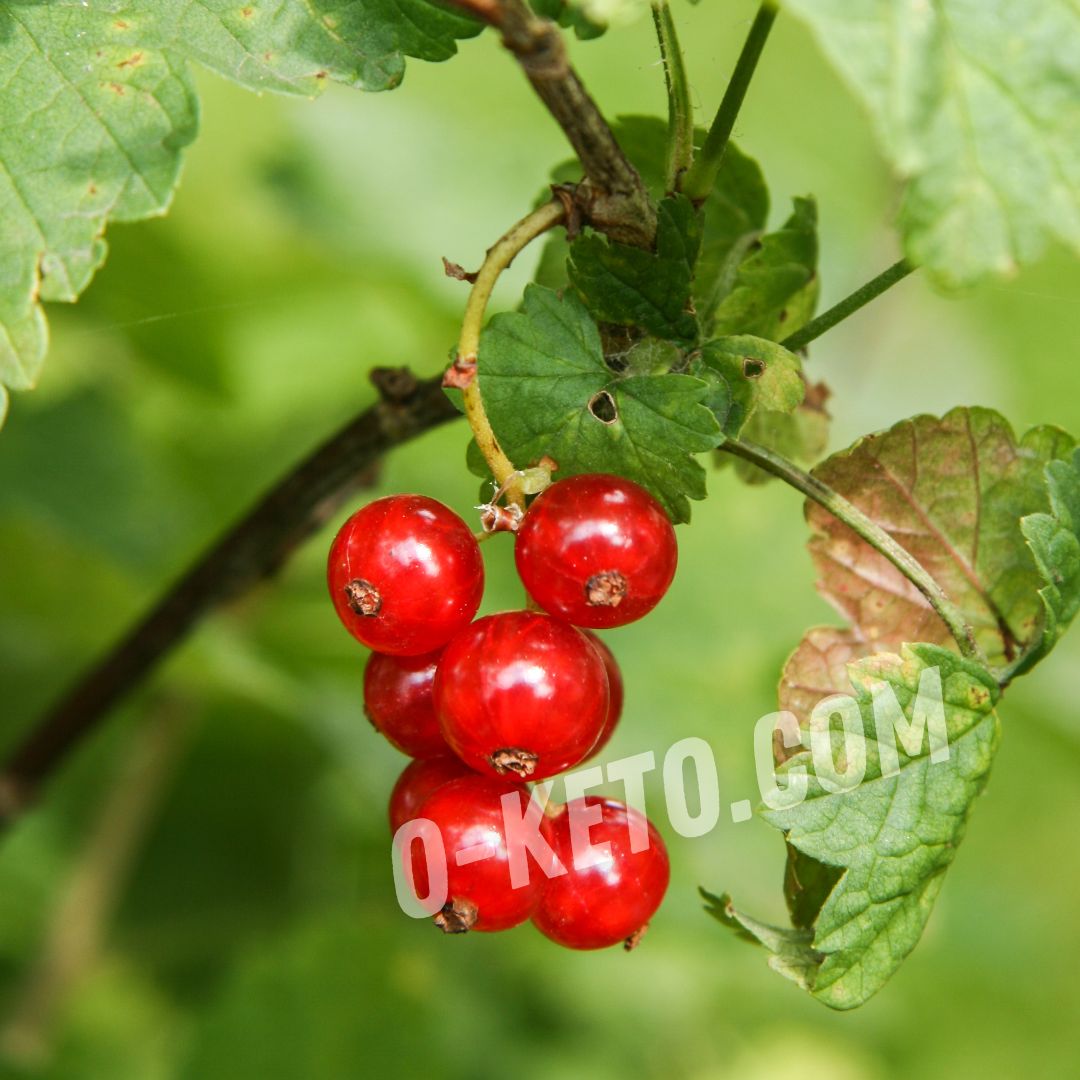

Red currant is a tart berry with translucent skin, juicy flesh and bright aroma. It is much less sweet than grapes or raisins and works well where acidity is needed: meat sauces, salads, sugar-free desserts, jelly, berry dressings and drinks. For keto, both carbohydrates and flavor intensity matter, because a small portion can be enough.
The berries grow in clusters, so they are convenient to add whole as a garnish or quickly crush for a sauce. Seeds and skin give light astringency. Red currant pairs well with rich foods: cream, cheese, duck, pork, mackerel, nuts and avocado.
Health benefits of red currants
Red currant anthocyanins, vitamin C, organic acids, and fiber are studied in relation to antioxidant protection, vascular function, and digestion. The proposed benefits include:
- support for the antioxidant protection of cells;
- a possible contribution of polyphenols to vascular function;
- an additional contribution of fiber to bowel function.
The tart taste makes a small amount useful in cooking, but juice, syrup, and jam have a different composition because the fruit structure is changed and sugar may be added. The whole berry and a sweet preserve should therefore be evaluated as different products.
Nutrition
The older description listed about 63 kcal per 100 g, around 1.6 g of protein, 0.2 g of fat and about 7.3 g of carbohydrates, of which roughly 2.3 g are dietary fiber. Values can vary slightly by variety and ripeness, but red currant remains a berry with a moderate amount of carbohydrates.
It contains vitamin C, vitamin K, B vitamins, potassium, phosphorus, iron and plant pigments. These components do not make the berry unlimited, but in a small portion it can provide a bright taste without a large amount of sugar.
The glycemic index of red currant is usually considered low compared with sweet fruits. In a keto diet, portion still matters: 30-50 g of berries in a sauce or dessert are easier to fit than a large bowl.
Is It Keto-Friendly?
Red currant can fit keto and LCHF in small amounts. Its acidity helps replace sweet berry sauces, jam and syrups. For dessert, it is better paired with cream, mascarpone, unsweetened Greek yogurt, cottage cheese or a nut-based crust.
Ready-made jams, fruit drinks and syrups made from red currant often contain sugar. Even if the berry itself is moderate in carbohydrates, a sweetened preserve quickly becomes unsuitable for strict keto.
How to Use It
Red currants can be added whole, crushed with a fork, warmed in a sauce or passed through a sieve. For meat dishes, a sauce with berries, salt, pepper, vinegar and a small amount of sugar-free sweetener works well. For desserts, the berries are best not cooked for long, so their fresh acidity remains.
Good ideas include:
- sauce for duck, pork, lamb or fatty fish;
- a few berries in a salad with goat cheese and nuts;
- an addition to cream or sugar-free cheesecake;
- a cold drink with mint and sugar-free sparkling water;
- berry dressing for leafy greens and avocado.
How to Choose and Store
Fresh currants should be dry, firm and free from mold or leaking juice. Clusters help the berries bruise less, so remove them from stems just before use. Frozen red currants are convenient for sauces and drinks, but they soften after thawing.
In the refrigerator, berries keep only briefly. Do not wash them in advance, and store them in a container that is not airtight. For longer storage, freeze small sugar-free portions. This makes it easier to add an exact amount to sauces and desserts.
Substitutes
For acidity, red currant can be replaced with unsweetened cranberry, lingonberry, raspberry, black currant or a few drops of lemon juice. In desserts, other small tart berries are the closest visual substitute. Dried fruit is not an equal keto replacement because it provides much more sugar in a small volume.
Serving and Acidity
Red currant often feels “light” because of its tart taste, but it still contains carbohydrates. It is easier to weigh the berries before adding them to cream or sauce: 30 g gives noticeable acidity, 50 g makes the flavor bright, and a large bowl may exceed strict keto limits.
The acidity of currants can reduce the need for sweetener. In a meat sauce, salt, pepper and the fat from the dish itself may be enough. In dessert, add the berries first, taste, and only then decide whether any sweetener is needed.
If the berries are very tart, it is not necessary to add a lot of sweetener immediately. Acidity can be softened with a fatty base: cream, mascarpone, sour cream, nut butter or cheese. In savory dishes, meat fat and olive oil play a similar role.
Red currants are convenient to freeze spread out on a board and then transfer to a bag. This prevents them from freezing into one block, so exactly the needed amount can be taken for a sauce or dessert. For keto this is especially useful because the portion stays precise.
How to fit currants into a low-carbohydrate diet
Fresh currants are easier to portion than juice, syrup, jam, or sweetened purée. Tartness does not mean that a berry is carbohydrate-free: on strict keto, count the serving with the other fruit eaten that day. Unsweetened frozen berries follow the same principle, and a dessert must be assessed by all of its ingredients.
Sources
- USDA FoodData Central: raw currants
- Dietary Guidelines for Americans: fruit and fruit juice
- Systematic review of fruit intake and cardiometabolic outcomes


