


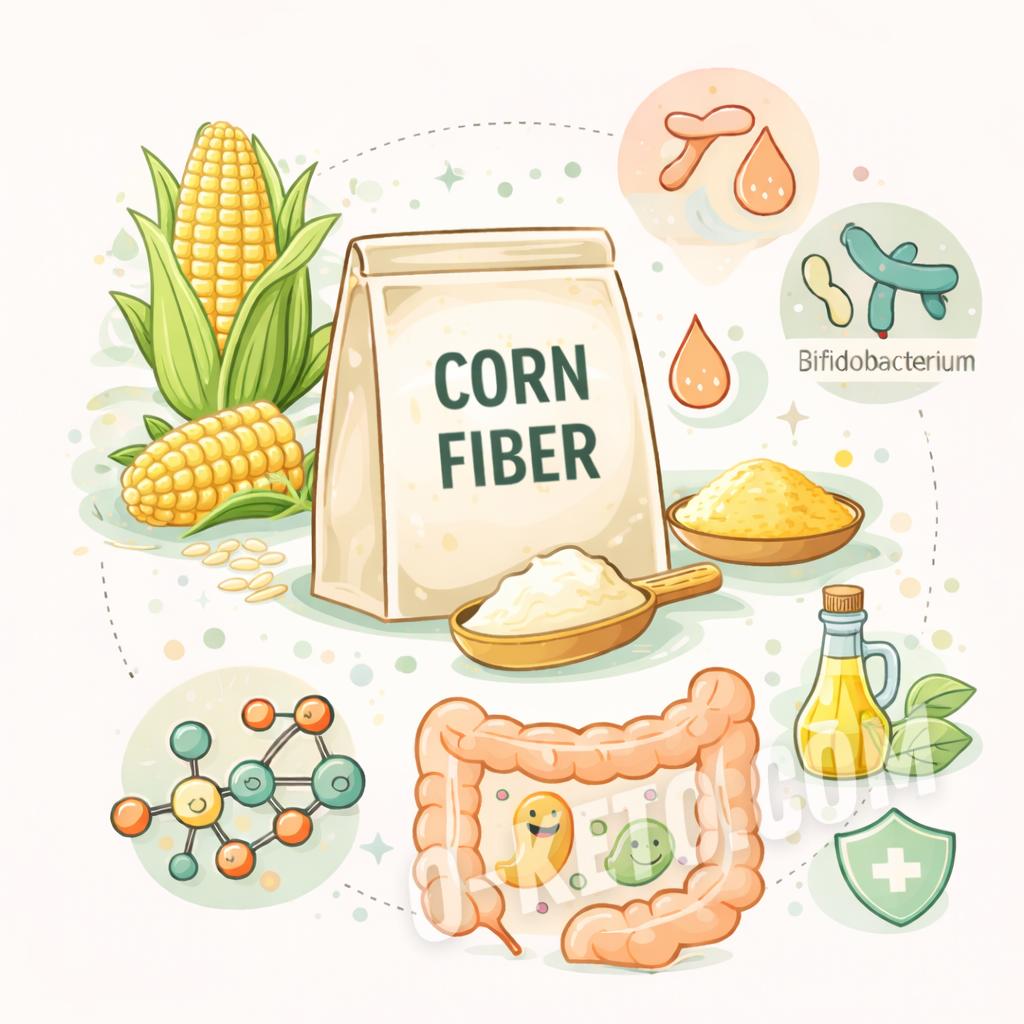

Corn fiber is a purified fraction of plant fibers obtained from corn. In nutrition science, it is primarily considered a technological and mechanical component of the diet rather than a source of energy or significant nutrients. Corn fiber is virtually not absorbed in the gastrointestinal tract and does not participate in the body’s glycemic and insulin reactions.
Beneficial Properties
The main action of corn fiber is mechanical in nature. It increases the volume of the food bolus and can influence intestinal motility in a mixed diet:
- increases the volume of intestinal contents;
- may promote regularity of stool;
- reduces the energy density of dishes;
- does not raise glucose and insulin levels;
- has a neutral taste and smell.
Daily Requirement and Sources
There is no separate physiological norm specifically for corn fiber. It is accounted for in the overall consumption of dietary fibers. In the diet, it is used as an auxiliary ingredient rather than a mandatory dietary element.
Main sources:
- purified corn fiber from industrial production;
- products with added dietary fibers;
- low-carbohydrate mixes and baked goods.
Symptoms and Consequences of Deficiency
There is no deficiency of corn fiber as a separate substance. The absence of insoluble fibers does not lead to disorders with adequate intake of fats, proteins, and normal bile secretion.
However, in a mixed diet, it is possible to experience:
- changes in stool volume with mixed feeding;
- absence of mechanical filling of the intestine;
- absence of clinically significant consequences.
Possible Risks of Excess and Their Manifestations
With excessive consumption of corn fiber, mechanical side effects may occur, especially with low fluid and fat intake:
- abdominal bloating;
- sensation of intestinal fullness;
- worsening of constipation with fat deficiency;
- reduced tolerance in sensitive gastrointestinal tracts.
Corn Fiber and the Keto Diet
In the context of ketogenic nutrition, corn fiber is not a mandatory component. The practice of keto and carnivore diets shows that normal gastrointestinal function is possible without plant fibers with adequate fat intake and proper bile secretion.
Corn fiber can be used in keto as a technological ingredient to improve the structure of baked goods and finished products. Its use is optional and determined by individual tolerance rather than physiological necessity.
Thus, corn fiber is an insoluble dietary fiber with mechanical action. It is not a source of vitamins, minerals, or energy and is not required for maintaining gastrointestinal health, but it can be used as an auxiliary component in mixed and low-carbohydrate diets.


